

2 weeks ago
Bombay High Court Rejects Strict 50:50 Child Custody

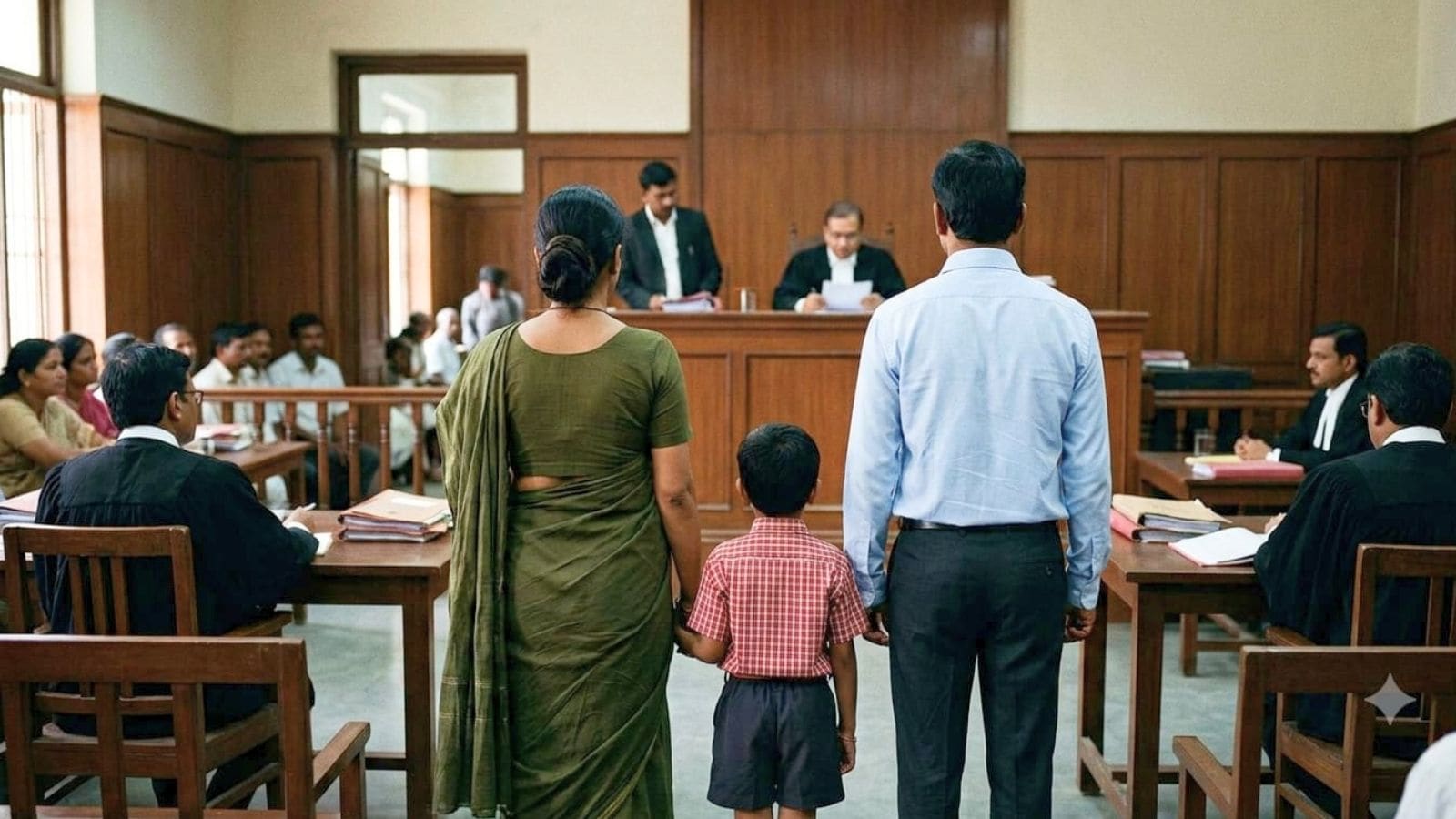
A court in Mumbai reviewed a disagreement between a boy’s parents about where he should live and how often he should see each parent.
The boy is 14 years old.
A family court had ordered that both parents should receive equal parenting and vacation time.
The Bombay High Court said a strict 50:50 schedule is not always best for a child.
It said Indian law focuses on the child’s welfare rather than giving parents equal time automatically.
For now, the boy will live with his mother.
His father will have him during the first half of the Diwali, Christmas and summer holidays, plus alternate-weekend overnight visits.
The family court must reconsider the larger custody issue.
Both parents must help the boy maintain a relationship with the other parent and share his education and medical costs.

The Bombay High Court set aside a family court order imposing joint parenting and a 50:50 vacation split for a 14-year-old boy.
Justice Gauri Godse said Indian law does not recognise joint parenting as a statutory concept and that the child’s welfare must come first.
The court continued the child’s physical custody with the mother while granting the father temporary holiday custody and alternate-weekend overnight access.
The court said equal parenting time may create conflict and psychological or other complications if it lacks a practical structure and parental cooperation.
The case was returned to the family court for a fresh decision, with both parents directed to share education and medical expenses equally.
- Who
- The Bombay High Court, Justice Gauri Godse, and the separated parents of a 14-year-old boy.
- What
- The High Court set aside a family court’s joint-parenting and 50:50 custody arrangement and remanded the matter for fresh consideration.
- Where
- The dispute was heard in the Bombay High Court and originated before a family court in India.
- When
- The article refers to a Bombay High Court order dated September 1 and a family court order dated September 20, 2024; the article does not clarify the year of the High Court order.
- Why
- The High Court held that child welfare, practical feasibility, emotional stability, education, health and other needs must take priority over equal parental time.
Equal-Time Approach
Welfare-First Approach
Parenting time
Equal-Time Approach
The family court directed joint parenting and equal vacation time, after finding that the child wanted equal time with both parents and wanted both of them to be happy.
Welfare-First Approach
The Bombay High Court said equal parenting time is not automatically the right solution and that a strict 50:50 split may be impractical and cause further conflict.
Basis for custody decisions
Equal-Time Approach
The father argued that the mother had given up custody under consent terms in exchange for Rs 8 lakh and an interest in the matrimonial flat.
Welfare-First Approach
The High Court rejected that interpretation, saying routine financial and property terms in consent arrangements cannot mean that the mother surrendered custody.
Shared parenting plan
Equal-Time Approach
A shared arrangement could give the child substantial time with both parents if the family court considers it appropriate.
Welfare-First Approach
The High Court said such a plan requires meaningful discussion, parental willingness and a structure that serves the child’s welfare; it therefore ordered a fresh family court decision.
Key facts
- Child’s age
- 14 years
- Current physical custody
- Mother
- Father’s interim access
- First half of the Diwali, Christmas and summer holidays, plus alternate-weekend overnight access
- Legal principle
- Indian custody law is based on the welfare of the minor child and does not recognise joint parenting as a statutory concept
- Family court decision
- Directed joint parenting, 50% vacation time for each parent, and the child’s ordinary residence with the mother from the next academic year
- Financial responsibility
- Both parents must bear education and medical expenses equally
- Further proceedings
- The matter was sent back to the family court for a fresh decision
Quotes
Justice Gauri Godse
Bombay High Court judge who issued the custody ruling
“In Indian law, the statutory framework governing child custody and guardianship does not recognise the concept of joint parenting. There is no compelling equal parenting, and the legal foundation in Indian law is the welfare of the minor child.”
 indianexpress.com
“Such routine terms in the consent terms cannot be interpreted to mean that the mother had given up the custody of the child in exchange for any consideration.”
indianexpress.com
Sources
Related news

Bombay High Court Says Child Welfare Outweighs Joint Parenting Rights

Bombay High Court Restores Mother’s Custody, Rejects Stereotypical Reasoning

Bombay High Court Rejects Father’s Singapore Custody Transfer

Bombay High Court Keeps Girl’s Interim Custody Unchanged

Fatherhood Alone Does Not Entitle Parent to Child’s Custody
High Court Says Child Preference Cannot Decide Custody

Tata Sons Listing Dispute Moves Toward Bombay High Court

Justice RC Chavan Resigns From Maharashtra UCC Committee, Citing Concerns

Bombay HC Flags Pollution During Ganeshotsav, Questions Firecracker Permissions

Maharashtra Judicial Posts Face Nearly 60% Vacancy, Chief Justice Warns

Bombay High Court Quashes ₹79.7 Crore GST Demand
