21 hrs ago
Kashmir's Wazwan Preserves 600-Year Roots as Chefs Embrace Change
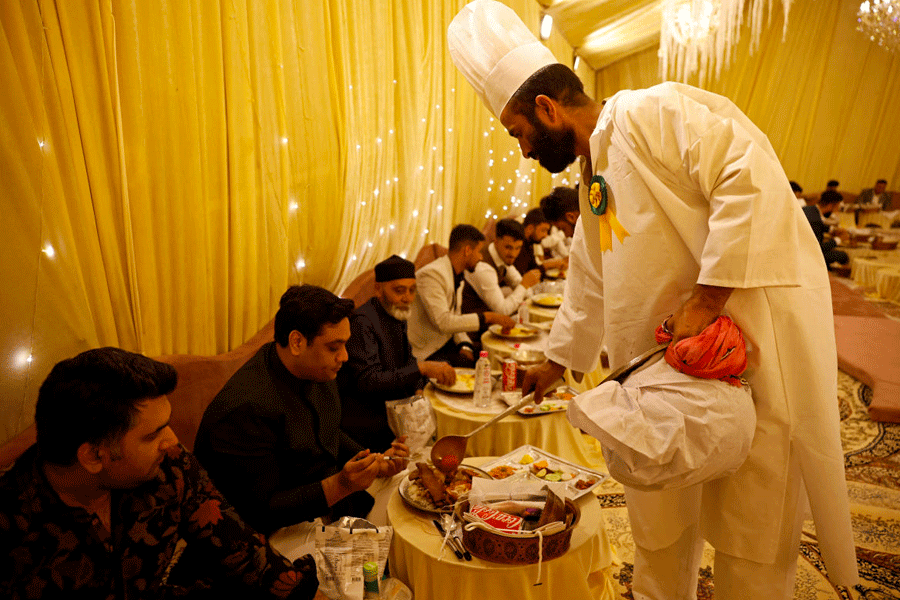
Wazwan is a special Kashmiri feast usually served at weddings.
It came to Kashmir from Central Asia about 600 years ago.
Families of cooks have passed the recipes and skills from parents to children.
The feast once had seven mutton dishes, but it now has about 20.
Cooks still pound meat with wooden mallets before cooking it.
They usually cook the food slowly over wood fires.
Wedding cooking can require working around the clock.
Some younger cooks are preserving Wazwan by serving it in restaurants instead.

Wazwan arrived in Kashmir from Central Asia in the 14th century.
The traditional wedding feast has grown from seven mutton dishes to about 20.
Chefs still pound meat by hand and cook it slowly over wood fires.
Ghulam Nabi Baba began learning Wazwan cooking from his father at age 15.
Younger chefs are increasingly moving from demanding wedding work into restaurants.
- Who
- Kashmiri Wazwan chefs, including 74-year-old Ghulam Nabi Baba and his son.
- What
- A centuries-old Wazwan cooking tradition is continuing while younger chefs shift from wedding feasts to restaurants.
- Where
- Srinagar and other parts of Kashmir, including Delina in north Kashmir.
- When
- The tradition dates to the 14th century; Baba began cooking at age 15 and has cooked for nearly six decades.
- Why
- Wazwan is changing partly because wedding cooking is extremely demanding, with cooks working around the clock, while restaurants offer better hours.
Traditional Wedding Cooking
Restaurant-Based Wazwan
Where the tradition continues
Traditional Wedding Cooking
Traditionalists continue preparing multi-course Wazwan feasts at weddings using established methods and wood fires.
Restaurant-Based Wazwan
Younger chefs are carrying the culinary legacy into restaurants rather than working at weddings.
Work and succession
Traditional Wedding Cooking
Older chefs view wedding cooking as a family craft learned through generations, with Baba beginning under his father at age 15.
Restaurant-Based Wazwan
Some younger family members have not continued wedding cooking because the work is too hectic and requires around-the-clock hours.
Key facts
- Tradition's origin
- Wazwan came to Kashmir from Central Asia in the 14th century.
- Current menu
- The feast now includes around 20 mutton dishes, compared with seven in earlier times.
- Cooking method
- Meat is pounded by hand and cooked slowly over wood fires.
- Featured dish
- Gushtaba is prepared with wooden mallets on stone slabs.
- Traditional cooks
- Wazwan chefs are known as wazas; a community of cooks in Srinagar's old city is called Wazpora.
- Baba's experience
- Ghulam Nabi Baba, 74, has cooked Wazwan for nearly six decades.
- Wedding workload
- Baba said an average marriage requires about 200 kilograms of mutton, while one large wedding involved 4,500 kilograms.
Quotes
Ghulam Nabi Baba
A 74-year-old Kashmiri Wazwan chef from a family of traditional cooks.
“There were only seven mutton dishes at that time. Over the centuries we added more, and now there are around 20 dishes.”
 telegraphindia.com
“Forty years ago in Delina (a village in north Kashmir), I cooked 4,500 kg of meat. That was a very big wedding.”
telegraphindia.com
Sources
Related news
Karishma Kemmu Celebrates Kashmiri Tithi Birthday With Family Rituals
How Armenians in Calcutta Shaped Bengal’s Beloved Potoler Dolma
Novotel Kolkata Hosts Five-Day Awadhi Culinary Festival in September
NIPS Kolkata Culinary Marathon Showcases 263 Rare Indian Recipes
Khamiri Roti: The Indian Subcontinent’s Fermented Flatbread Tradition