11 hrs ago
Nepal Urges Tourists to Return After Devastating Floods

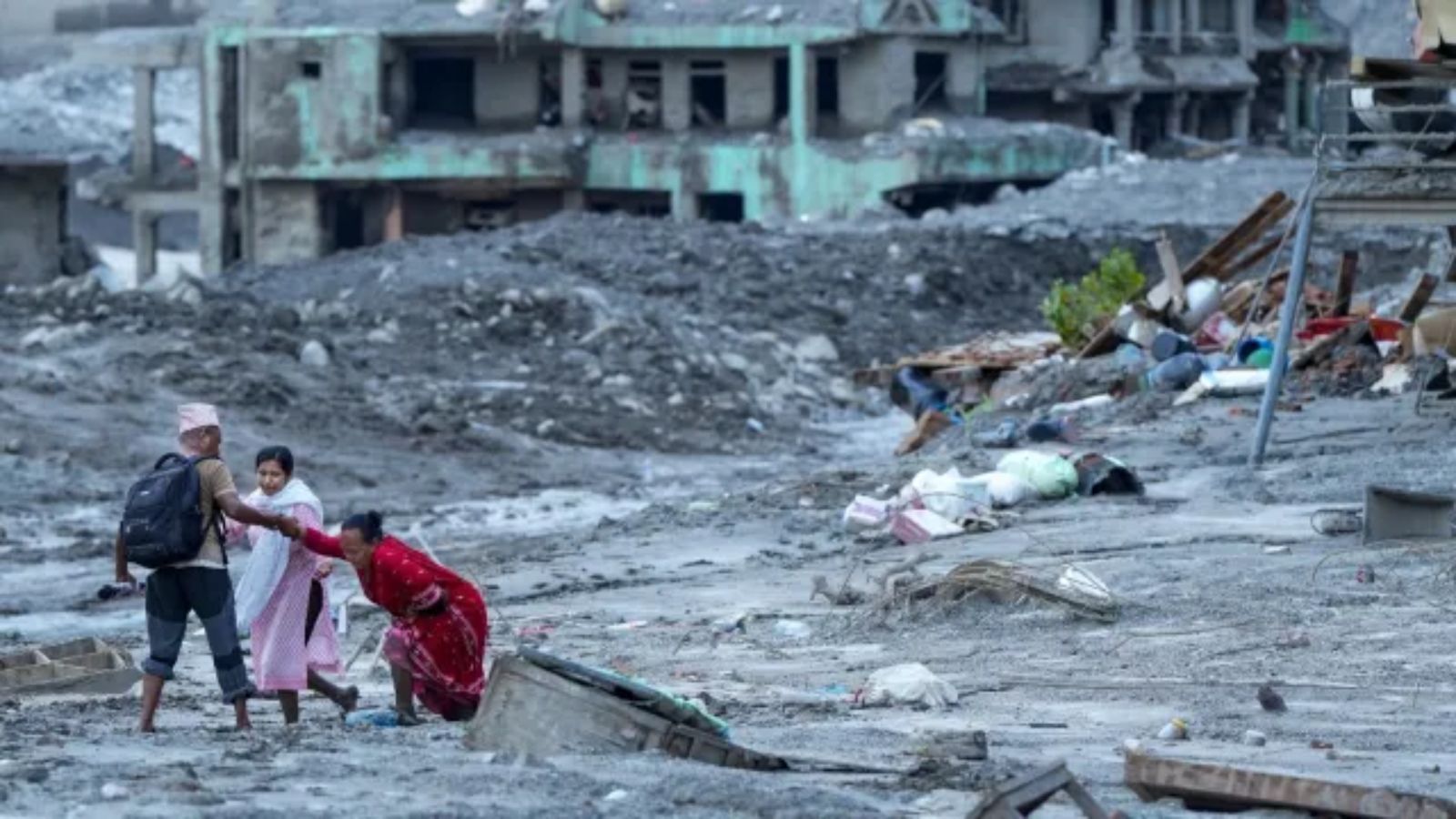
A glacier broke apart and caused a huge flood of ice, mud, rocks and water in Nepal.
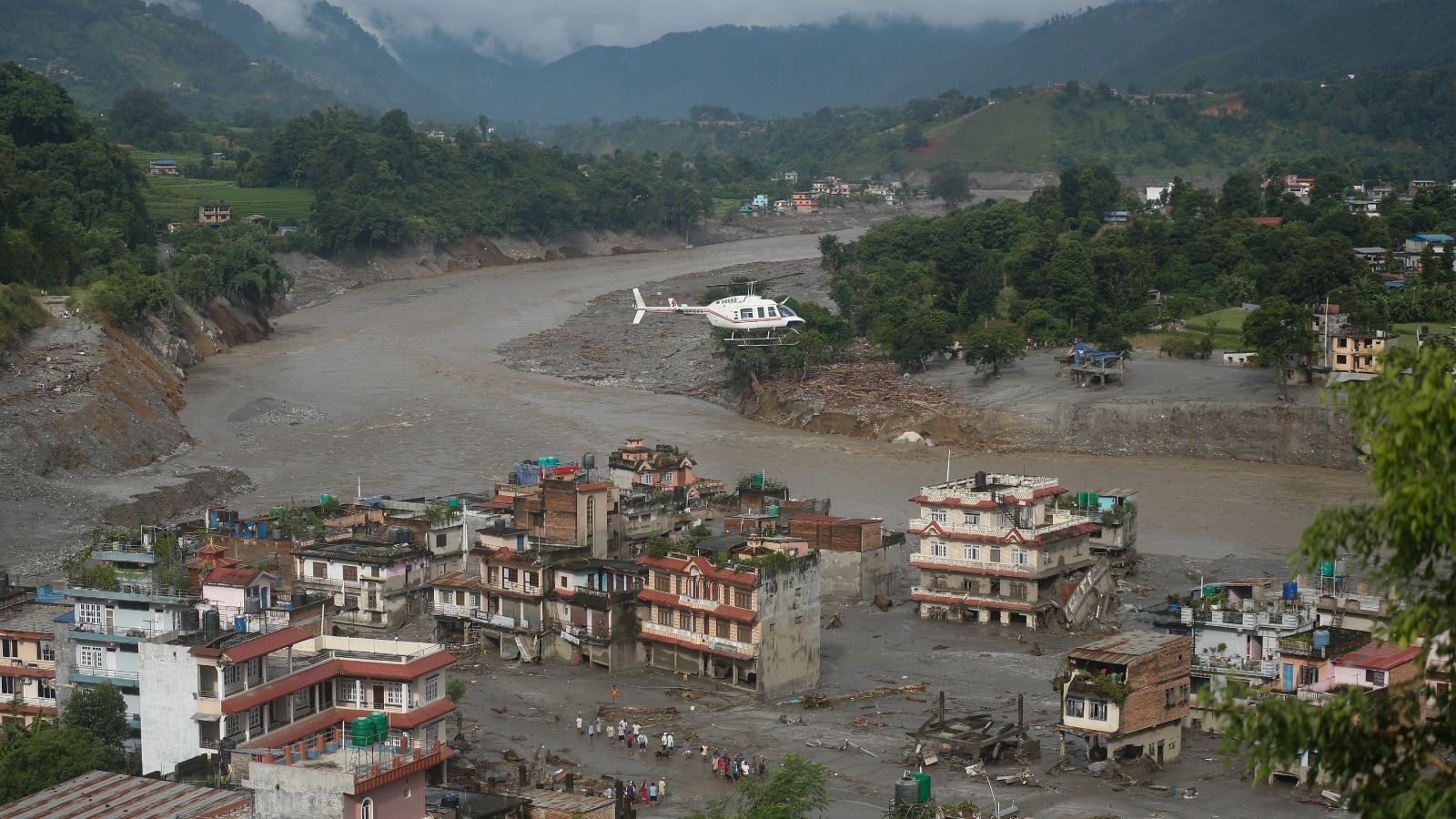
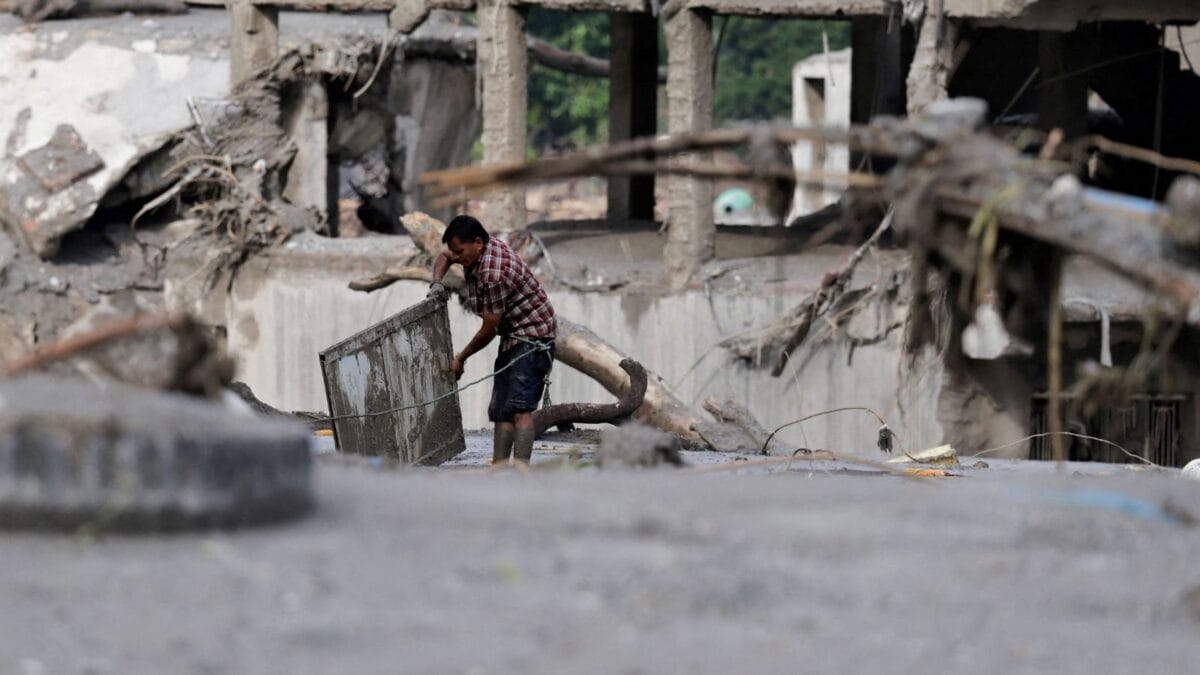
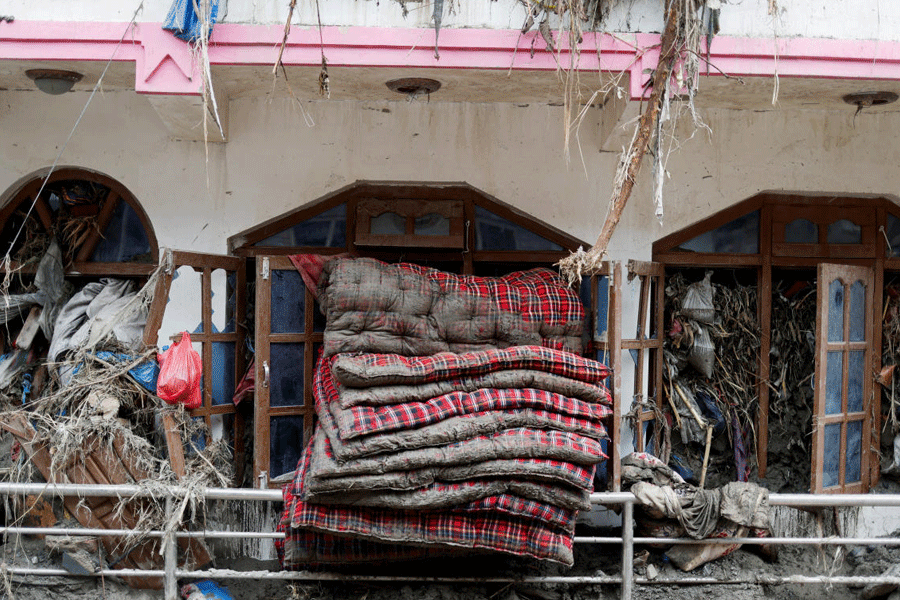
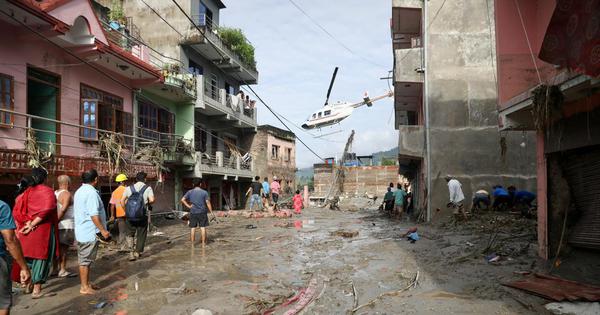
The flood destroyed villages, roads, bridges and power equipment.
More than 1,000 deaths have been reported, although different updates give different totals.
Thousands of people are still missing, including foreign visitors and hydropower workers.
Rescue teams from several countries are searching tunnels and other hard-to-reach places.
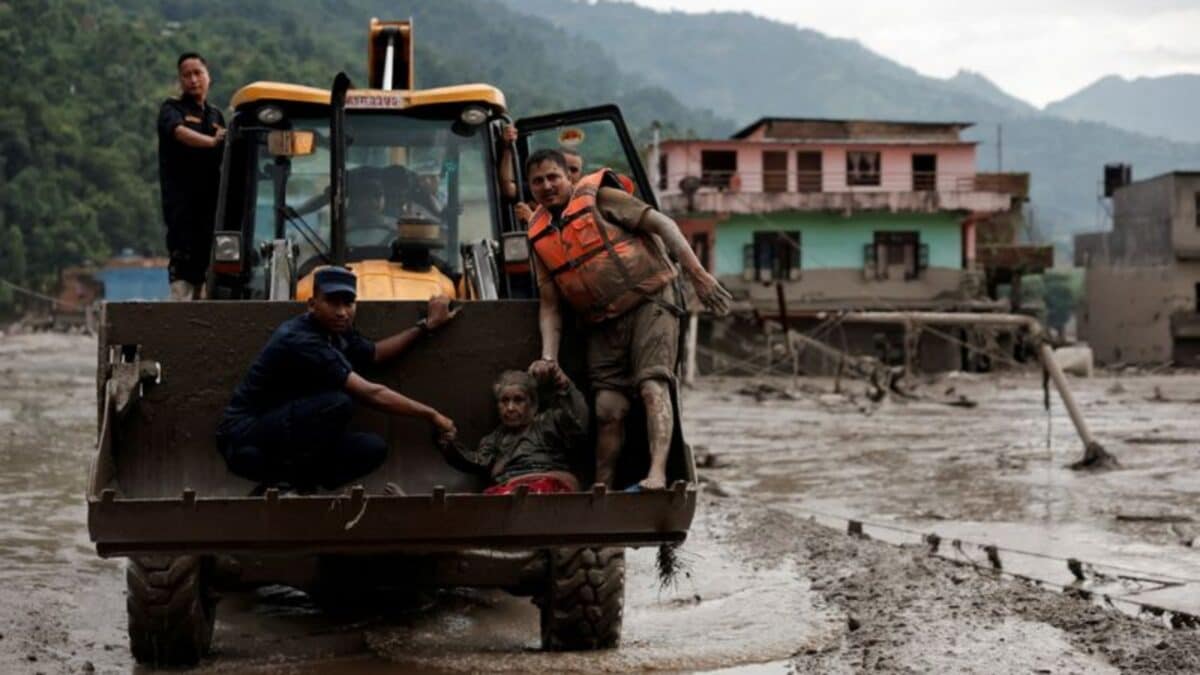
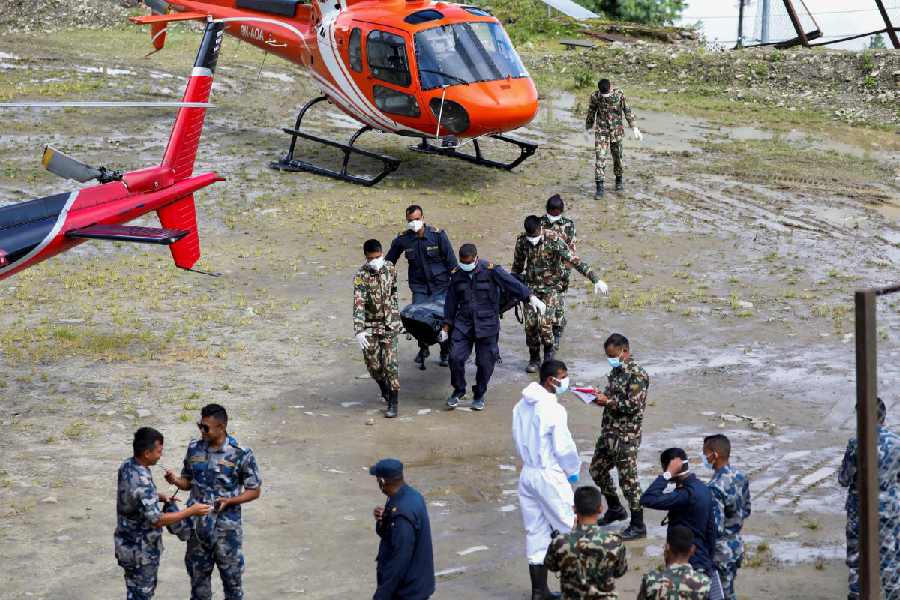
Nearly 12,000 people have been rescued using helicopters and other aircraft.
Nepal’s tourism minister says many mountain trails and tourist sites are still open.
The government wants visitors to come because tourism provides money for workers and communities.
Some districts and roads remain dangerous or closed because of flooding, landslides and monsoon conditions.

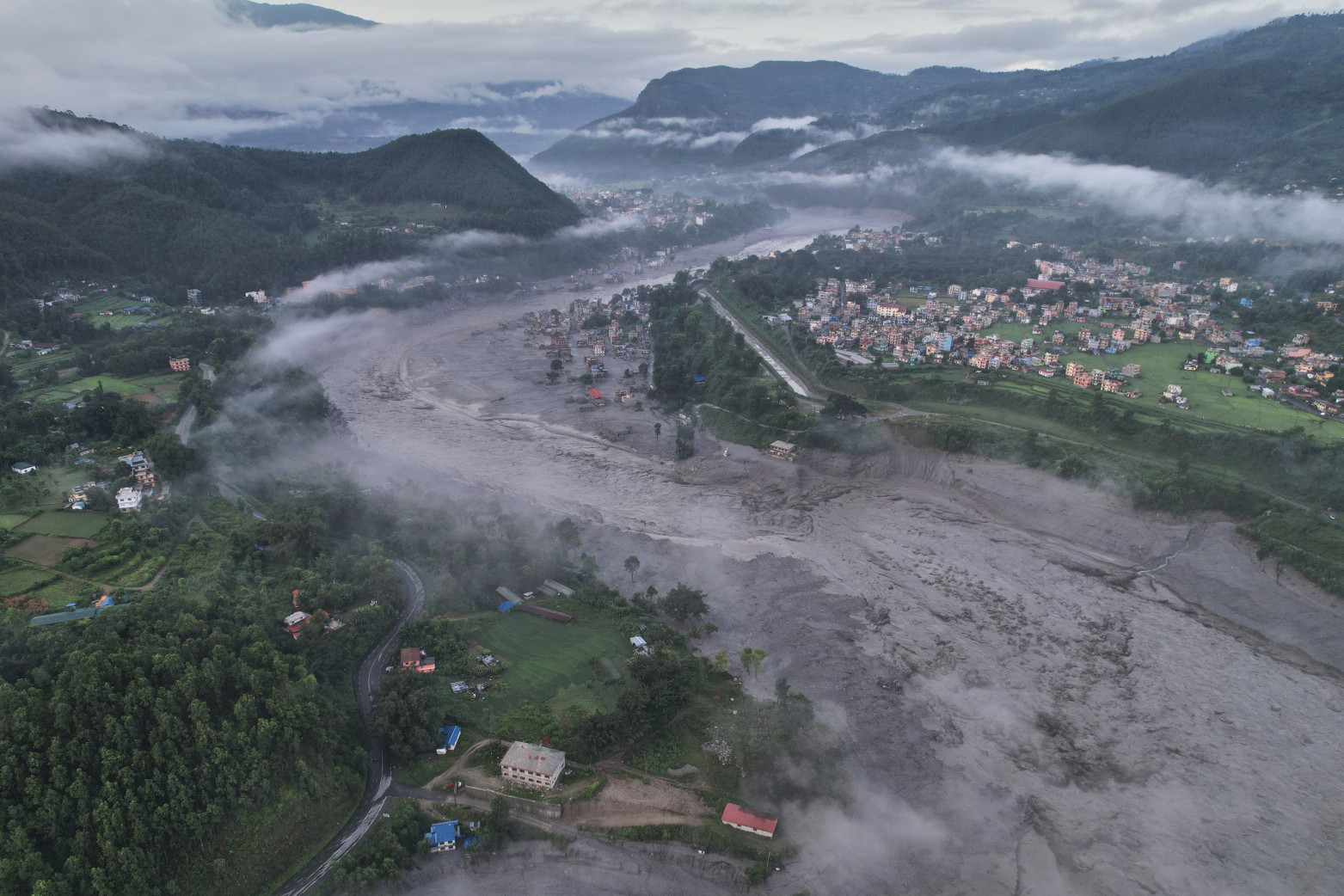
A glacial collapse on August 26 sent ice, mud, rocks and water through Nepal’s Bhote Koshi and Trishuli valleys.
Nepal’s reported death toll reached 1,010 in one Tuesday update and 1,114 by Wednesday, with thousands still unaccounted for.
Tourism Minister Khadak Raj Paudel said trekking routes remain open and urged visitors to support Nepal’s recovery.
Rescue teams from Nepal, India, China and South Korea are searching flood-hit hydropower tunnels for missing workers.
Tourism authorities say most destinations remain open, although roads in Rasuwa, Nuwakot, Dhading and Gorkha are closed or restricted.
- Who
- Nepal’s government, Tourism Minister Khadak Raj Paudel, rescue teams from Nepal, India, China and South Korea, local residents, hydropower workers and international travelers.
- What
- A glacial-collapse disaster caused catastrophic floods, deaths, disappearances and infrastructure damage, while Nepal urged tourists to continue visiting unaffected areas.
- Where
- The disaster affected Nepal’s Bhote Koshi and Trishuli valleys, including Rasuwa, Nuwakot, Dhading and Gorkha, and also affected the Tibet Autonomous Region of China.
- When
- The floods struck on August 26, 2026; casualty and rescue figures were updated on Tuesday and Wednesday, September 2, 2026.
- Why
- Nepal wants tourism revenue and international support to help sustain its economy and finance rehabilitation and reconstruction.
Tourism Can Support Recovery
Safety Requires Caution
Whether travelers should visit
Tourism Can Support Recovery
Tourism Minister Khadak Raj Paudel says Nepal’s mountain trails and trekking routes remain open and that visitors can provide important economic support during the crisis.
Safety Requires Caution
The disaster’s death toll, missing-person reports and images of destruction may deter travelers, while monsoon weather and unstable roads create continuing risks in affected areas.
How broadly Nepal is affected
Tourism Can Support Recovery
Tourism authorities say destinations and activities outside the affected river corridor are operating normally, so the entire country should not be treated as closed.
Safety Requires Caution
Floods and landslides have closed or restricted roads in Rasuwa, Nuwakot, Dhading and Gorkha, making travel through those areas unsafe or impractical.
Immediate national priority
Tourism Can Support Recovery
Hotel bookings, trekking permits, portering wages and homestay income can help workers and communities during rebuilding.
Safety Requires Caution
Rescuing missing people, reaching trapped hydropower workers and securing substantial international reconstruction assistance remain urgent priorities.
Key facts
- Reported death toll
- At least 1,010 in one Tuesday report and 1,114 in a Wednesday National Disaster Risk Reduction and Management Authority update
- People unaccounted for
- About 590 foreigners from 39 countries in one Foreign Ministry figure; other reports cite roughly 4,000 to 4,500 people unaccounted for across Nepal and the Tibet Autonomous Region of China
- Rescued
- At least 11,993 people in Nepal
- Disaster cause
- A glacial collapse sent ice, mud, rocks and river water through affected valleys
- Hydropower damage
- At least 12 hydropower projects were damaged in Nuwakot and Rasuwa; nearly 950 hydropower workers were reported unaccounted for in one update
- International response
- Teams from Nepal, India, China and South Korea are searching tunnels; India also sent an 11-member team, specialized equipment and 5.5 tonnes of medicines
- Travel conditions
- Tourist sites and activities outside the main affected corridor are described as operating normally, while several roads and districts remain closed or restricted
Quotes

Nepal’s Ministry of Foreign Affairs
Nepal’s foreign ministry
“The scale and extent of the damage caused by this disaster are becoming increasingly clear as access has improved and more details are now available. Given the magnitude of the destruction, Nepal anticipates requiring substantial international support during the rehabilitation and reconstruction phase.”
 livemint.com
 NDTV
NDTV
 deccanchronicle.com
 news18.com
“Our mountain trails and trekking routes are still waiting for you. Your coming to Nepal this time does not mean only a holiday. It's a big support to the country fighting this catastrophic tragedy of flash floods.”
livemint.com
NDTV
deccanchronicle.com
news18.com
Sources

Related news

Nepal Flood Death Toll Reaches 675 as Rescue Efforts Intensify
Nepal Flood Death Toll Reaches 675 as Thousands Remain Missing
Nepal-China Border Flood Kills 160, Hundreds Remain Missing
Nepal Flood Toll Rises as Rescue and Relief Continue
Nepal Flash Flood Toll Rises as Rescue Operations Continue

Nepal Floods Leave Hundreds Dead, Foreigners Missing
Nepal Plans New Landslide Warning System Along China Border

Nepal Thanks India as Glacial Disaster Rescue Efforts Continue
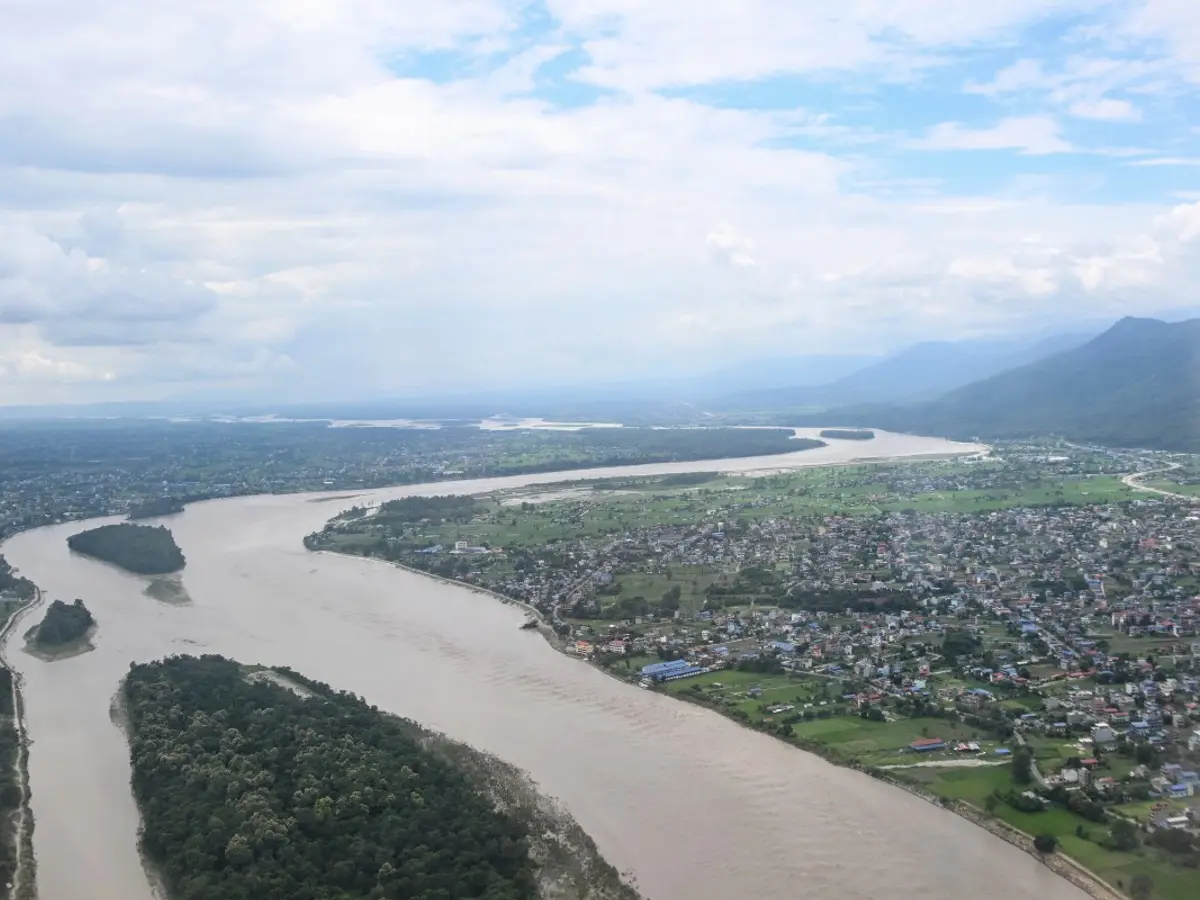
Nepal Warns of Heavy Rain After Deadly Floods
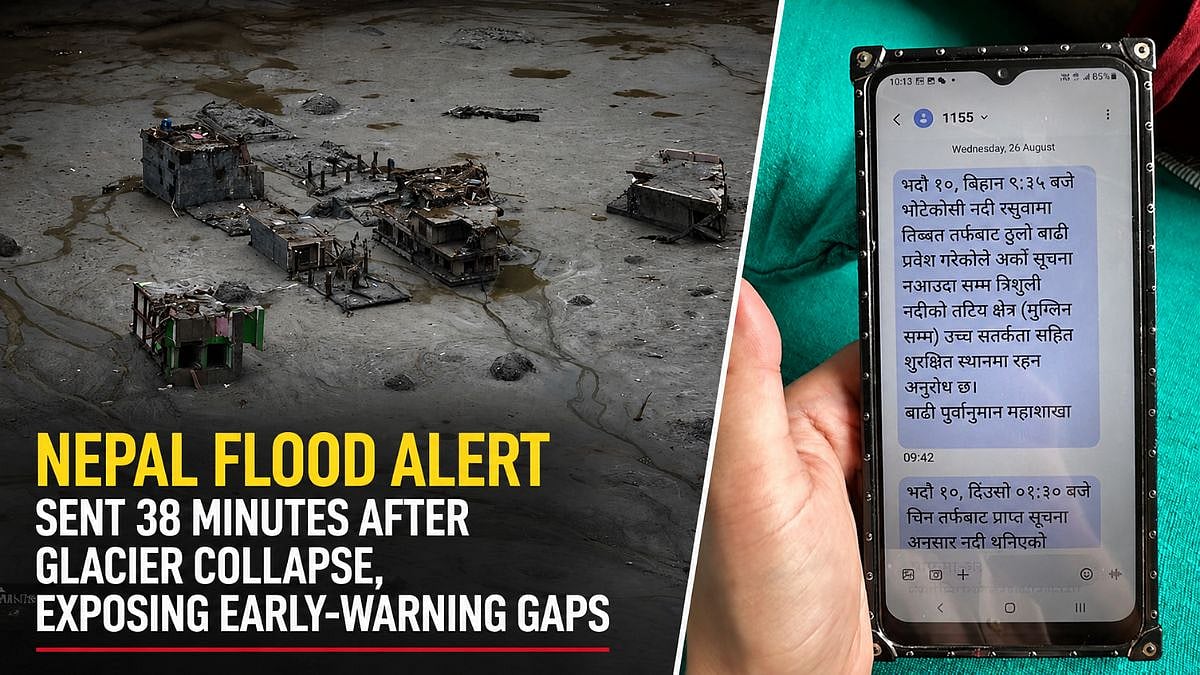
Nepal Flood Exposes Delayed Alerts and Cross-Border Warning Gaps
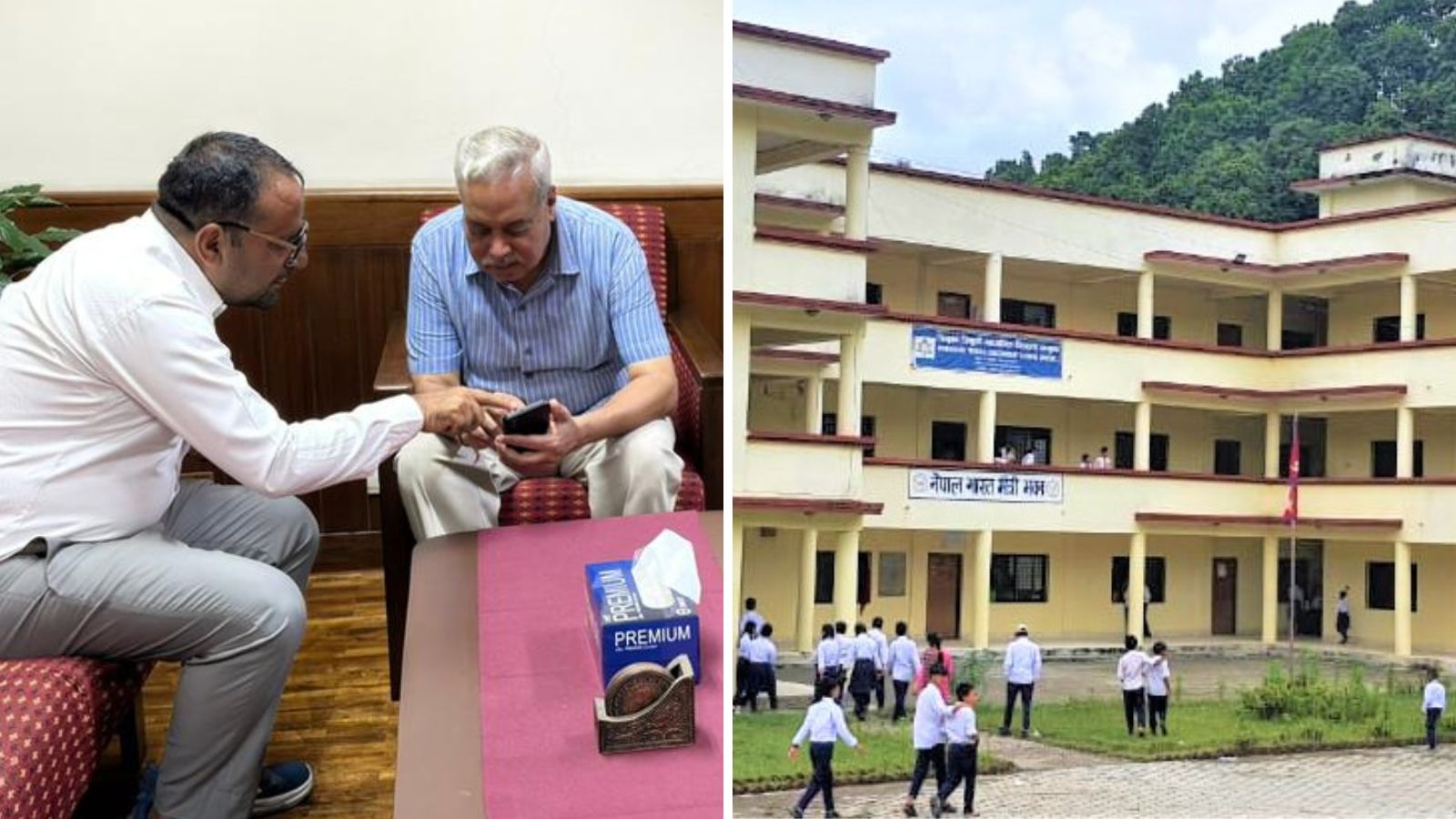
India to Rebuild Nepal School After Principal Saves 1,600