

2 weeks ago
NALSAR Controversy Follows CJI Surya Kant At TISS Mumbai

A university called NALSAR had a big disagreement with a group called the Bar Council of India.
The Bar Council told state groups not to let NALSAR students who graduate in 2026 become lawyers.
Many people thought this was unfair and said so loudly.
Because of all the criticism, the Bar Council took back its decision.
The Supreme Court, which is the highest court in India, also said the Bar Council's action was wrong.
The Chief Justice of India, Surya Kant, spoke about the situation.
He said students are allowed to protest, even if their side of the argument is not correct.
The whole dispute became a big controversy.
People talked about it a lot, and it followed the Chief Justice to TISS Mumbai.
In the end, the decision was withdrawn and students kept their right to speak up.

The Bar Council of India directed state bar councils not to enrol NALSAR's 2026 graduates as advocates.
The directive triggered widespread criticism and was subsequently withdrawn.
The Supreme Court criticised the Bar Council of India's action.
CJI Surya Kant said students had a right to protest even if their position was wrong.
The controversy escalated following the NALSAR dispute and was linked to TISS Mumbai.
- Who
- NALSAR students, the Bar Council of India, the Supreme Court, and CJI Surya Kant
- What
- The Bar Council of India directed state bar councils not to enrol NALSAR's 2026 graduates as advocates, a move that was criticised and later withdrawn
- Where
- India, with the controversy linked to TISS Mumbai
- When
- Not specified in the article
- Why
- The directive triggered widespread criticism, and the Supreme Court said students had a right to protest even if their position was wrong
Critics and Supreme Court
Bar Council of India
Enrolment of NALSAR graduates
Critics and Supreme Court
The directive to bar NALSAR's 2026 graduates from enrolment was wrong and drew widespread criticism, including from the Supreme Court.
Bar Council of India
The Bar Council of India initially directed state bar councils not to enrol the university's 2026 graduates as advocates.
Student protest rights
Critics and Supreme Court
CJI Surya Kant said students had a right to protest even if their position was wrong.
Bar Council of India
The Bar Council's original action triggered the protests, which it later withdrew in response to criticism.
Key facts
- University
- NALSAR
- Regulator
- Bar Council of India
- Action
- Directed state bar councils not to enrol 2026 graduates as advocates
- Status of directive
- Withdrawn after criticism
- Supreme Court response
- Criticised the Bar Council of India's action
- Chief Justice
- Surya Kant
- Affected graduates
- 2026 batch
- Related institution
- TISS Mumbai
Sources
Related news

CJI defends NALSAR students' protest right, slams Bar Council ban
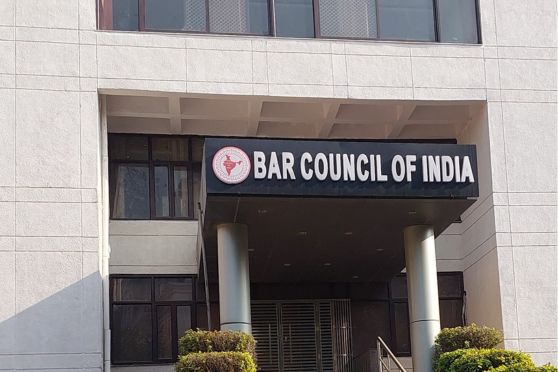
Bar Council Halts, Then Lifts NALSAR Graduate Enrolment Ban
CJI Slams Bar Council's NALSAR Enrolment Suspension As 'Uncalled For'

Bar Council lifts NALSAR 2026 enrolment freeze after uproar

BCI chief apologises to law students over NALSAR convocation row

NLSIU students demand BCI apology over revoked NALSAR enrolment order

HHRC Seeks Answers Over 20-Year Water Shortage in Faridabad
Shinde Sena Challenges Shiv Sena’s 2018 Power Shift

Supreme Court Questions BCI Chairman’s Proposed Five-Year Tenure

BJP MPs Seek National Commission for General Category Interests
PUCL Urges CJI Action Over Rajasthan High Court Allegations
