1 hr ago
Jodi Ganpati: Why Maharashtra Families Worship Two Ganesh Idols
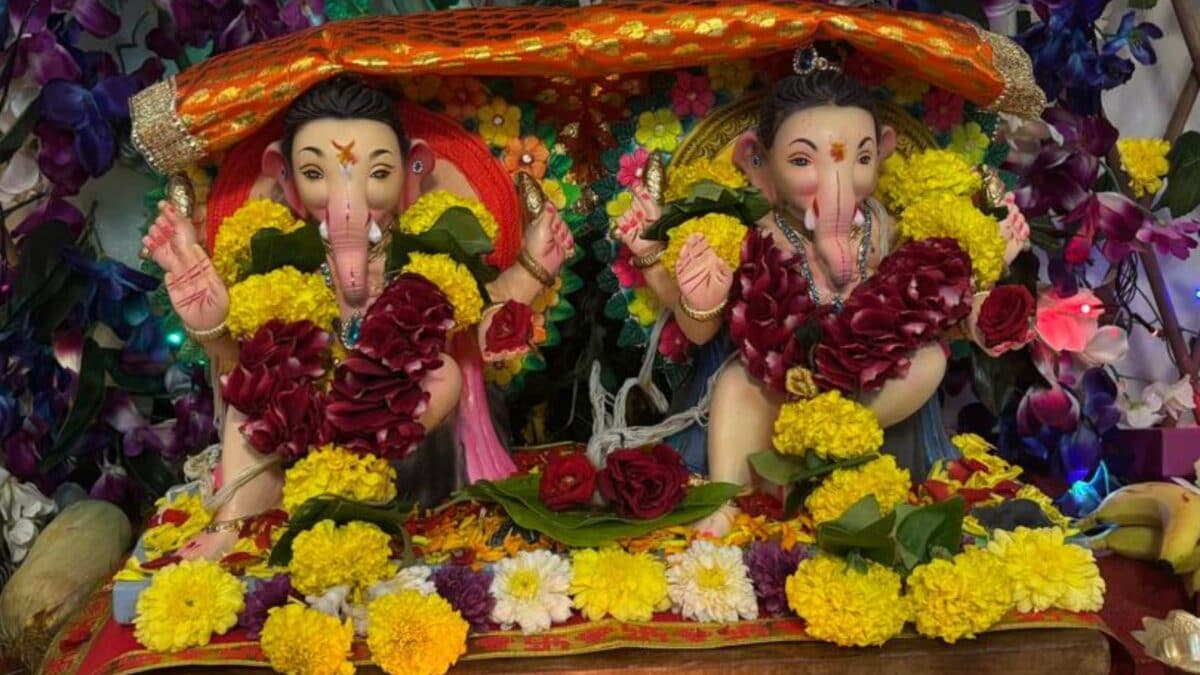
Jodi Ganpati means keeping two Ganesh idols together for worship.
Some families in Maharashtra do this during Ganesh Chaturthi.
The idols are usually placed side by side in the family’s prayer area.
Many families learned this custom by watching their parents and grandparents.
Children often continue it when they grow up.
Some families do not know exactly when the tradition started.
They keep it because it is an important family custom.
The practice can continue even when families move to a new home.
It shows how festivals can have special traditions in different households.

Jodi Ganpati refers to two Ganesh idols worshipped together during Ganesh Chaturthi.
The idols are generally placed side by side in a family’s puja area.
Some Maharashtra families have followed the practice for several generations.
Families may continue the custom even when they no longer know how or why it began.
The tradition reflects personal household practices and family continuity within Ganesh Chaturthi celebrations.
- Who
- Some families in Maharashtra who follow the Jodi Ganpati tradition.
- What
- Worshipping two Ganesh idols together during Ganesh Chaturthi.
- Where
- In families’ homes, generally in the puja area, in Maharashtra.
- When
- During Ganesh Chaturthi; the article was last updated September 15, 2026.
- Why
- Families continue the practice as a tradition passed down by parents and grandparents, even when its exact origin is unknown.
Key facts
- Meaning
- Jodi Ganpati refers to two Ganesh idols worshipped together.
- Festival
- The practice is associated with Ganesh Chaturthi.
- Placement
- The idols are generally placed side by side in the family’s puja area.
- Origin
- There is no single universally accepted origin story.
- Transmission
- The custom is commonly passed informally from parents and grandparents to children.
- Continuity
- Some families maintain the practice even after moving to another place.
- Cultural role
- The tradition represents household customs and links between generations.
Sources
Related news

Family Grows a Living Ganesh for Sustainable Chaturthi Celebrations

Govinda Joins Family for Ganesh Chaturthi Celebrations in Mumbai
Bapatla Family Preserves a 30-Year Ganesh Idol-Making Tradition
Five Iconic Ganesh Temples to Visit During Ganesh Chaturthi
Ganesh Chaturthi and Hartalika Teej Coincide on September 14, 2026
Vardhaan Puri Recalls Ganesh Chaturthi Memories With Grandfather Amrish Puri
Paritosh Tripathi Shares Glimpse of Shilpa Shetty’s Ganpati Celebration
Maharashtra CM Fadnavis Visits Mayor’s Home For Ganesh Blessings

Govinda Returns From US for Family Ganpati Celebration