1 hr ago
IISc Team Builds AI Tools for Cancer Screening and Healthcare
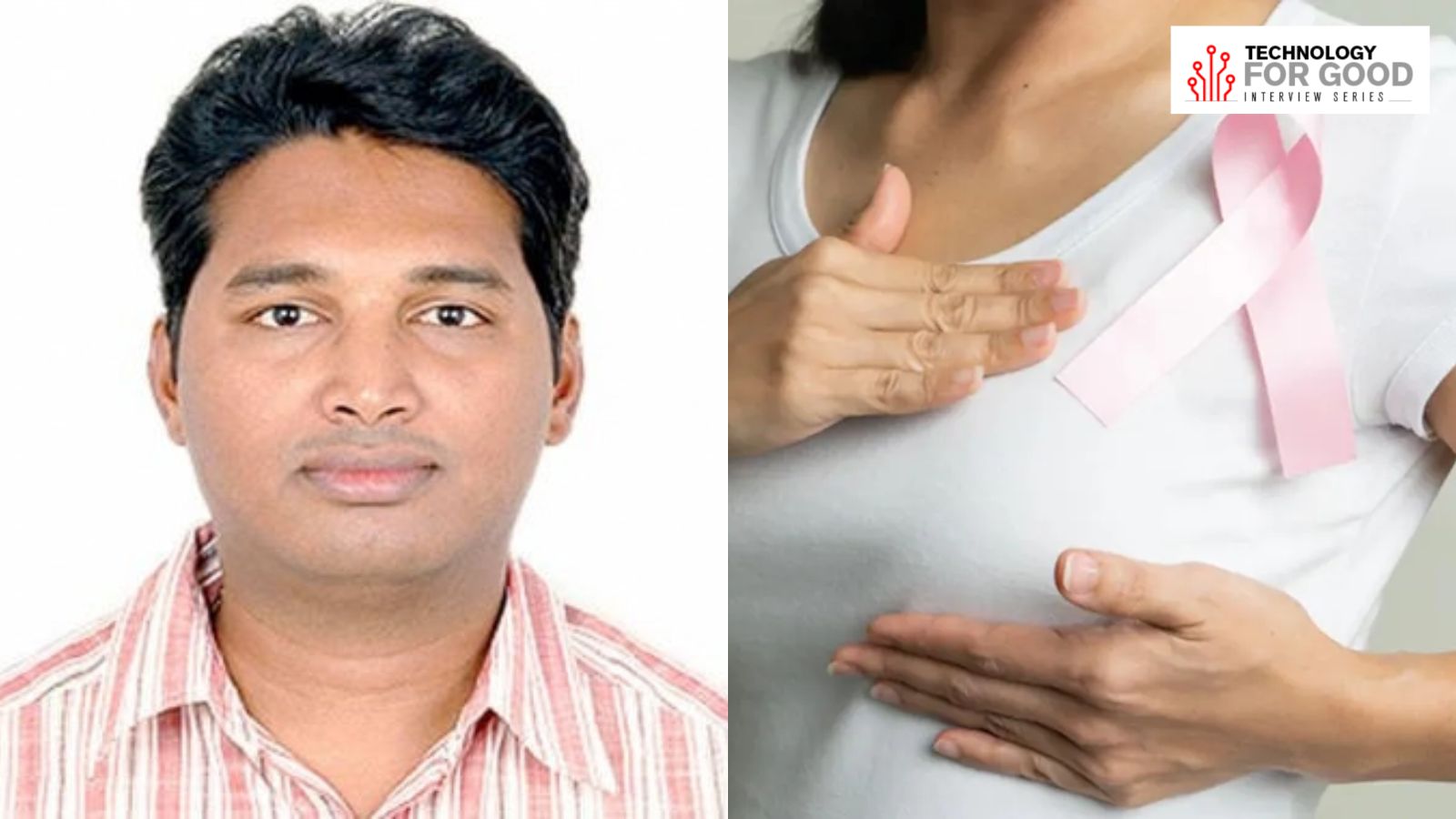
A team at IISc is building computer tools to help health workers find health problems earlier.
One phone app looks at pictures of mouth lesions that could become cancer.
Another tool asks women questions to estimate whether they may need a mammogram.
The team says its mouth-screening app has been used with more than 70,000 people.
It is also working on tools for other health conditions, including diabetes and brain problems.
Its brain project is designed around Indian health needs and medical data.
The team is also building platforms to test and share healthcare AI tools.
These tools are meant to help health workers, especially in places with fewer medical resources.

IISc’s TANUH develops AI tools for early detection and management of non-communicable diseases, designed for frontline health workers.
Its Aarogya Aarohan app screens oral lesions for possible precancer; the team says it has screened more than 70,000 patients.
A breast-cancer risk tool uses an adaptive, 10-question questionnaire to identify people who may need mammograms.
TANUH is developing additional tools for retinal and vascular disease screening, gestational diabetes prediction, mental-health assessment, and kidney-care support.
Its IndiNeuroFM, BODH, and SAMVIT initiatives aim to support India-specific neurological AI, evaluation of models on Indian data, and wider deployment of health tools.
- Who
- The Translational AI for Networked Universal Healthcare (TANUH) team at the Indian Institute of Science, led by Professor Phaneendra K. Yalavarthy.
- What
- Developing AI-based screening, decision-support, and health-system platforms, including tools for oral and breast cancer.
- Where
- At IISc in Bengaluru, with work and partnerships across India.
- When
- The article does not specify a date for the projects or interview.
- Why
- To support earlier detection, prevention, and management of non-communicable diseases, and address gaps in healthcare resources and India-specific data.
Benefits and rationale
Limitations and safeguards
Breast-cancer risk prediction
Benefits and rationale
TANUH says its India-specific questionnaire can identify higher-risk women and help direct them to mammography, which is limited in availability.
Limitations and safeguards
The tool is not a diagnosis: the team reports a positive predictive value of about 60–65% and says mammograms can confirm whether a high-risk referral is warranted.
AI support for neurological care
Benefits and rationale
TANUH says India-specific models could help clinicians in areas with few neuroradiologists by flagging findings such as a skull fracture or possible brain bleed.
Limitations and safeguards
The team describes the models as providing findings rather than diagnoses; treating physicians make diagnoses and treatment decisions.
Key facts
- Organisation
- TANUH is a non-profit AI Centre of Excellence in healthcare at IISc.
- Oral screening
- Aarogya Aarohan uses mobile-phone images of lesions; the team says it has screened more than 70,000 patients.
- Breast risk tool
- An adaptive questionnaire asks up to 10 questions to stratify breast-cancer risk.
- Breast tool performance
- Phaneendra says it is about 83% accurate compared with mammograms; its negative predictive value is about 97%, while its positive predictive value is about 60–65%.
- Clinical partners
- The team says it works with around 50 clinical partners and hospitals; it also cites 60 large partners across its broader network.
- IndiNeuroFM data
- The team says it has collected data from more than 20,000 patients and plans to collect data from 60,000.
- Platforms
- BODH supports confidential evaluation of models on Indian healthcare datasets; SAMVIT provides infrastructure for deploying and scaling AI screening programmes.
Quotes
Prof Phaneendra K Yalavarthy
IISc professor and Chief Project Manager of TANUH
“We use a mobile phone app to take pictures of the lesion to identify whether it is pre-cancerous. This AI-based solution has won many awards, and we have screened more than 70,000 patients.”
 indianexpress.com
Sources
Related news

Pune Health-Tech Firm Showcases Cervical Cancer AI at BRICS Exposition

Forus Health, Eyebetes Pilot AI Diabetes Screening at Ganpati Celebrations
Odisha Startup Plans Sovereign Multilingual AI for Bharat
Telangana Plans Health Innovation Hub Through Technology Collaboration

India Showcases 37 Deep-Tech Innovations at BRICS 2026

Free AI Helps Indian Farmers Detect Crop Diseases Early
IISc Leads Indian Institutions in 2026 Global Scientists List

Banks Prepare for Quantum Computing’s Future Encryption Threat
Mahesh Kakde Becomes Fifth Indian to Win Ramanujan Prize

Karnataka Plans Revival of 500 Lakes, but Health Requires More