

4 days ago
Guru Rattiah Revives Kuchipudi’s Nearly Lost Theatrical Tradition
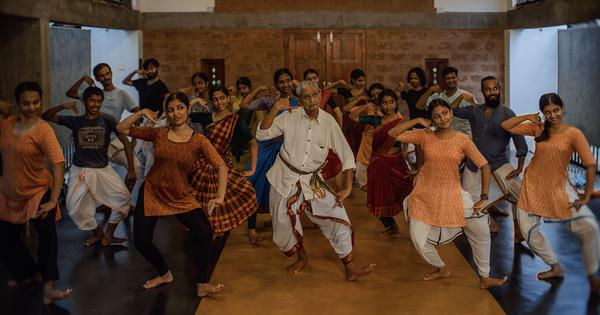
Kuchipudi was once a kind of musical play performed by groups of dancers.
The performers had to dance, sing, recite poetry and act as characters.
Today, much Kuchipudi is performed as solo dance pieces.
Guru Rattiah thinks some of the older theatre traditions are being forgotten.
He teaches these demanding skills to students at his home in Kuchipudi village.
His student Sreelakshmy Goverdhanan brings young dancers to learn from him.
Together, they are performing stories with songs, dialogue and acting.
Their goal is to help keep the older form of Kuchipudi alive.

At 85, Pasumarthi Rattiah Sarma is preserving the older Yakshagana form of Kuchipudi.
The traditional style combines dance with singing, poetry, dialogue, music and character acting.
Kuchipudi has largely shifted from ensemble dance dramas to solo performances.
Rattiah teaches the old style at his home and school in Kuchipudi village.
His senior disciple Sreelakshmy Goverdhanan is training young dancers and staging full Kuchipudi dramas.
- Who
- Pasumarthi Rattiah Sarma, his senior disciple Sreelakshmy Goverdhanan and younger Kuchipudi students.
- What
- Rattiah is teaching and helping revive the older Yakshagana, or theatrical, form of Kuchipudi.
- Where
- Kuchipudi village in Andhra Pradesh, with related training and performances in Kerala.
- When
- Rattiah received the Sangeet Natak Akademi fellowship this month; the revival effort has developed over the past 16 years.
- Why
- The older ensemble tradition has declined as Kuchipudi has become more urbanized and primarily solo, leaving its theatrical and musical elements at risk of being lost.
Traditional Theatrical Kuchipudi
Modern Solo Kuchipudi
Performance format
Traditional Theatrical Kuchipudi
Supporters of the older form value ensemble dance dramas in which performers sing, act, recite poetry and deliver dialogue.
Modern Solo Kuchipudi
The contemporary form is more commonly presented through solo dance items, including daruvus excerpted from older plays.
Cultural change
Traditional Theatrical Kuchipudi
Rattiah argues that spectacle without rigorous training can weaken Kuchipudi’s theatricality, musicality and character work.
Modern Solo Kuchipudi
The shift made Kuchipudi more accessible, urban and democratic by crossing earlier gender and caste barriers and reaching wider audiences.
Preserving the tradition
Traditional Theatrical Kuchipudi
Rattiah and his students believe young dancers must learn the older repertoire and skills directly from surviving masters.
Modern Solo Kuchipudi
Modern Kuchipudi schools and metropolitan performers have created a widely taught solo grammar and syllabus that helped establish the form nationally as classical.
Key facts
- Guru
- Pasumarthi Rattiah Sarma, widely known as Master Rattiah, is 85.
- Recognition
- He was awarded a fellowship of the Sangeet Natak Akademi.
- Traditional form
- Kuchipudi Yakshagana combines theatre, dance, music and poetics.
- Older repertoire
- Major works include Bhamakalapam, Usha Parinayam and Prahalada Natakam.
- Current teaching
- Rattiah teaches a small group of students at his home and school in Kuchipudi village.
- Senior disciple
- Kerala-based dancer Sreelakshmy Goverdhanan has studied the old style with Rattiah for 16 years.
- Recent performance
- Sreelakshmy’s troupe presented a two-hour version of Usha Parinayam with Rattiah as sutradhar last December.
Quotes
Pasumarthi Rattiah Sarma
Eighty-five-year-old Kuchipudi Yakshagana guru and teacher.
“Kuchipudi is like a garland strung with many gems. You need it all – a grasp of abhinaya sangeetam (theatre music), Carnatic music, Telugu and Sanskrit sahityam (literature) and kavitvam (poetics). If you can’t sing, recite poetry and deliver lines, you cannot dance.”
 scroll.in
“I want controlled energy like a spring, not force. The face and body should at all times show lalityam (grace), no matter how much effort you put in. Remember that the landscape of Kuchipudi dance is never flat.”
scroll.in
Sources
Related news

KrishnAnjali Kuchipudi Performance Marks ISKCON Abids Golden Jubilee

Kuchipudi exponent Veena Murthy Vijay gets Sangeet Natak Akademi Award

Amrutha Mutyala presents Bharatanatyam Arangetram at Ravindra Bharati
Bohurupee Revives Kinu Kaharer Thetar in Centennial Tribute
