1 week ago
How Colonial India Built a Self-Reliant Scientific Culture
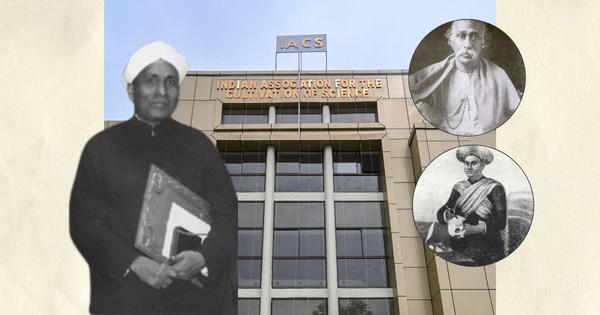
In colonial India, science was not easy for Indians to study or pursue as a career.
Dr. Mahendralal Sircar wanted Indians to have their own place for learning and doing experiments.
He helped create the Indian Association for the Cultivation of Science in 1876.
Newspapers and writers also explained scientific ideas to ordinary Bengali readers.
Years later, C.V. Raman used the association’s laboratory after finishing his daily accounting work.
His experiments showed how light changes when it passes through a liquid.
This discovery became known as the Raman Effect and won him the Nobel Prize in 1930.
The association eventually grew into a modern research university.

Mahendralal Sircar founded the Indian Association for the Cultivation of Science in Calcutta on July 29, 1876.
The institution aimed to make scientific education and research accessible to Indians under local management.
Bengali journals and writers, including Akshay Kumar Dutt and Bankim Chandra Chattopadhyay, helped popularise scientific ideas.
C.V. Raman conducted experiments at the association while working as an accountant and later discovered the Raman Effect.
Raman’s work won the 1930 Nobel Prize, while the institution later developed into a deemed university with more than 400 research students.
- Who
- Mahendralal Sircar, C.V. Raman, and other Indian scientists, educators, writers, and supporters of science.
- What
- The article describes the creation and development of an indigenous scientific culture in colonial India, centered on the Indian Association for the Cultivation of Science.
- Where
- Calcutta, then colonial India, especially the Indian Association for the Cultivation of Science at 210 Bowbazar Street.
- When
- The association was founded on July 29, 1876; Raman began working there in 1907 and won the Nobel Prize in 1930.
- Why
- Its founders wanted Indians to access scientific education, conduct research, and manage a scientific institution independently of the colonial government.
Key facts
- Institution founded
- Indian Association for the Cultivation of Science, established July 29, 1876
- Founder
- Dr. Mahendralal Sircar
- Original location
- 210 Bowbazar Street, Calcutta
- Raman’s employment
- He worked in the Indian Finance Service while conducting experiments after work
- Major discovery
- The Raman Effect, involving changes in light’s wavelength when scattered by liquid molecules
- Nobel Prize
- C.V. Raman received the 1930 Nobel Prize in Science and was described as the first person from Asia to win the award
- Current institution
- The association has grown into a deemed university in Jadavpur with more than 400 research students and 67 faculty members
Quotes

Mahendralal Sircar
Indian physician and founder of the Indian Association for the Cultivation of Science
“We want an institution where lectures in scientific subjects will be systematically delivered and not only illustrative experiments performed by the lecturers, but the audience should be invited and taught to perform themselves. And we wish that this institution be entirely under native management and control.”
 scroll.in
“The present times are vibrant and filled with enormous possibilities. It puts the new generation in a unique position to invent and innovate.”
scroll.in
Banwarilal Chaudhury
Writer who commemorated Mahendralal Sircar in New India
“It is no exaggeration to say that he was the father of whatever scientific spirit we find in New India. Here was a Caesar. When comes such another?”
scroll.in
Sources
Related news
IIT Kharagpur Director Calls for Inclusive Innovation at Ray Lecture

Prafulla Chandra Ray Linked Science to Industrial Independence

How DD Kosambi envisioned higher science education in India
Can Indian Knowledge Systems Be Defended From Pseudoscience?