1 week ago
Mirza Fakhrul Islam Alamgir Sworn In as Bangladesh President
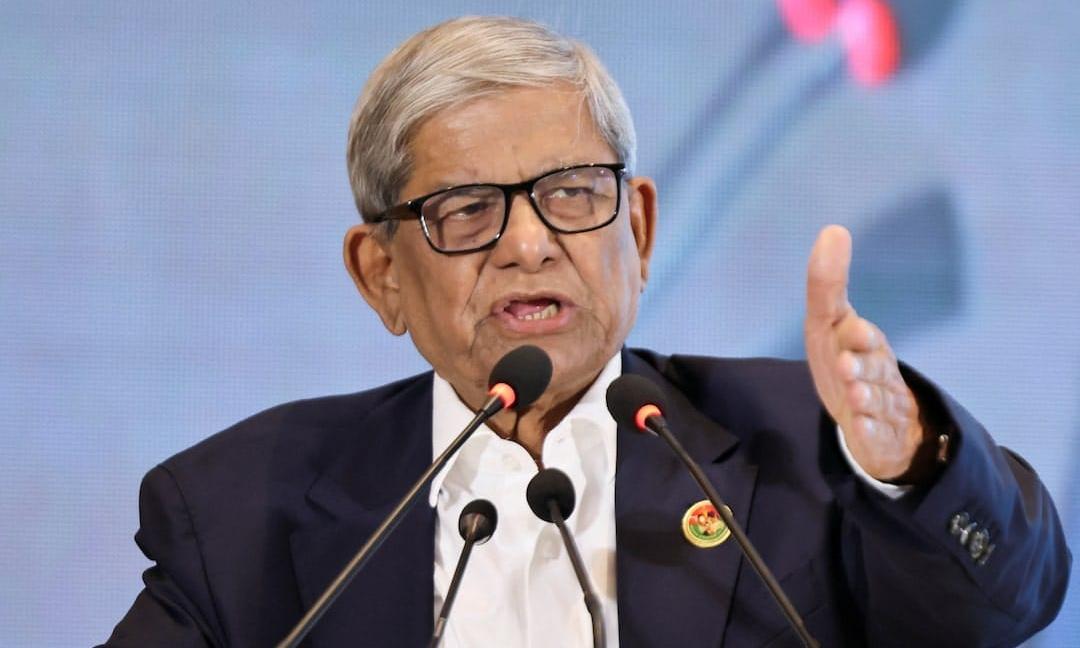
Mirza Fakhrul Islam Alamgir is now the president of Bangladesh.
He took his oath at a ceremony in Dhaka on Friday.
He won a parliamentary election against Oli Ahmed.
This was Bangladesh’s first contested presidential election in 35 years.
The previous president, Mohammed Shahabuddin, resigned because of health problems.
Alamgir then swore in five people for cabinet positions.
Bangladesh’s president usually has a mostly ceremonial job.
Analysts said the role could become more powerful during caretaker governments that organize elections.

Mirza Fakhrul Islam Alamgir was sworn in as Bangladesh’s 23rd president on Friday.
He defeated Colonel (retd) Oli Ahmed by 255 votes to 88 in the country’s first contested presidential election since 1991.
Acting Speaker Kayser Kamal administered the oath at Bangabhaban in Dhaka.
Alamgir later administered oaths to five ministers or state ministers, expanding the cabinet to 55 members.
The presidency is generally ceremonial, although analysts said its importance could increase under Bangladesh’s recently reintroduced caretaker election system.
- Who
- Mirza Fakhrul Islam Alamgir became president after defeating Colonel (retd) Oli Ahmed; Acting Speaker Kayser Kamal administered the oath.
- What
- Alamgir was sworn in as Bangladesh’s 23rd president and later administered oaths to five cabinet members.
- Where
- The ceremony was held at the Darbar Hall of Bangabhaban in Dhaka.
- When
- The oath ceremony took place on Friday, after the presidential election on Thursday.
- Why
- The election was required after former president Mohammed Shahabuddin resigned on health grounds before completing his five-year term.
Greater Presidential Role
Primarily Ceremonial Role
Future importance of the presidency
Greater Presidential Role
Political analysts said the presidency could become more significant under the recently reintroduced caretaker government system, particularly in commanding the armed forces during that period.
Primarily Ceremonial Role
Under Bangladesh’s parliamentary system, the president is largely ceremonial, and powers such as command of the armed forces are generally exercised on the prime minister’s advice.
BNP’s constitutional plans
Greater Presidential Role
Analysts said Alamgir’s election could reflect a calculated Bangladesh Nationalist Party move because the party promised in its manifesto to give the president more power through constitutional amendments.
Primarily Ceremonial Role
No constitutional amendment had been made in the reported events, so the presidency’s existing, largely ceremonial role remained in place.
Key facts
- President
- Mirza Fakhrul Islam Alamgir
- Presidential election result
- Alamgir received 255 votes; Oli Ahmed received 88.
- Election significance
- It was Bangladesh’s first contested presidential election since 1991.
- Oath venue
- Darbar Hall, Bangabhaban, Dhaka
- Cabinet size
- The cabinet now has 55 members, including the prime minister.
- Former president
- Mohammed Shahabuddin resigned last month on health grounds.
- Presidential system
- The president is generally a ceremonial head of state, with key constitutional powers exercised largely on the prime minister’s advice.
Sources
Related news

Mirza Fakhrul Islam Alamgir Sworn In as Bangladesh President
Bangladesh Parliament Elects BNP Veteran Alamgir as President

Bangladesh Holds First Contested Presidential Poll in 35 Years
Bangladesh's ruling BNP nominates Mirza Fakhrul as presidential candidate
Mirza Fakhrul Takes Bangladesh Presidency Into Democratic Test
Mirza Fakhrul Islam Alamgir’s Five-Decade Journey to Bangladesh Presidency
Bangladesh Recall Shanto, Mahmud for Asian Games T20 Squad

Sharma and Malik share halfway lead at Telangana Golconda Masters
India Replaces Sri Lanka as 2027 Women’s Champions Trophy Host
Centre Assures JDU Bihar’s Interests In Farakka Treaty Decision

India’s Record Wheat Harvest Opens $1.5 Billion Export Window