

2 hrs ago
How Sandeep Tandon Built Quant’s High-Churn Investment Machine
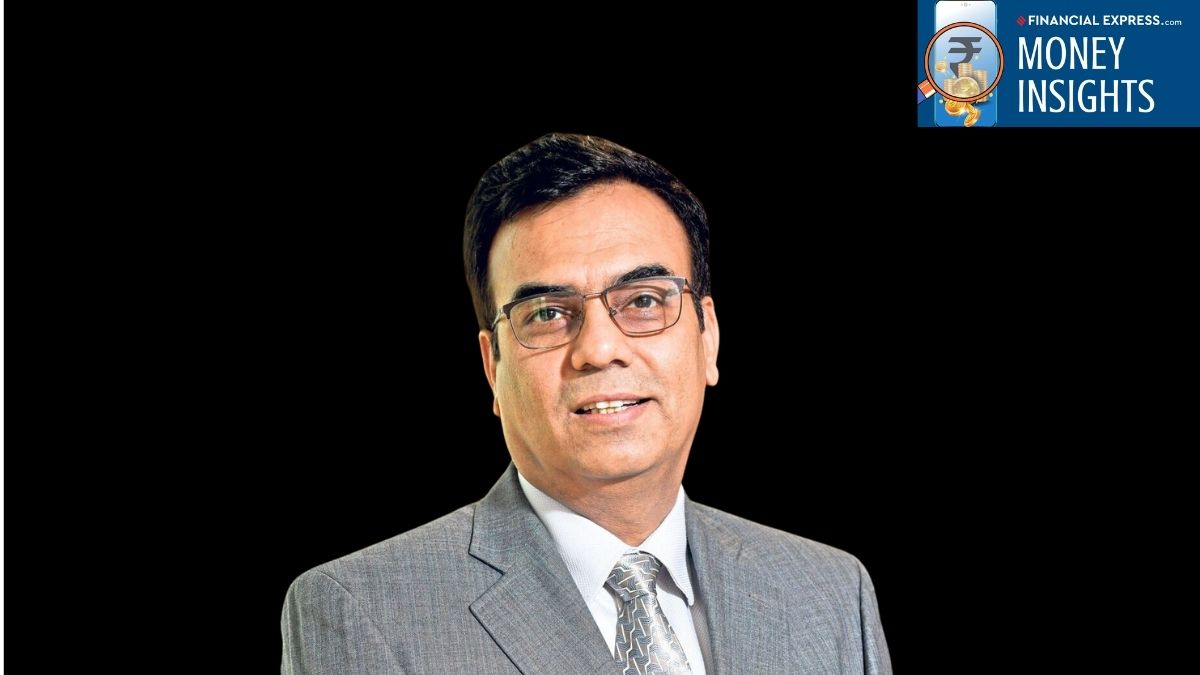
Sandeep Tandon started as a journalist before joining the finance industry in 1992.
He later built Quant Mutual Fund after acquiring a smaller fund house.
His investing method uses data, market psychology and the movement of money to make decisions.
Quant often buys and sells investments more actively than traditional funds.
This can help the funds respond quickly when market conditions change.
Several Quant funds have delivered returns above their category averages over the periods shown.
However, the funds can also move up and down more sharply than many similar funds.
The article says investors should check whether these risks fit their goals and diversify across fund houses.
Past performance does not guarantee future returns.

Sandeep Tandon moved from journalism into finance in 1992 and later acquired and rebranded Escorts Mutual Fund as Quant Mutual Fund.
His VLRT framework combines data analysis, market psychology, money-flow tracking and active portfolio management.
Quant’s assets have grown from about Rs 235 crore in 2018 to more than Rs 1 lakh crore, according to the article.
Several Quant equity schemes have outperformed category medians and benchmarks, although many also carry higher volatility.
Quant continues to attract inflows despite a June 2024 front-running case that had no final penal order at the time described.
- Who
- Sandeep Tandon and Quant Mutual Fund.
- What
- The article examines Tandon’s career, data-driven investment framework, Quant’s growth, performance and risks.
- Where
- India’s mutual-fund and capital markets.
- When
- Tandon entered mainstream finance in 1992; the performance data is reported as of 1 September 2026, with risk data as of 31 August 2026.
- Why
- Tandon used an active, data-led investment process to identify market trends, manage portfolios and pursue returns.
Active, Data-Driven Investing
Conventional Risk Awareness
Portfolio turnover
Active, Data-Driven Investing
Frequent buying and selling allows Quant to respond to liquidity changes, market momentum and sector turnarounds.
Conventional Risk Awareness
High turnover can increase portfolio volatility and may be uncomfortable for investors accustomed to buy-and-hold strategies.
Returns versus risk
Active, Data-Driven Investing
The article says several Quant schemes outperformed category medians and benchmarks, with some showing stronger risk-adjusted measures.
Conventional Risk Awareness
Many schemes also showed higher standard deviation than their category medians or benchmarks, so stronger returns came with greater risk.
Future performance
Active, Data-Driven Investing
Supporters of the approach may point to its historical results and continued investor inflows as evidence that the process is working.
Conventional Risk Awareness
The article cautions that future results depend on market structure, the framework’s adaptability and the performance of individual holdings; past returns are not guaranteed.
Key facts
- Founder and CIO
- Sandeep Tandon
- Investment framework
- VLRT, combining data, money flows, market psychology and market cycles
- Reported asset growth
- Quant Mutual Fund’s assets rose from about Rs 235 crore in 2018 to more than Rs 1 lakh crore
- Reported front-running case
- A June 2024 case was ongoing without a final penal order at the time described
- Quant Small Cap Fund
- The article reports an AUM of Rs 34,069 crore in its performance table and says the fund represents roughly one-third of the AMC’s assets
- Selected performance
- Quant Small Cap Fund recorded 17.6% and 20.6% CAGRs over three and five years, respectively, as of 1 September 2026
- Risk profile
- Quant Value Fund had 21.5% standard deviation, compared with a 15.1% category median
- Investment warning
- The article says investors should match fund risk with their goals and diversify across fund houses
Sources
Related news

Sunil Singhania’s Abakkus Funds Show Early Wealth-Creation Promise

Quant Small Cap Leads Ten-Year SIP Equity Fund Returns

Old Bridge Focused Fund Outperforms Through Value, Cash, and Discipline

Only Six Flexi-Cap Funds Score Sortino Ratio Above 1

Nippon Small Cap Fund outperforms despite enormous Rs 78,000-crore size
