1 day ago
Netflix Revives Stanford Prison Experiment Amid Lasting Scientific Debate
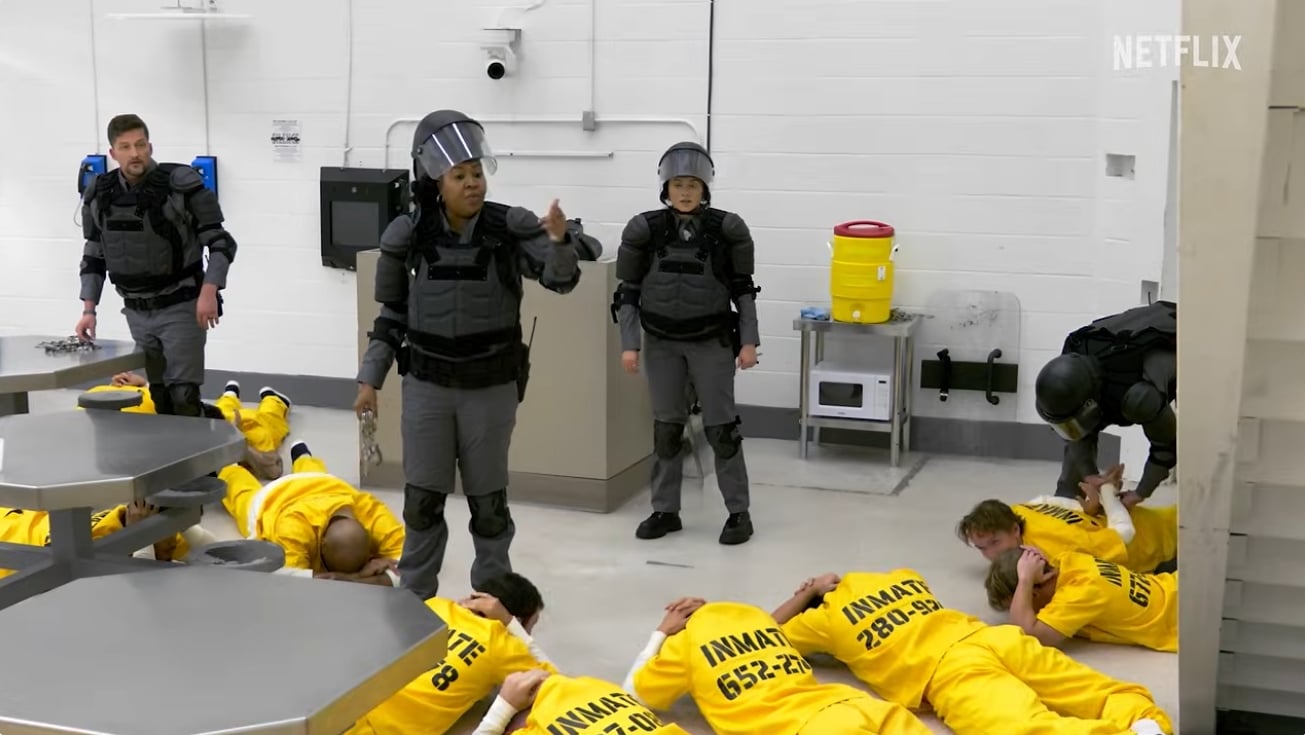
In 1971, researchers placed college students in a pretend prison and gave some the job of guards and others the job of prisoners.
The study was supposed to examine how power and rules affect people.
It ended after six days because some prisoners became very upset and some guards acted cruelly.
The researchers said the situation and assigned roles had changed the participants’ behavior.
Later researchers questioned whether the guards were encouraged to behave harshly.
Another study in 2002 did not produce the same result, because its guards did not become tyrants and its prisoners challenged them.
Netflix has now created a new six-part series based on the idea.
The new participants will be placed in a real prison, which has led to criticism about safety and entertainment.
The creators say participants will be screened, supported by psychologists, and allowed to leave.

Netflix’s six-part series, The New Stanford Prison Experiment, premieres on October 21 with 30 participants assigned as guards or prisoners in a real prison.
Philip Zimbardo’s original 1971 study involved 24 Stanford students and ended after six days following rebellion, abuse, and participants’ psychological distress.
The original findings were widely interpreted as showing that institutional roles and power could drive ordinary people toward abusive behavior.
Later researchers, including Thibault Le Texier, questioned whether researchers encouraged guards to act harshly and whether the study’s conclusions were overstated.
The Netflix project says it includes psychological screening, psychologists, and a withdrawal mechanism, but critics fear it blurs entertainment and scientific research.
- Who
- Netflix, the creators and participants of The New Stanford Prison Experiment, and the legacy of psychologist Philip Zimbardo’s 1971 study.
- What
- Netflix is releasing a six-part unscripted series revisiting the Stanford prison experiment and the debate over how power and social roles affect behavior.
- Where
- The original study took place at Stanford University; the Netflix participants will be placed in a working prison; the 2002 BBC study used a mock prison in Elstree, Hertfordshire, England.
- When
- The original experiment ran from August 15 to 20, 1971; the Netflix series is scheduled to premiere on October 21; the BBC Prison Study took place in 2002.
- Why
- The series aims to examine how authority, powerlessness, and assigned social roles influence behavior, while revisiting disputed conclusions from the original study.
Critics and Researchers
Series Creators and Supporters
Scientific validity
Critics and Researchers
Critics and later researchers question whether the original guards’ behavior was spontaneous, saying researchers may have encouraged hostility and influenced the results.
Series Creators and Supporters
The original study was widely presented as evidence that institutional roles and situations can strongly affect human behavior.
Ethics and researcher involvement
Critics and Researchers
Critics argue that Philip Zimbardo became emotionally involved in his prison-superintendent role and did not stop the experiment quickly enough.
Series Creators and Supporters
The Netflix creators say the new project includes psychological screening, access to psychologists, and a mechanism for participants to leave.
Using a real prison
Critics and Researchers
Critics, including former participant Clay Ramsay, fear the series could blur the boundary between entertainment and science and have called the revival unethical.
Series Creators and Supporters
Executive producer Jane Lipsitz says a real prison provides a history and sense of confinement that cannot be recreated on a set.
What roles do to people
Critics and Researchers
The BBC Prison Study found that guards did not automatically become tyrants and that prisoners organised and challenged them, questioning automatic role conformity.
Series Creators and Supporters
The Stanford study’s interpretation held that authority and institutional roles could produce abusive behavior among ordinary people.
Key facts
- Netflix series
- The New Stanford Prison Experiment, a six-part unscripted series
- Series participants
- 30 people, randomly assigned as guards or prisoners
- Original study
- Conducted by Philip Zimbardo and his team in August 1971
- Original sample
- 24 male Stanford students selected from more than 70 applicants
- Original duration
- Planned for up to two weeks but terminated after six days
- Key criticism
- Archival analysis suggested researchers may have instructed guards about expected behavior
- Alternative study
- The 2002 BBC Prison Study involved 15 participants and produced different findings
Quotes
Another X user
A social-media user criticizing the revival
“Our reality is a never-ending parody and it ain’t even a funny one”
 theprint.in
“I’m sorry but WHAT. like what in the actual???”
theprint.in
Sources
Related news
Why Bigg Boss Contestants React Differently Under Constant Surveillance

Complaint Filed Against Mukesh Chhabra, Netflix India Over Remarks

Why Viewers Get Hooked on Bigg Boss Fights Explained

LPU Students Challenge Scripted Video Amid Rape-Suicide Protest Row

Virender Sehwag Hosts Rise and Fall Season 2