1 hr ago
First-in-Country Tricuspid TEER Treats Rare Barlow’s Disease Without Surgery

An elderly patient had a rare problem with a heart valve called Barlow’s Disease.
The valve had become thick, floppy and unable to close properly.
This caused blood to leak backward each time the heart beat.
Doctors repaired the valve without opening the chest.
They guided a thin tube through a blood vessel to the heart.
Using special imaging, they placed two small clips on the valve.
The doctors said this reduced the leakage by more than 90 percent.
The patient recovered quickly after the procedure.

An elderly patient in India with rare tricuspid valve Barlow’s Disease was treated for severe tricuspid regurgitation.
Doctors used a dedicated tricuspid TEER device instead of open-heart surgery.
Two clips were placed through a catheter to help the valve leaflets close properly.
The treating team said the procedure reduced valve leakage by more than 90%.
The patient left breathing support in the operating room, spent one day in intensive care and was mobilised the next day.
- Who
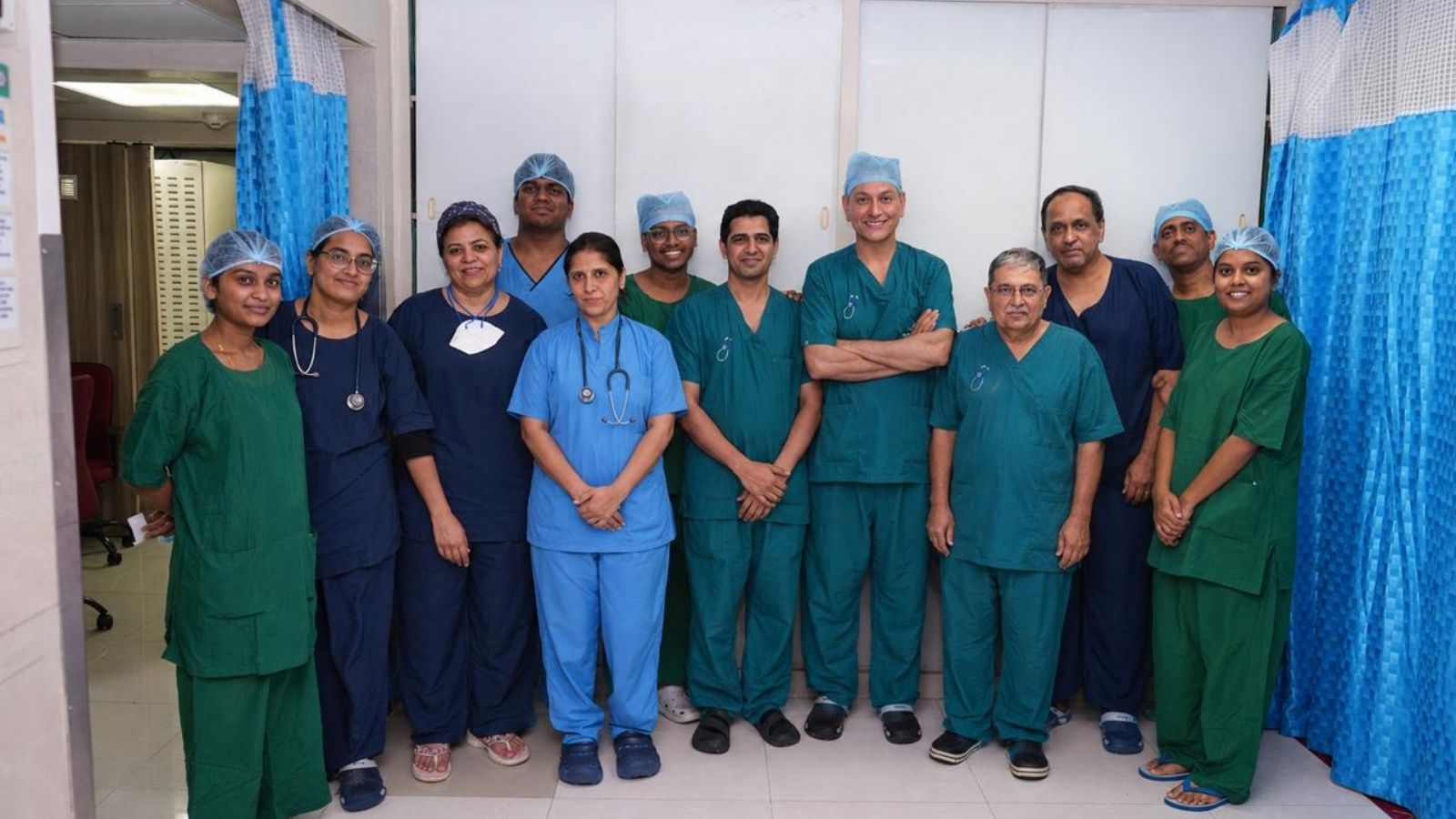
- An elderly patient was treated by interventional structural cardiologist Dr. Ravinder Singh Rao, Dr. Kailash Chandra, Dr. Prashant Varshney and their team.
- What
- Doctors performed a tricuspid transcatheter edge-to-edge repair procedure using two clips to treat severe tricuspid regurgitation caused by Barlow’s Disease.
- Where
- India; the specific hospital was not identified in the article.
- When
- The procedure was reported on 24 September 2026.
- Why
- The patient had severe valve leakage and complex valve anatomy, while catheter-based treatment offered an alternative to conventional open-heart surgery.
Key facts
- Condition
- Tricuspid Valve Barlow’s Disease causing severe tricuspid regurgitation
- Treatment
- Tricuspid transcatheter edge-to-edge repair using a dedicated device
- Surgical approach
- The repair was performed without open-heart surgery
- Devices used
- Two clips were placed to bring the valve leaflets closer together
- Reported result
- Valve leakage was reduced by more than 90 percent
- Recovery
- The patient spent one day in intensive care and was mobilised the following day
- Reported significance
- The team described it as the first reported use in India for primary tricuspid regurgitation linked to tricuspid valve prolapse and Barlow’s Disease
Quotes
Dr. Ravinder Singh Rao
Interventional structural cardiologist and member of the treating team
“Tricuspid valve disease can be challenging to treat, particularly when the valve anatomy is complex. In this patient, the severity of the leakage and the valve structure required careful assessment and precise treatment. The successful outcome shows how catheter-based approaches can help us treat selected patients who may otherwise have limited options”
 freepressjournal.in
Sources
Related news

India's First Tricuspid TEER Procedure Treats Rare Valve Disease
Rare combined heart procedure helps 77-year-old avoid blood thinners

Apollo Team Completes Complex Robotic Heart Surgery With Clot Removal
Robotic Surgery Repairs Heart Defect in Merchant Navy Aspirant

Thane Patient Receives Complex Bentall Surgery for Marfan-Related Heart Damage
Dr. Amit Singh Named Cardiologist of Year at ET Awards

Jay Gupta Sees Brazil Friendlies Sparking Indian Football Revolution

Arunachal Chief Minister Frames Siang Project As National Security Initiative

AU Small Finance Bank’s MFIB Network Crosses 1,000 Branches

China Leads Asian Games Medal Tally After Day 10

DGCA Sets New Training Syllabus for Indian Gyroplane Pilots