2 hrs ago
Robotic Surgery Repairs Heart Defect in Merchant Navy Aspirant

A 26-year-old man wanted to join the Merchant Navy.
During a medical check-up, doctors found a large hole between the upper chambers of his heart.
This hole let too much blood flow to his lungs and made the right side of his heart work harder.
He had not noticed major symptoms and was otherwise active.
Because of the heart defect, he was declared unfit for the service.
Doctors said a device inserted through a catheter could not close the large defect.
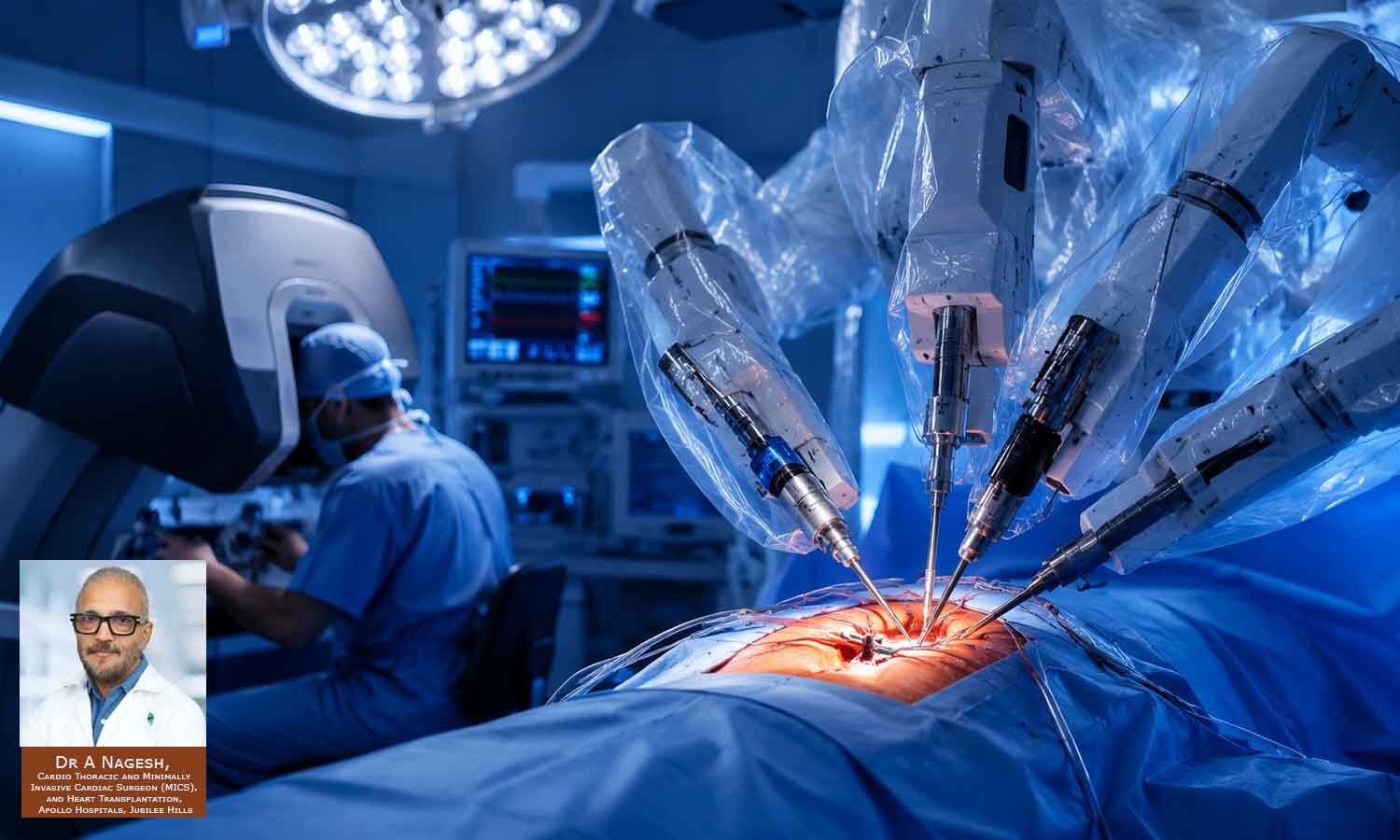
Instead, they used robotic surgery and a special patch to repair it.
He recovered well and left the hospital with normal heart function.

A 26-year-old man was found to have a large congenital atrial septal defect after a routine check-up.
The defect caused excess blood flow to his lungs and strained the right side of his heart.
Doctors at Fortis Escorts Hospital repaired the defect using the Da Vinci Xi robotic surgical system.
A specialised patch was used because the defect was unsuitable for catheter-based device closure.
The patient recovered without reported complications, was removed from the ventilator the same day, and was discharged with normal heart function.
- Who
- A 26-year-old Merchant Navy aspirant and doctors at Fortis Escorts Hospital, led in the statement by Dr Ritwick Raj Bhuyan.
- What
- Doctors repaired a large congenital atrial septal defect using robotic-assisted surgery and a specialised patch.
- Where
- Fortis Escorts Hospital in Okhla, New Delhi.
- When
- The report was dated September 17; the year was not specified.
- Why
- The defect caused excess blood flow to the lungs and strain on the right side of the heart, and its size and anatomy made catheter-based device closure unsuitable.
Key facts
- Patient
- 26-year-old man aspiring to join the Merchant Navy
- Condition
- Large atrial septal defect, a congenital opening between the heart’s two upper chambers
- Initial detection
- The defect was not detected on a mandatory screening ECG but was later identified by echocardiogram
- Procedure
- Robotic-assisted repair using the Da Vinci Xi system
- Repair method
- Closure with a specialised patch
- Recovery
- Taken off the ventilator the same day and discharged in stable condition
- Outcome
- Normal heart function was reported after recovery
Quotes
Dr Ritwick Raj Bhuyan
Senior Director of Cardio Thoracic Vascular Surgery at Fortis Escorts Hospital
“The patient was aspiring to join the Merchant Navy but was unable to pursue the opportunity because of his ASD. Since the defect was large and not suitable for device closure, we chose a robotic-assisted surgical approach.”
 theprint.in
Sources
Related news
Apollo Team Completes Complex Robotic Heart Surgery With Clot Removal

Non-Surgical ASD Device Closure Helps Three-Year-Old at KIMS Cuddles

Thane Patient Receives Complex Bentall Surgery for Marfan-Related Heart Damage

AIIMS Guwahati Launches Cardiac Programme With Two Open-Heart Surgeries

AIIMS Panel Probes Conflicting Accounts Over Teenager’s Death

Catheter Revolution Offers New Options for Heart Valve Treatment

Gambhir Says Vaibhav Sooryavanshi Must Wait for Opportunity

Canada and India Advance Fourth Round of CEPA Trade Talks

Centre and states prepare Viksit Bharat financing roadmap

Man Arrested After Friend’s Body Found In Delhi Trunk
AIIMS Transfers AI Mammography Technology to BPL Technologies