

8 months ago
Kolkata Exhibition Celebrates Rural Heritage Stories

The Kolkata Centre for Creativity (KCC) has opened an exhibition called 'Breathing (with) History – Celebrating Rural Heritage Stories' as part of the AMI Art Festival 2025.
This exhibition showcases the rich cultural heritage of rural India, featuring items like terracotta figurines, scroll paintings, traditional jewellery, and more.
The event aims to connect urban audiences with the traditions and stories of rural communities.
Artists and scholars have contributed to the exhibition, highlighting the importance of preserving these cultural practices.
The exhibition also includes digital innovations to engage children and a section on how industrial societies rely on natural resources.
It's a wonderful way to explore and appreciate the diverse cultural tapestry of rural India.

The exhibition 'Breathing (with) History – Celebrating Rural Heritage Stories' is part of the AMI Art Festival 2025, organized by the Kolkata Centre for Creativity (KCC), Indian Museum, and Museum Association of Bengal.
It showcases rural Indian heritage through artifacts like Bankura terracotta figurines, Chau masks, Pingla scroll paintings, and traditional jewellery.
The exhibition features contributions from artists such as Putli Ganjhu, Parvati Devi, and Ranjit Taro, who highlight the cultural expressions and traditions of rural communities.
Digital innovations, like a digital museum platform, are used to engage children and preserve traditions.
The event includes sections on industrial reliance on natural resources and archaeological findings from regions like Baruipur and Joynagar.
- Who
- Organized by the Kolkata Centre for Creativity (KCC), Indian Museum, and Museum Association of Bengal; features artists like Putli Ganjhu, Parvati Devi, and Ranjit Taro.
- What
- An exhibition celebrating India's rural heritage through various cultural artifacts and traditions.
- Where
- Kolkata, India.
- When
- Part of the AMI Art Festival 2025.
- Why
- To rediscover and preserve India's rural cultural landscapes and traditions.
Key facts
- Event Name
- Breathing (with) History – Celebrating Rural Heritage Stories
- Organizers
- Kolkata Centre for Creativity (KCC), Indian Museum, Museum Association of Bengal
- Festival
- AMI Art Festival 2025
- Artists
- Putli Ganjhu, Parvati Devi, Shafaque Meerza, Suchorita Kanrar, Ranjit Taro, Eeshita Basu, Aptauddin Molla, Prof. Durga Basu, Prof. Tamali Chandan Roy
- Key Artifacts
- Bankura terracotta figurines, Chau masks, Pingla scroll paintings, Sohrai and Khovar motifs, Patua paintings, Karbi Anglong community wares, traditional jewellery, Bhadu Puja, Punni Pukur Brata, Shashthi Puja, Bheem Puja, Goshto Pujo, Unnoti Devi figure
- Digital Innovation
- Digital museum platform for children to explore rural traditions
- Location
- Kolkata, India
Quotes
Shafaque Meerza
Shafaque Meerza is associated with the Sanskriti Museum and Art Gallery, Hazaribagh, Jharkhand.
“These pieces come from the hands of village women who paint Sohrai and Khovar motifs during the harvest and wedding season, respectively, adorning mud walls with stories of abundance. Artists including Putli Ganjhu and Parvati Devi have shifted the practice onto paper, helping the tradition gain visibility abroad in countries such as Australia, Switzerland, Italy and Canada.”
 thestatesman.com
Suchorita Kanrar
Suchorita Kanrar is associated with Darpan – Reflection of the Past.
“Children spend most of their time with screens. My husband and I had this wonderful idea: why not convert this idea of a museum into a digital space, where the children can openly interact with the past and explore the rural traditions?”
thestatesman.com
Ranjit Taro
Ranjit Taro is associated with Fondazione L’Albero della Vita (FADV).
“Each garment, pini (a woman’s garment worn below the waist), pekok (utilised to tie or fasten), vamkok (girdle worn by Karbi women), reflects traditional methods using cotton, silk or jute silk. Red is worn by married men, while white is worn by youth, particularly unmarried ones, and the Khanjar is a colourful poho donned by girls and women.”
thestatesman.com
Eeshita Basu
Eeshita Basu is a teacher and collector from The Heritage School.
“Even in the earliest human societies, people decorated themselves with flowers, leaves and stones. After food and clothing comes the desire to embellish.”
thestatesman.com
Prof. Durga Basu
Prof. Durga Basu heads the Society for Heritage, Archaeology & Management (SHAM).
“These events justify the popular Bengali saying ‘Baro Maashe Tero Parbon’ (There are more festivals than months in a year).”
thestatesman.com
Sources
Related news

Bengal’s Lost Commercial Heritage Revisited Through Historical Fiction
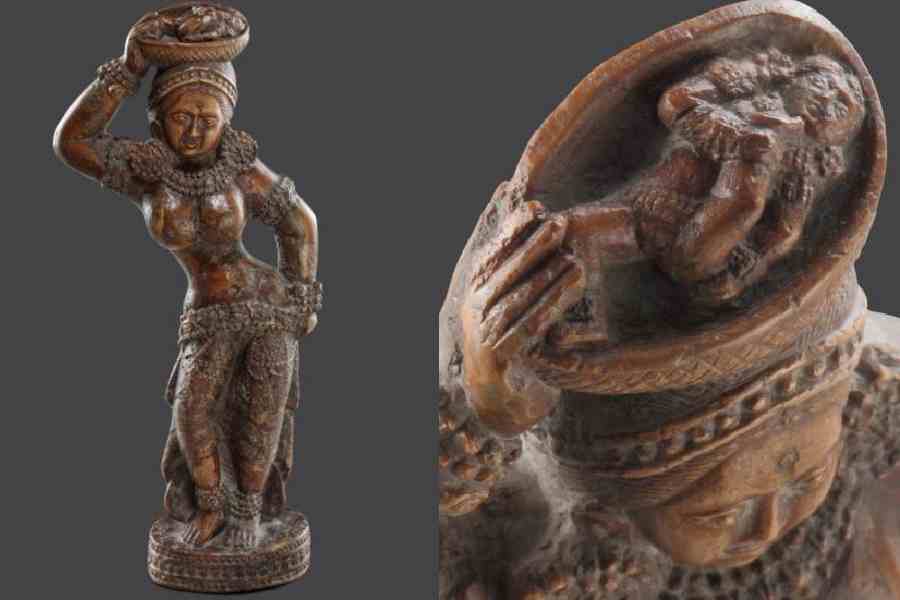
'One Mother, Many Tongues' exhibition shows mothers as fierce protectors
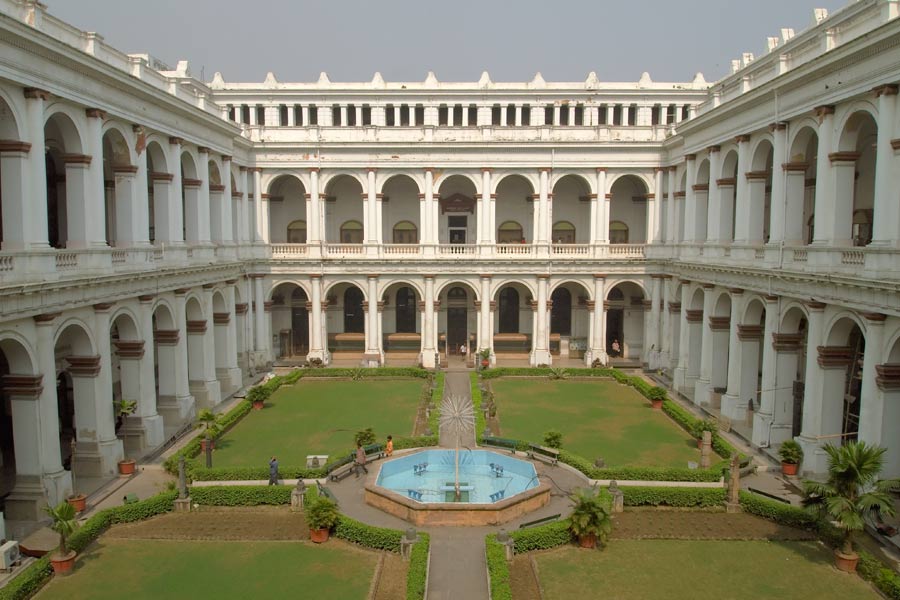
Indian Museum Uses AI, Digital Tools to Preserve Artefacts
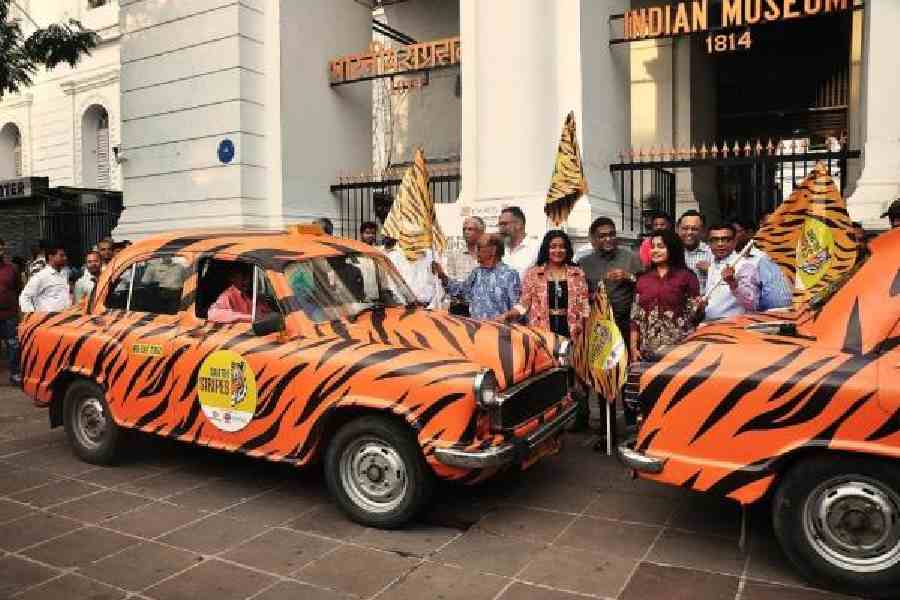
Tiger-Themed Taxis Promote Conservation on International Tiger Day
Bengal's Path to Transformation: Infrastructure, Education, and Decolonization
