

1 month ago
Bengal's Path to Transformation: Infrastructure, Education, and Decolonization

The new government in West Bengal is trying to improve the state by adopting some policies from other states and creating new ones that fit Bengal's unique needs.
They want to build better roads and use rivers for transport, fix the education system, and make the police better.
They also want to make the old Indian Museum more modern and connect it to the Victoria Memorial.
The goal is to make Bengal a better place to live and work, using its own strengths and history.

The new government in West Bengal is adopting some policies from other states but also creating Bengal-specific solutions.
Proposals include the Bengal Spine Highway, empowered waterways authority, and international hub at Bagdogra airport.
Education reforms aim to reduce dropout rates and improve infrastructure in schools.
Decolonization efforts include police reform and modernizing cultural institutions like the Indian Museum.
The goal is to transform Bengal by addressing its unique challenges and leveraging its strengths.
- Who
- The new government in West Bengal and its policies.
- What
- Proposals for infrastructure, education, and decolonization.
- Where
- West Bengal, India.
- When
- Within the first two months of the new government's term.
- Why
- To address Bengal's unique challenges and transform the state.
Proponents of National Templates
Advocates for Bengal-Specific Governance
Governance Approach
Proponents of National Templates
Supports adopting proven policies from other states to ensure stability and signal certainty.
Advocates for Bengal-Specific Governance
Advocates for policies tailored to Bengal's unique cultural, historical, and ecological context.
Infrastructure Development
Proponents of National Templates
Prioritizes standard infrastructure projects that have worked elsewhere.
Advocates for Bengal-Specific Governance
Proposes Bengal-specific projects like the Bengal Spine Highway and empowered waterways authority.
Education Reform
Proponents of National Templates
Focuses on incremental improvements within existing frameworks.
Advocates for Bengal-Specific Governance
Calls for transformational changes, including recruiting teachers on a war footing and making school records portable.
Decolonization Efforts
Proponents of National Templates
Views decolonization as a secondary concern.
Advocates for Bengal-Specific Governance
Advocates for meaningful decolonization, starting with police reform and modernizing cultural institutions.
Key facts
- State Budget Focus
- Digitization of land records and a specific package for the Sundarbans.
- Infrastructure Proposals
- Bengal Spine Highway, empowered waterways authority, and international hub at Bagdogra airport.
- Education Statistics
- Secondary-school dropout rate: 23% for boys, 18% for girls; 6,482 single-teacher schools.
- Child Marriage Rate
- 6.3% in Bengal vs. national average of 2.1%.
- Policing Rank
- Dead last in the India Justice Report 2025.
- Indian Museum
- Oldest and largest in Asia, founded in 1814.
- Colonial Legacy
- Bengal was the richest and most educated region in the subcontinent before falling to the 24th rank.
Sources
Related news

Reliance Explores Aluminium Production Through Odisha Bauxite and Coal Gasification

UK and Ukraine Open Battlefield AI Partnership Amid War

BEL Recruitment 2026: Apply For 14 Project Engineer Posts

Karnataka Signs Rs 2,500 Crore ADB-Backed Project for 500 Schools
General Sundarji’s Strategic Legacy From Brasstacks to Brassboard

Grade 8 Student Earns Global Rank in LogiQids Olympiad

Bengal’s Lost Commercial Heritage Revisited Through Historical Fiction

'One Mother, Many Tongues' exhibition shows mothers as fierce protectors
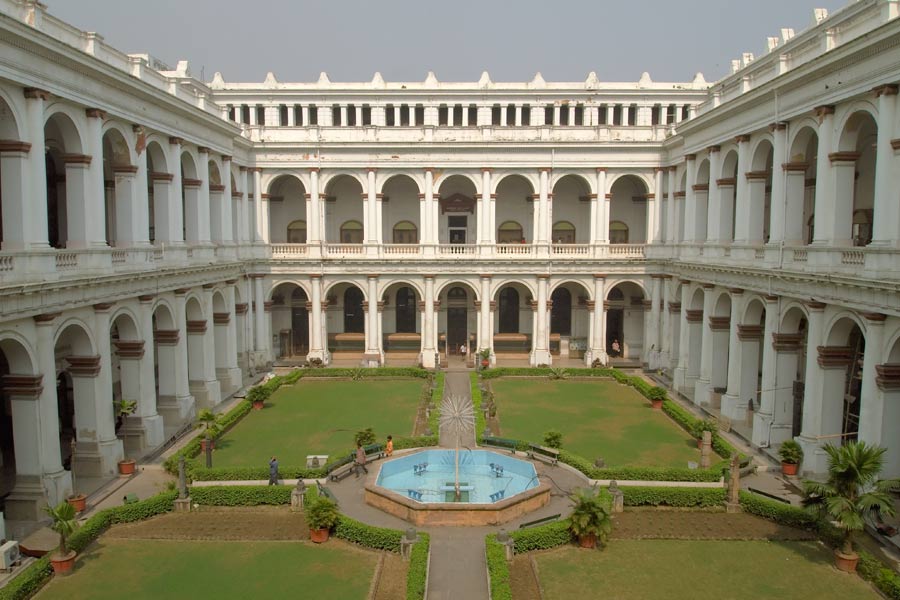
Indian Museum Uses AI, Digital Tools to Preserve Artefacts

Tiger-Themed Taxis Promote Conservation on International Tiger Day
