1 week ago
India Plans 100 Ships to Reduce Foreign Freight Dependence
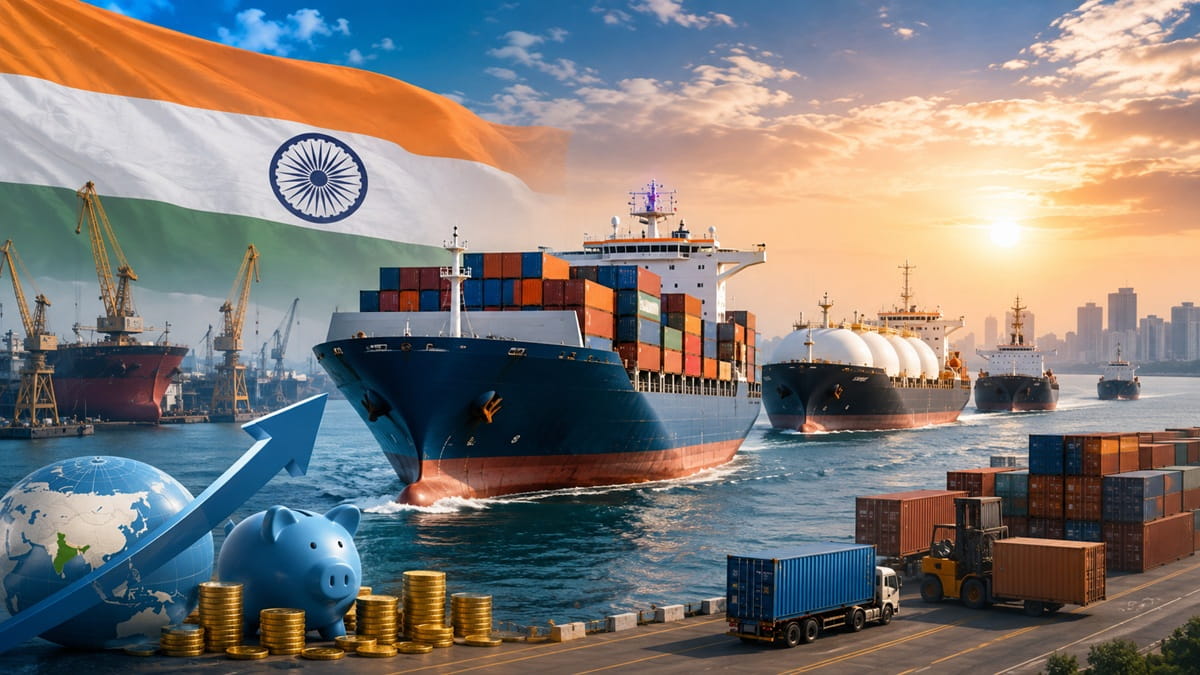
India wants more ships that are owned or registered by Indian companies.
It plans to add about 100 ships over the next five years.
India currently pays foreign shipping companies almost $75 billion each year to carry important goods.
These goods include crude oil, natural gas, coal and urea.
Indian ships cost about 16–20% more to operate than foreign ships, according to industry representatives.
The government wants to reduce this difference through tax changes, cheaper loans and guaranteed cargo.
It also wants to make shipping rules easier for Indian businesses.
The plan is part of a larger effort to expand ports, shipbuilding and maritime jobs.
The government hopes India will become one of the world’s five biggest ship-owning nations by 2047.

India plans to add 100 vessels to its merchant fleet within five years.
The country pays nearly $75 billion annually to foreign shipping lines for transporting cargo such as oil, gas, coal and urea.
Industry representatives say Indian-flagged ships are 16–20% more expensive than foreign-flagged vessels.
The National Shipping Board proposed fiscal reforms, assured cargo, cheaper financing, regulatory streamlining and easier business rules.
The expansion is linked to India’s goal of becoming a leading ship-owning nation and increasing port capacity to 10,000 million tonnes annually by 2047.
- Who
- The Indian government, the National Shipping Board, Indian shipowners, industry representatives and maritime workers are involved.
- What
- India plans to add 100 vessels to its merchant fleet and introduce reforms to make Indian-flagged shipping more competitive.
- Where
- The initiative concerns India’s merchant fleet, ports, shipbuilding and wider maritime industry.
- When
- The plan was discussed at the National Shipping Board’s first Sagar Samvad event on Tuesday; the fleet target covers the next five years.
- Why
- India wants to reduce dependence on foreign shipping lines and retain more of the nearly $75 billion it pays annually to transport cargo overseas.
Government’s Expansion Strategy
Industry’s Competitiveness Concerns
Purpose of expanding the fleet
Government’s Expansion Strategy
Government officials say Indian shipowners should participate in the growth of the maritime economy instead of allowing expansion to primarily benefit foreign operators.
Industry’s Competitiveness Concerns
Industry representatives say Indian companies face structural cost and demand disadvantages that make it difficult to expand their fleets.
Competing for cargo
Government’s Expansion Strategy
The National Shipping Board says fiscal reforms, assured cargo and cheaper financing could help Indian-flagged vessels compete and add 100 ships.
Industry’s Competitiveness Concerns
Industry representatives say taxes, seafarer wage deductions, freight-income taxation and higher domestic financing costs make Indian ships 16–20% more expensive, particularly when matching foreign freight rates under the Right of First Refusal framework.
Long-term maritime benefits
Government’s Expansion Strategy
The government links fleet expansion to stronger maritime security, shipbuilding, container manufacturing, port infrastructure and employment.
Industry’s Competitiveness Concerns
The articles indicate that achieving these benefits will require access to long-term, low-cost capital and broader reforms to overcome the financing advantage of international operators.
Key facts
- Fleet expansion target
- 100 vessels within five years
- Annual foreign freight payments
- Nearly $75 billion
- Indian-flagged cost disadvantage
- 16–20% higher than foreign-flagged ships, according to industry representatives
- Current Indian fleet
- 1,544 vessels, including 492 overseas vessels and 1,052 coastal vessels
- Recent fleet growth
- 92 vessels were added to the Indian registry in FY26, contributing 1.584 million gross tonnes
- Port capacity target
- 10,000 million tonnes annually by 2047
- Proposed reforms
- Fiscal reforms, assured cargo support, competitive financing, regulatory streamlining and improved ease of doing business
- Container manufacturing support
- A ₹10,000 crore assistance scheme for domestic container manufacturing
Quotes

Sarbananda Sonowal
Union Minister for Ports, Shipping and Waterways
“A skilled and future-ready maritime workforce will be central to achieving our Maritime India Vision 2030 and building India’s shipbuilding capabilities under Maritime Amrit Kaal Vision 2047”
 financialexpress.com
“That is not a performance problem for Indian shipowners—it is a competitiveness and demand-partnership problem. We must command our own waterline.”
financialexpress.com
 livemint.com
Sources

Related news
India’s 100-Vessel Plan Puts Five Maritime Stocks in Focus

India Restores Shipping Relaxations Amid Global Capacity Disruptions

India’s Maritime Expansion Creates Dredging Opportunities for Two Stocks

India’s 2047 Ambitions Raise Need for Stronger Navy
GRSE Plans Rs 2,500 Crore Expansion for Global Growth

India urged to boost shipping capacity, naval protection: GTRI
IWDC Meet to Boost Inland Waterways Growth
Modi inaugurates projects worth Rs 830 crore in West Bengal

Indian Lighthouse Festival 2026 in Visakhapatnam

Clash Over Electoral Roll in Thakurnagar