2 days ago
Ahmedabad Family Works to Preserve Mata ni Pachhedi Art
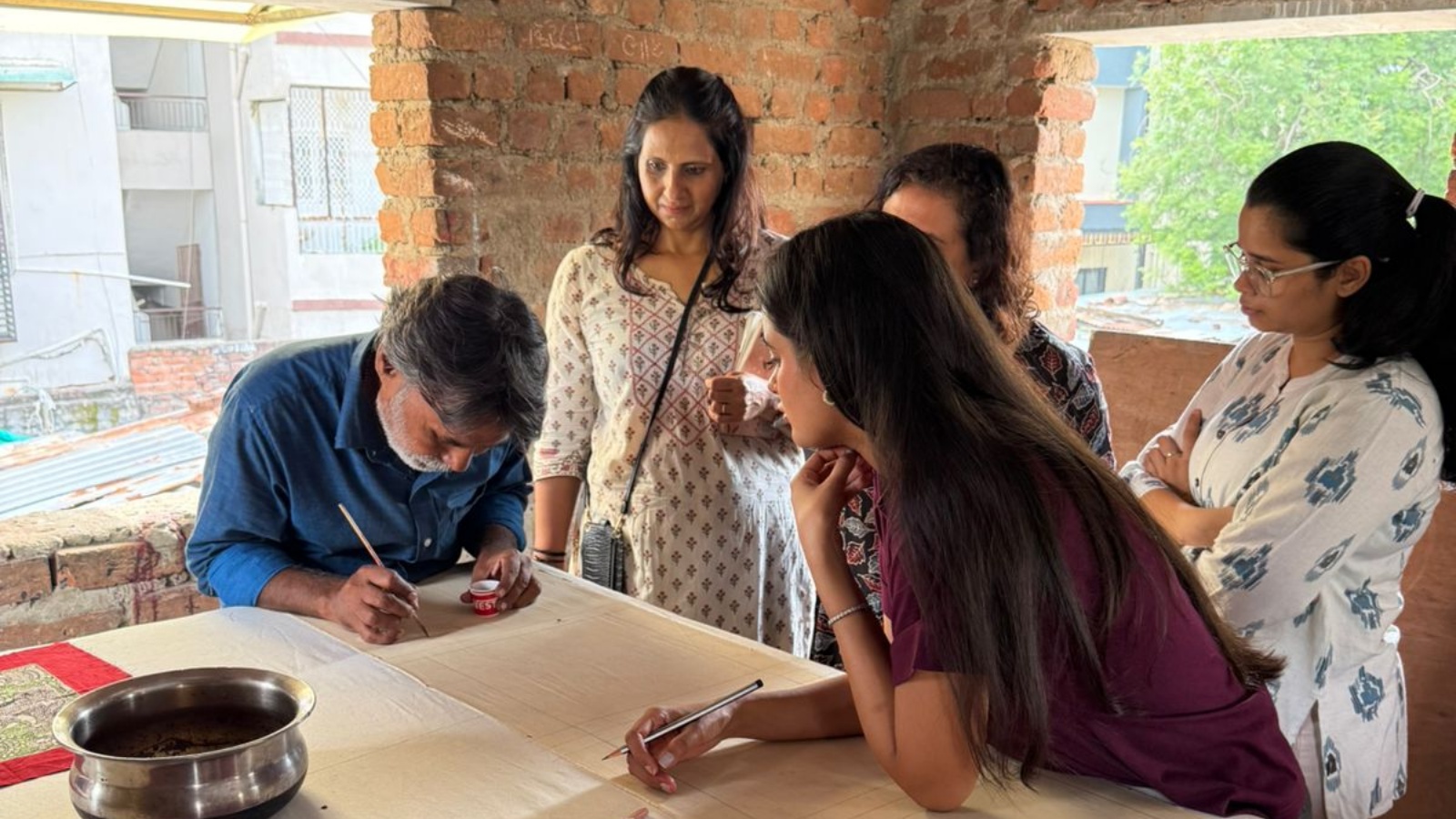
Mata ni Pachhedi is a special cloth painting made for worship.
It usually shows a goddess surrounded by animals, plants and other symbols.
The Chitara community has practiced this art for about 300 years.
In the past, some community members could not enter certain temples, so they brought pictures of the goddess home instead.
Om Chitara is 22 years old and is the ninth generation in his family to make the art.
Artists draw on cloth with bamboo pens and use dyes made from natural materials.
Making one painting can take many months because the colours must be carefully treated and fixed.
Some people now buy the paintings as decorations or gifts as well as for worship.
Om and other artists are trying to keep the tradition from disappearing.

Mata ni Pachhedi is a ritual textile tradition practiced by the Chitara community for more than 300 years.
The art developed partly because Devipujak communities were barred from entering certain temples.
Om Chitara, a 22-year-old ninth-generation artist, works with about 40 community artisans in Ahmedabad.
Artists use bamboo pens, natural dyes and lengthy processes that can take months or more than a year.
The craft received a Geographical Indication tag in 2023, but limited space and slow production remain major challenges.
- Who
- Om Chitara, the Chitara community and about 40 associated artisans are preserving the art.
- What
- They are continuing the Mata ni Pachhedi tradition of painting ritual textiles featuring Hindu goddesses.
- Where
- The artists largely live and work in Ahmedabad, including a studio in the Vasna area.
- When
- The tradition began more than 300 years ago; Om is now 22, with milestones including a Geographical Indication tag in 2023 and a Padma Shri awarded to Bhanubhai Chitara in 2025.
- Why
- The art developed as a portable form of worship and an alternative for communities excluded from certain temples; artists now also work to preserve it as a fading heritage tradition.
Traditional Sacred Practice
Contemporary Cultural Art
Purpose of the artwork
Traditional Sacred Practice
The cloth remains a religious object bought by villagers for worship and represents a portable temple or home shrine.
Contemporary Cultural Art
Hand-drawn works are also purchased as wall art and gifts, with contemporary imagery such as the Tree of Life added for changing preferences.
How audiences understand it
Traditional Sacred Practice
The artwork preserves goddess stories and meanings attached to colours, animals and religious symbols.
Contemporary Cultural Art
Ganga Kadakia says audiences may view it as an attractive object, while younger people can connect with its depictions of animals, fish, trees and nature even without strong religious associations.
Key facts
- Art form
- Mata ni Pachhedi, also known as Chandarvo and Dhoti
- Community
- The Chitara community of Devipujaks, earlier called Vaghri
- Traditional palette
- Red, black and white; additional colours were introduced later
- Materials
- Unbleached fabric, bamboo kalam pens, indigo, henna, wild turmeric, madder root and other natural ingredients
- Production time
- A 2×2-foot piece can take up to two-and-a-half months; larger hand-drawn works can take a year and a half or more
- Recognition
- Mata ni Pachhedi received a Geographical Indication tag in 2023
- Current challenge
- Limited studio space restricts production, especially for large commissions
Quotes
Om Chitara
Ninth-generation Mata ni Pachhedi artist from Ahmedabad
“Our home serves as both our living space and our sanctuary for preserving Mata ni Pachhedi. Around 40 artisans in our community work together to keep this heritage alive, led by four senior craftsmen, including myself”
 indianexpress.com
“So they also accepted the pachhedi, thinking, ‘Fine, if we can’t go to the temple, we will put this up at home’. We will pray to it in the village itself’”
indianexpress.com
Sources
Related news

Artists from Naxal-Affected Bastar Create I-Day At Home Invitation Kit

Bhiwandi Padmashali Community Keeps 78-Year Raksha Bandhan Tradition Alive

From Embroidery Ban to Colourful Bags Empowering 300 Women Artisans
IHC Lok Sangeet Sammelan Celebrates Pandavani and Pulluvan Pattu

Over 70 Artists Showcase Diverse Works At Bhopal Exhibition
Odisha Village Drummers Preserve Craft Rooted in Rural Life

Akshay Oberoi Buys Karjat Farmhouse, Calls It Nature Sanctuary
Central Railway Tests Vetiver Grass Against Mumbai-Pune Ghat Landslides
Missing Karjat Man Found Safe After Community Search

Mumbai Train Services Hit by Karjat Fault, Borivali Trespassing