

1 week ago
Russian Military Planes Enter South Korea’s Air Defence Zone
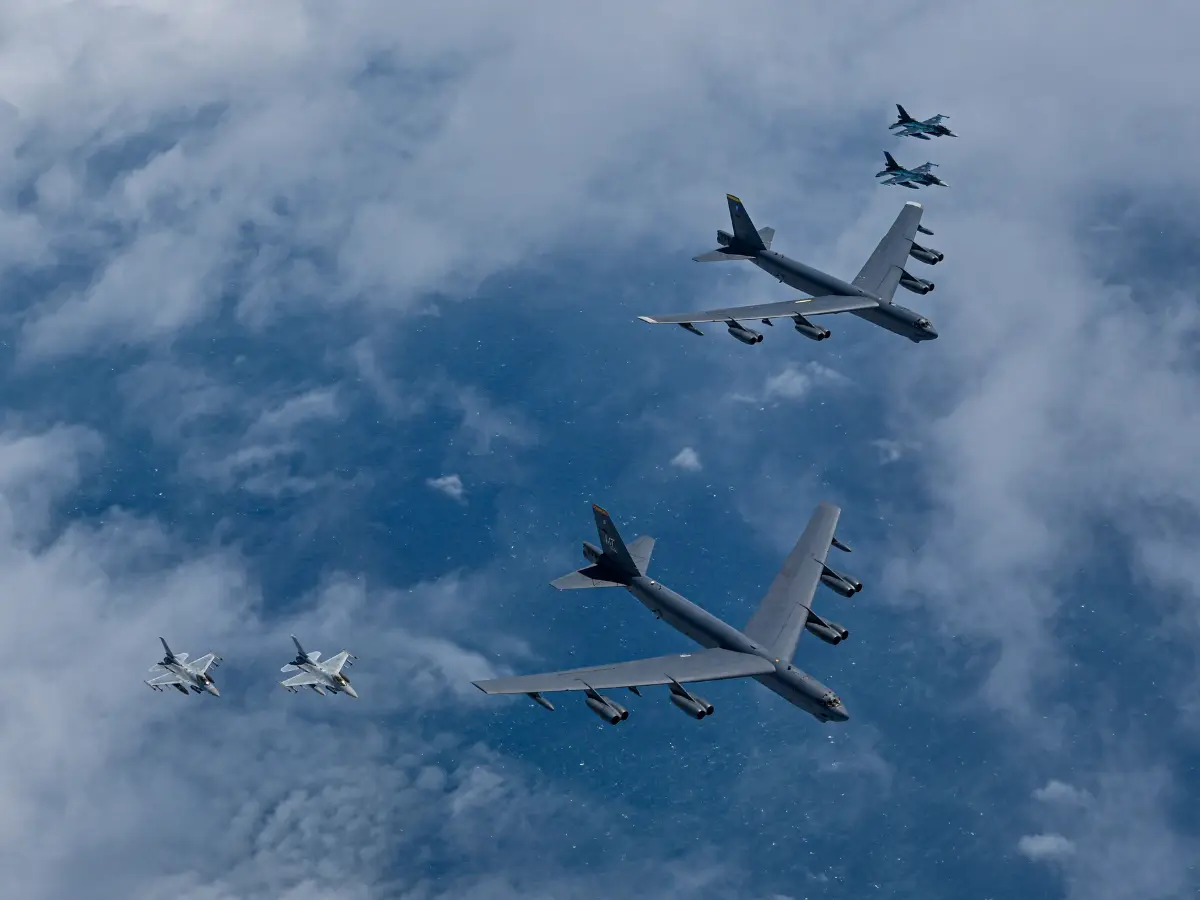
South Korea said Russian military planes flew into a monitored area near its coast.
This area is called an air defence identification zone, or ADIZ.
An ADIZ is not the same as a country’s airspace.
Countries use these zones to ask foreign aircraft to identify themselves.
South Korea detected the planes and sent fighter jets to be ready.
The Russian aircraft later left the zone.
South Korea said the planes did not enter its actual airspace.
A similar Chinese-Russian flight occurred in late June.
Russia and China said that earlier flight was a normal patrol and was not aimed at other countries.

South Korea said multiple Russian military aircraft entered and then left its air defence identification zone on Wednesday, Aug. 26.
Seoul scrambled Air Force fighter jets after detecting the aircraft before they entered the zone.
South Korea said the Russian aircraft did not violate its sovereign airspace.
The incident was described as the second such Russian incursion in weeks, following a larger Chinese-Russian entry in late June.
Ties between South Korea and Russia have worsened over Seoul’s sanctions related to Russia’s invasion of Ukraine and Moscow’s closer relationship with North Korea.
- Who
- South Korea’s military and multiple Russian military aircraft were involved; China and Russia were also involved in the late-June incident.
- What
- Russian military aircraft entered and left South Korea’s air defence identification zone, prompting Seoul to scramble fighter jets.
- Where
- South Korea’s air defence identification zone over the East Sea, also called the Sea of Japan.
- When
- Wednesday, Aug. 26; a similar Chinese-Russian incident occurred in late June.
- Why
- South Korea said it acted as a precaution and has raised concerns amid worsening relations with Russia and stronger Russia-North Korea ties.
South Korean position
Russian and Chinese position
Meaning of the aircraft activity
South Korean position
South Korea treated the flights as a security concern, monitored the aircraft, scrambled fighter jets and protested after the earlier incident.
Russian and Chinese position
Russia said the late-June patrol was part of normal military cooperation, while China described it as a strategic air patrol.
Airspace violation
South Korean position
South Korea said the Russian aircraft entered its air defence identification zone but did not violate its sovereign airspace.
Russian and Chinese position
The article does not report a Russian response to the Aug. 26 incident; Russia previously said the joint patrol was not directed against third countries.
Key facts
- Reported aircraft
- Multiple Russian military aircraft
- South Korean response
- Air Force fighter jets were deployed to prepare for any contingency.
- Airspace status
- South Korea said the aircraft did not violate its airspace.
- Location
- The air defence identification zone over the East Sea, also called the Sea of Japan.
- Earlier incident
- More than 10 Chinese and Russian military aircraft entered the zone in late June.
- Russian-Chinese explanation
- China called the earlier activity a strategic air patrol, while Russia described it as normal military cooperation not directed against third countries.
- Diplomatic response
- South Korea protested to Beijing and Moscow after the late-June incident and demanded measures to prevent a recurrence.
Quotes

South Korean defence ministry
South Korea’s government ministry responsible for national defence
“South Korea's military detected the Russian aircraft before they entered the zone and deployed Air Force fighter jets to prepare for any contingency,”
 wionews.com
Sources
Related news

South Korea cautious on Ukraine's request for air defence support

Ukraine presses South Korea for air-defence aid as Pyongyang backs Russia
Finland Probes Suspected Russian Aircraft Airspace Incursion Over Gulf
North Korea Fires Ballistic Missile Days Before US-South Korea Drills
Zelensky warns Russia to deploy 50,000 North Korean troops

North Korea Fires Suspected Ballistic Missile Toward Sea
Putin Faces Western Isolation While Russia Builds Non-Western Ties
Russian strikes hit Kyiv for seventh consecutive day
Russia Vows Civil Aviation Safety Amid Ukraine Drone Warning

Germany Blames Russia for Leipzig Drone Attack, Europe Vows Response

Jaishankar to Visit Ukraine and Poland for Bilateral Talks