

1 week ago
Madhya Pradesh High Court Quashes Recovery From Government Employee’s Widow

A government employee was paid a salary benefit while he was working.
After he died, the government said that Rs 1.08 lakh had been paid too much.
It asked his widow to return the money.
The widow said the benefit had been approved by government officials and that neither she nor her husband had cheated anyone.
The High Court agreed that there was no evidence of fraud or false information.
It also said the widow should have been given a chance to explain before the recovery order was made.
The court cancelled the recovery order.
This means the widow does not have to repay the disputed amount under that order.

The Madhya Pradesh High Court quashed an order seeking recovery of Rs 1.08 lakh from a deceased employee’s widow.
The alleged excess salary arose from a disputed pay-scale benefit granted during the employee’s service.
The court found no evidence of fraud, misrepresentation or suppression of facts by the employee or his widow.
The recovery order was issued without giving the widow a show-cause notice or opportunity for a hearing.
The court said recovery was impermissible under principles recognised in the Supreme Court’s Rafiq Masih ruling.
- Who
- The Madhya Pradesh government, the deceased government accountant’s widow, and Justice Deepak Khot of the Madhya Pradesh High Court.
- What
- The High Court quashed a Rs 1.08 lakh recovery order for alleged excess salary paid to the deceased employee.
- Where
- The Madhya Pradesh High Court.
- When
- The recovery order was dated March 30, 2016; the High Court issued its decision on August 17. The employee died on August 31, 2015.
- Why
- The court found no evidence of fraud or misrepresentation and held that the widow was not given an opportunity to be heard before recovery was ordered.
Widow’s position
State’s position
Whether repayment was justified
Widow’s position
The widow argued that the benefit had been granted by government authorities and that repayment was unlawful because neither she nor her husband had committed fraud or misrepresentation.
State’s position
The state sought recovery of Rs 1.08 lakh, alleging that the deceased employee’s pay had been incorrectly fixed from April 1, 2006, instead of July 1, 2006.
Responsibility for the overpayment
Widow’s position
The widow maintained that any excess payment resulted from an administrative decision and was not attributable to the employee or herself.
State’s position
The state treated the disputed salary amount as an excess payment recoverable after reviewing the employee’s pay fixation and option form.
Opportunity to respond
Widow’s position
The widow argued that the recovery was invalid because she received no show-cause notice or hearing.
State’s position
The recovery order was issued without a prior hearing, a procedure the High Court found deficient.
Key facts
- Amount disputed
- Rs 1.08 lakh
- Recovery order
- Dated March 30, 2016
- High Court decision
- Issued on August 17
- Deceased employee
- A government accountant appointed on January 21, 1982
- Employee’s death
- August 31, 2015
- Pay dispute
- The state alleged the benefit should have applied from July 1, 2006, rather than April 1, 2006
- Procedural issue
- No show-cause notice or hearing was given before recovery was ordered
Quotes
Justice Deepak Khot
Judge of the Madhya Pradesh High Court
“There is nothing on record to indicate that the petitioner had obtained the said benefit by practising fraud, misrepresentation or suppression of any material fact.”
 indianexpress.com
Sources
Related news

Madhya Pradesh High Court Restores Government Employee’s Pension

Uttarakhand High Court Raises Maintenance, Rejects Voluntary Savings Argument

Madhya Pradesh High Court Revives Wife’s Interim Maintenance Claim

Uttarakhand High Court hikes wife's maintenance, loans no excuse
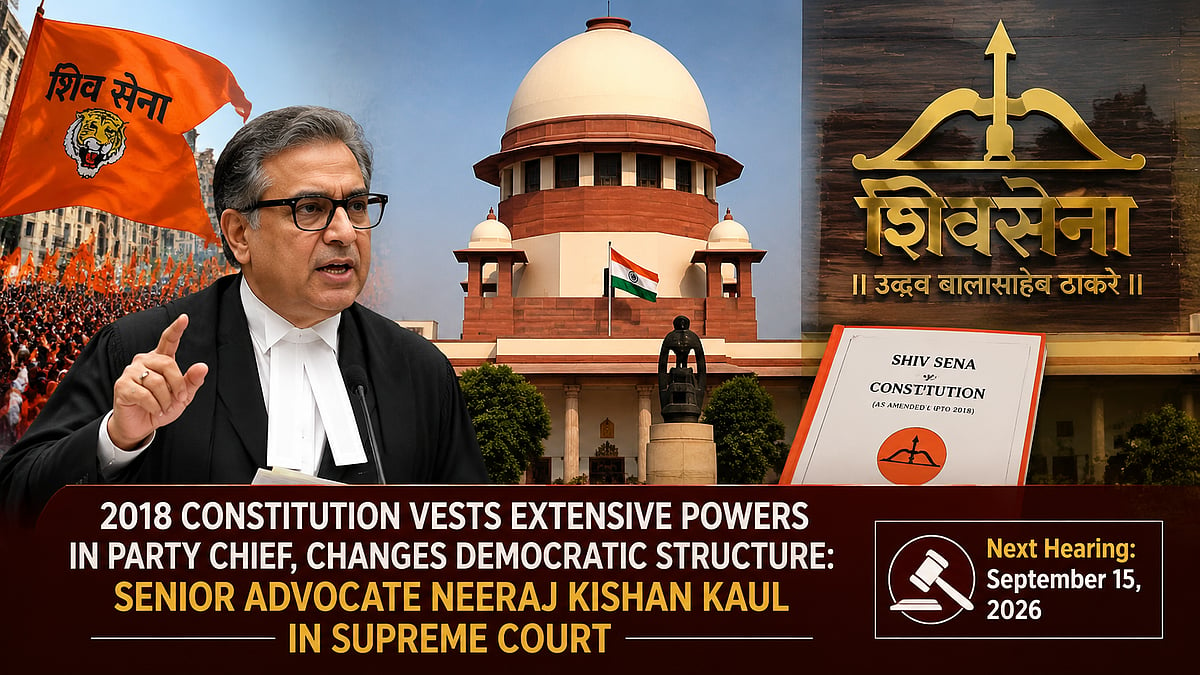
Shinde Sena Challenges Shiv Sena’s 2018 Power Shift

Supreme Court Questions BCI Chairman’s Proposed Five-Year Tenure

BJP MPs Seek National Commission for General Category Interests

PUCL Urges CJI Action Over Rajasthan High Court Allegations

Supreme Court Questions IPS Deputation for CAPF Leadership Positions
