3 hrs ago
UN Sea-Level Declaration Protects States, Challenges India’s Coast
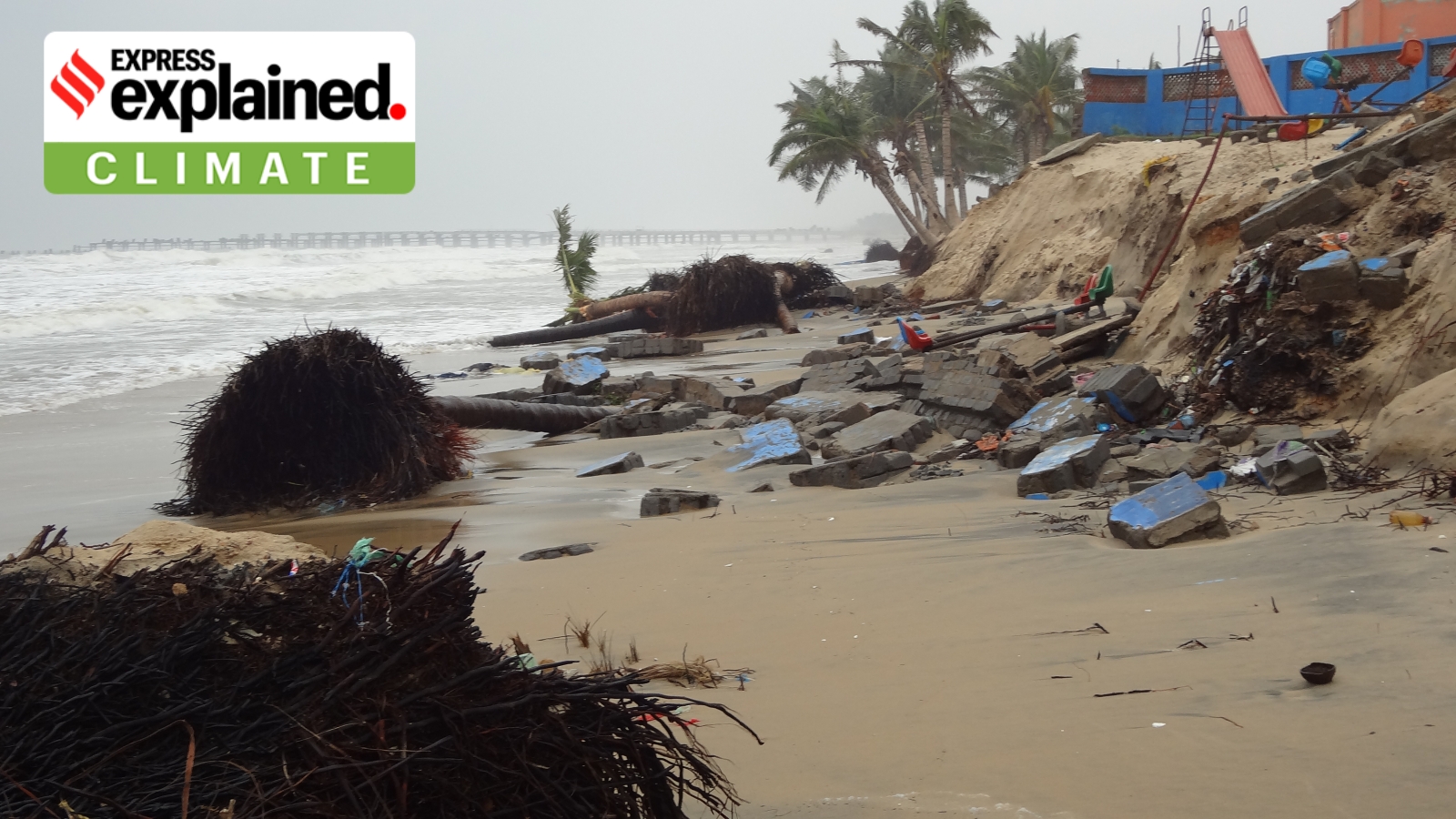
The world’s oceans are rising faster than before.
The United Nations adopted a declaration to help countries threatened by rising seas.
It says a country can remain a country even if some of its land disappears.
Such countries could keep their rights, United Nations membership and ocean boundaries.
India supports this because it has many islands and a very long coastline.
Parts of India’s coast are already shrinking, especially in West Bengal and the Sundarbans.
The article says India should use better maps when deciding where buildings can be constructed.
It also says people forced to move should receive land, legal protection and help finding work.

The UN General Assembly adopted its first declaration on rising sea levels on 24 September.
The declaration supports continued statehood, sovereignty and maritime boundaries for countries threatened by sea-level rise.
Global sea-level rise increased from 2.1 millimetres annually in 1993–2002 to 4.7 millimetres in 2015–2024.
About one-third of India’s mainland coastline eroded between 1990 and 2016, with some sections retreating more than five metres each year.
The article calls for India to use hazard lines, strengthen relocation protections and seek more international adaptation finance.
- Who
- The UN General Assembly, vulnerable island countries and coastal countries including India.
- What
- The UN adopted its first declaration on rising sea levels, affirming continued statehood and stable maritime boundaries while urging stronger coastal planning.
- Where
- The declaration was adopted in New York, with implications for Pacific island states, the Maldives and India’s coasts.
- When
- The declaration was adopted on 24 September; another high-level meeting is scheduled for September 2030.
- Why
- Accelerating sea-level rise threatens territory, homes, infrastructure and coastal communities.
Key facts
- Sea-level rise in 2024
- Global sea level rose 6 millimetres, the largest annual increase on record.
- Projected rise by 2100
- About 38 centimetres under a low-emissions pathway, or about 77 centimetres if emissions continue to climb.
- India’s coastline
- A 2023–24 remeasurement counted 11,098 kilometres of coastline and 1,298 offshore islands and islets.
- Indian coastal erosion
- About one-third of the mainland shoreline eroded between 1990 and 2016.
- Rapidly retreating coast
- Nearly 400 kilometres of coast retreated by more than 5 metres annually, while another 225 kilometres retreated by 3–5 metres.
- Maritime boundaries
- The declaration supports retaining territorial seas extending 12 nautical miles and exclusive economic zones of up to about 370 kilometres.
- Adaptation finance
- The United Nations Environment Programme estimates developing countries’ adaptation needs at more than $310 billion annually by 2035, compared with $26 billion in international public adaptation finance in 2023.
Sources
Related news
UN Warns of Rising Sea Levels Threatening India
UN Warns Mumbai Faces Growing Risk of Permanent Inundation
UN Warns Rising Seas Put Millions in South Asian Deltas

BMC Launches Fresh Study of Mumbai’s Coastal Flooding Risk
UN Reports Warn Climate Crisis Threatens Humanity’s Future

UN Report Says 1.5°C Breach Is Now Unavoidable

West Indies Post Highest Total, India Face 406-Run Chase

Australian Court Rejects Thorpe’s Bid to Prosecute King

Rain Disrupts India’s Asian Games Semifinal Preparation

NCDRC Rejects Claim Over Missed Women’s T20 World Cup Trip