9 months ago
Kerala High Court: Acquittal Orders Need Judicial Scrutiny, Not Automatic

Imagine you reported someone for not paying you back, like bouncing a check.
The police put their name on a list of people who need to be dealt with.
When it's time for proof, you might not be able to come to court that exact day.
The law says if you don't show up, the judge can decide to let the person off the hook.
But, the Kerala High Court said judges shouldn't just let people go automatically because you missed one day.
Judges need to think about it carefully.
Maybe you have a good reason for being absent, or maybe you are trying hard to solve the case.
The judge can also just move the court date to another day instead of letting the accused go free right away.
This is to make sure that people who are trying to get justice don't lose their chance just because they couldn't make it to court on one specific occasion.

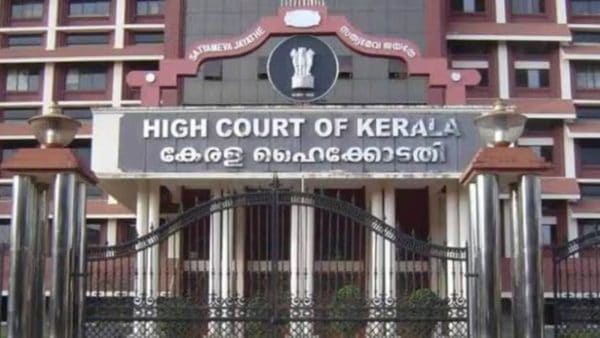
The Kerala High Court ruled that courts should not automatically acquit an accused solely based on the complainant's absence.
Magistrates must apply their mind and consider if an acquittal order under Section 256 CrPC is appropriate.
Section 256 CrPC grants discretion to magistrates to adjourn the case if the complainant is absent.
The court emphasized that the personal appearance of the complainant may not always be necessary for a hearing.
An acquittal order passed in a cheque dishonor case due to the complainant's absence was set aside and the case remanded for fresh consideration.
- Who
- Kerala High Court
- What
- Held that acquittal orders under Section 256 of CrPC should not be passed automatically due to the complainant's absence, and that magistrates must apply their mind and consider discretion to adjourn.
- Where
- Kerala, India
- When
- Recently (specific date not provided in article)
- Why
- To ensure fair prosecution and prevent prejudice to complainants who are diligently pursuing their cases, by requiring judicial consideration rather than automatic acquittal.
Complainant's Right to Fair Prosecution
Magistrate's Discretion and Procedure
Automatic Acquittal vs. Judicial Consideration
Complainant's Right to Fair Prosecution
The complainant, who is prosecuting the matter with diligence, should not face automatic acquittal of the accused due to absence on a single date, especially if the case has been prosecuted in good faith.
Magistrate's Discretion and Procedure
Section 256 of CrPC grants the magistrate power to acquit the accused upon the complainant's non-appearance, and this power can be exercised without further recourse.
Adjournment as an Alternative
Complainant's Right to Fair Prosecution
The magistrate has the discretion to adjourn the case to another date, particularly if the personal appearance of the complainant is not deemed essential for that specific hearing.
Magistrate's Discretion and Procedure
The absence of the complainant on a scheduled date for evidence can lead to an order of acquittal under Section 256 of CrPC.
Key facts
- Court
- Kerala High Court
- Relevant Law
- Section 256 of the Criminal Procedure Code (CrPC)
- Issue
- Automatic acquittal of an accused due to complainant's absence
- Court's Ruling
- Acquittal orders under Section 256 CrPC should not be passed automatically; require judicial application of mind and consideration of discretion to adjourn.
- Case Example
- Cheque dishonor case where complainant's absence led to acquittal, later set aside by HC.
- Remanded Case Details
- S.T. No. 26 of 2023, Chief Judicial Magistrate Court-III, Aluva; parties to appear on 21.11.2025
Quotes
The Court
The Kerala High Court
“Section 256 Cr.P.C confers power upon the Magistrate to acquit the accused on his failure to appear on the day fixed for hearing. The provision also provides for a discretion to the Magistrate to adjourn the case to some other day. The proviso to the said provision also contemplates the grant of an adjournment in a situation where the Magistrate is of the opinion that the personal appearance of the complainant was not necessary on the said date”
 indianexpress.com
“The judgment dated 01.09.2023 in S.T. No.26 of 2023 on the files of the Chief Judicial Magistrate Court-III, Aluva, is hereby set aside and the case is remanded for fresh consideration. The parties shall appear before the Chief Judicial Magistrate Court-III, Aluva, on 21.11.2025”
indianexpress.com
Justice Bechu Kurian Thomas
Justice of the Kerala High Court
“Courts should not normally proceed to pass an order of acquittal in an automatic manner merely on the complainant’s absence from the court on a particular date. There should be an application of mind to the question as to whether an order of acquittal under section 256 Cr.P.C should be passed”
indianexpress.com