

2 days ago
Gold Holds Losses as Oil Disruptions Boost Fed Rate-Hike Bets

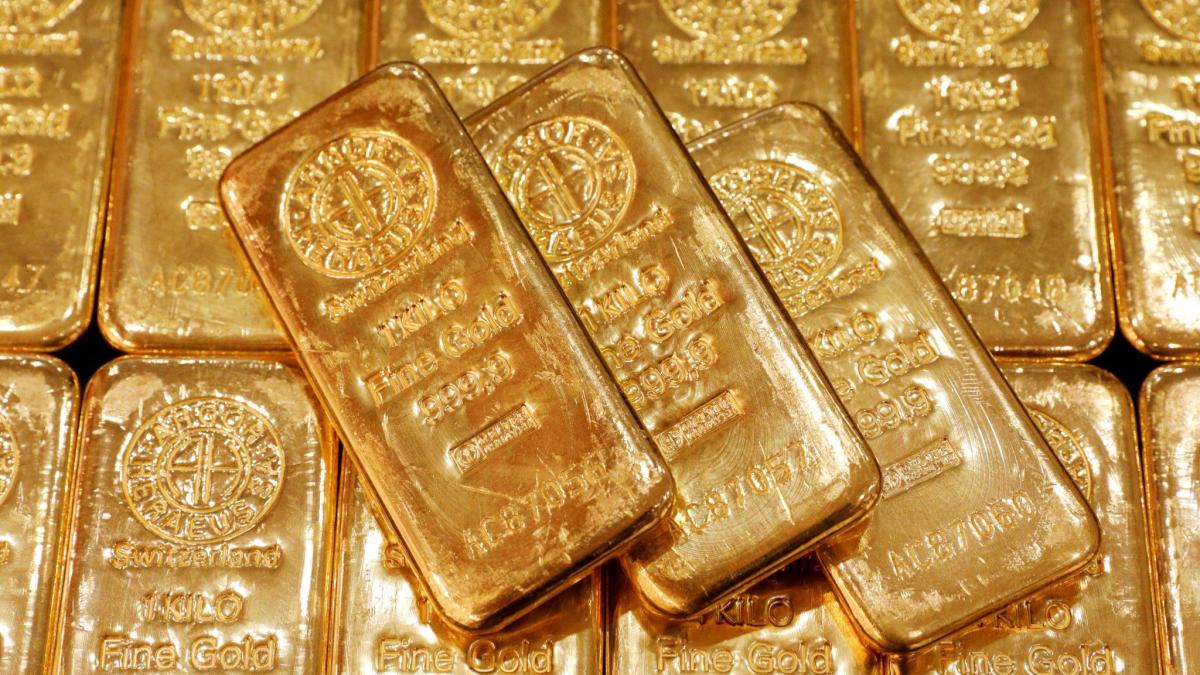
Gold prices went down while oil prices went up.
Oil supplies were disrupted after Saudi Arabia closed an important pipeline.
The pipeline helped move oil without using the Strait of Hormuz.
Traders worry that expensive oil could make inflation worse.
Because of this, they think the Federal Reserve may raise interest rates soon.
Higher rates can make gold less attractive because gold does not pay interest.
Higher US government bond yields and a stronger dollar also pressured gold.
Gold has fallen more than 3% in September after trading above $4,600 in late August.
Some investors still think gold could rise later if higher rates hurt the economy and increase recession worries.

Gold traded near $4,290 an ounce after falling more than 1% in the previous session.
Oil prices approached $108 a barrel after Saudi Arabia closed its East-West pipeline following attacks.
Traders priced in a roughly 90% to 92% chance of the Federal Reserve raising rates within days.
Higher inflation expectations, Treasury yields and a stronger dollar pressured non-interest-bearing gold.
JPMorgan Private Bank’s Yuxuan Tang said a hike could hurt gold initially, while recession risks may support it later.
- Who
- Gold traders, the Federal Reserve, Saudi Arabia, and analysts including Yuxuan Tang of JPMorgan Private Bank.
- What
- Gold held losses as oil disruptions increased expectations of a Federal Reserve interest-rate increase.
- Where
- Gold was quoted in London and Singapore, while the oil disruption involved Saudi Arabia’s East-West pipeline and the Strait of Hormuz.
- When
- Monday and the following trading session; traders expected a possible rate decision within the coming days.
- Why
- Higher oil prices could increase inflation and encourage the Federal Reserve to raise rates, while higher yields and a stronger dollar also pressured gold.
Rate-Hike View
Rate-Hold and Recession View
Near-term gold impact
Rate-Hike View
A Federal Reserve rate increase would likely put further pressure on gold because higher borrowing costs make non-interest-bearing bullion less attractive.
Rate-Hold and Recession View
A decision to hold rates, whether hawkish or dovish, could push real yields lower and support gold.
Medium-term outlook
Rate-Hike View
Higher oil prices and rising inflation expectations could require tighter monetary policy, creating continued headwinds for gold.
Rate-Hold and Recession View
Even if the Federal Reserve raises rates, tighter policy could worsen already-struggling parts of the economy and increase recession risks, supporting gold as a portfolio hedge.
Key facts
- Gold price
- Spot gold fell 0.9% to $4,310.64 an ounce in London in one report and 0.3% to $4,288.18 in Singapore in the other.
- Intraday decline
- Gold fell as much as 1.1% and later traded around $4,290 an ounce after reaching a five-week low.
- Oil price
- Benchmark crude futures traded near $108 a barrel.
- Rate-hike probability
- Traders priced in an almost 90% chance in one report and a 92% chance in the other of a rate increase within days.
- Pipeline disruption
- Saudi Arabia closed its East-West pipeline after attacks, putting oil flows through the route at risk.
- Treasury yield
- The 10-year Treasury yield briefly reached 5%, its highest level in nearly three years.
- September performance
- Gold was down more than 3% in September after trading above $4,600 an ounce in late August.
Quotes
Yuxuan Tang
Asia head of rates and foreign-exchange strategy at JPMorgan Private Bank
“By contrast, a hold, hawkish or dovish, would likely push real yields lower and reignite concerns about policy credibility and currency debasement, which should be supportive for gold.”
 livemint.com
Sources
Related news

Gold slips as oil rally boosts Fed hike bets
Gold Drops as Oil Surge Raises Fed Hike Bets

Gold Slips as Hot Inflation Lifts Fed Hike Bets

Gold Falls Sharply as Fed Rate-Hike Bets Rise

Gold Slips as US Inflation Raises Federal Rate Hike Odds
Gold Slips as Mideast Tensions Sustain Federal Reserve Hike Bets
War-Driven Chokepoints Keep Oil Prices High, Threatening India
Indian Refiners Face Rising Crude Costs Amid Middle East Disruptions
Iran War Costs Drive Inflation, Oil Prices and Mortgage Rates

Saudi Arabia Calls Alleged Houthi Mecca Attack Red Line
Pakistan Weighs Smart Lockdown as Fuel Prices Surge
