

1 week ago
UN and Red Cross Seek Urgent Curbs on Autonomous Weapons
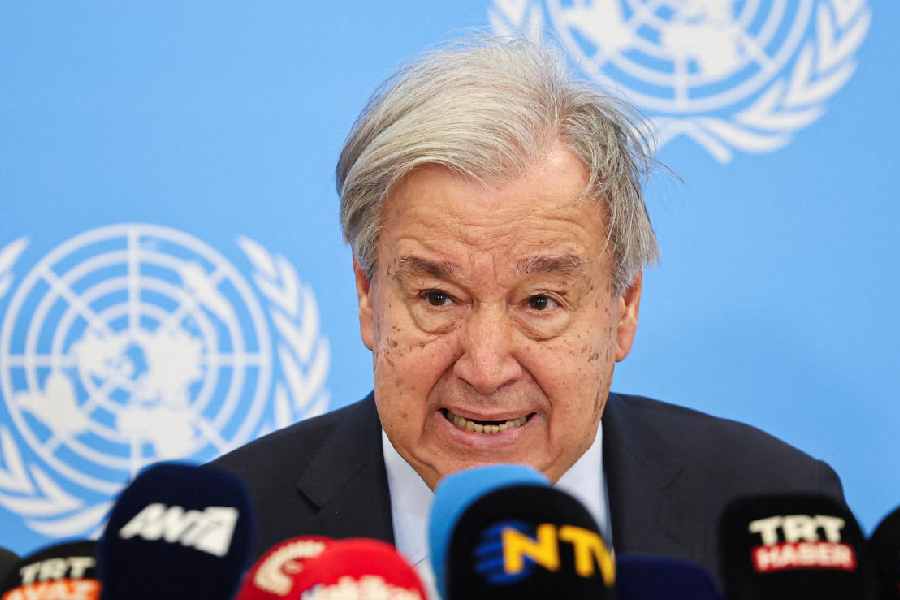
The United Nations and the Red Cross want countries to create strict rules for weapons that can operate by themselves.
They are especially worried about machines deciding whether to take a human life.
A drone attack in Ukraine reportedly killed three people, and Ukrainian officials said the drone used an Nvidia chip.
The article does not establish that this attack was fully autonomous.
Some armies already use fully autonomous systems to stop missiles from reaching warships.
Those systems are not known to have attacked people.
Human rights groups fear AI weapons could make deadly mistakes, such as failing to recognize a wounded or surrendering soldier.
They also worry it could become unclear who is responsible for a machine's actions.
Countries will continue discussing the issue in Geneva, although Russia and the United States oppose a new legally binding agreement.

Antonio Guterres and Mirjana Spoljaric urged states to negotiate binding rules for autonomous weapons.
They warned machines could soon select and kill human targets without human involvement.
A Russian drone attack in Ukraine reportedly killed three people, according to Ukrainian officials.
Fully autonomous anti-missile systems are already used, but are not known to target humans.
Russia and the United States oppose new binding rules, saying existing international law is sufficient.
- Who
- UN Secretary-General Antonio Guterres and International Committee of the Red Cross President Mirjana Spoljaric called for action by states; Russia and the United States oppose a new legally binding instrument.
- What
- They called for urgent negotiations on legally binding rules regulating autonomous weapon systems, including clear prohibitions and restrictions.
- Where
- States are discussing the issue in Geneva.
- When
- The warning was issued Tuesday, August 25; discussions have continued since 2014, with talks planned for November.
- Why
- They said autonomous weapons could make fatal errors, target humans without human involvement, and create uncertainty over responsibility for possible war crimes.
Supporters of Binding Restrictions
Opponents of a New Treaty
Need for new international rules
Supporters of Binding Restrictions
The United Nations, Red Cross, and human rights groups say urgent negotiations are needed for clear prohibitions and restrictions because AI weapons may be unpredictable and difficult to control.
Opponents of a New Treaty
Russia and the United States argue that existing international humanitarian law is sufficient and oppose a new legally binding instrument.
Human control over lethal decisions
Supporters of Binding Restrictions
The UN and Red Cross say decisions about whether to take a human life should remain with people, not machines.
Opponents of a New Treaty
The article does not identify a specific alternative proposal from opponents, but their position rejects the need for new binding standards.
Risk and accountability
Supporters of Binding Restrictions
Critics warn autonomous systems could fail to recognize wounded or surrendering soldiers and make it harder to assign responsibility for possible war crimes.
Opponents of a New Treaty
Opponents maintain that existing legal rules can address the use of these weapons, according to the article.
Key facts
- Key officials
- UN Secretary-General Antonio Guterres and International Committee of the Red Cross President Mirjana Spoljaric
- Proposed measure
- A legally binding instrument with clear prohibitions and restrictions on autonomous weapon systems
- Existing discussions
- States have discussed the issue since 2014
- Reported Ukraine attack
- Ukrainian officials said a Russian drone equipped with an Nvidia chip killed three Ukrainians on Monday
- Existing autonomous systems
- Some armies use fully autonomous anti-missile systems on warships
- Human-targeting status
- Fully autonomous systems are not known to have been used against human targets
- Upcoming meeting
- A major review conference is planned for November in Geneva
- Current disagreement
- Russia and the United States argue existing international law is sufficient, while advocates seek new binding standards
Quotes
Antonio Guterres and Mirjana Spoljaric
The UN secretary-general and president of the International Committee of the Red Cross, issuing a joint statement
“Negotiations must begin now to urgently adopt a legally binding instrument to regulate autonomous weapon systems with clear prohibitions and restrictions.”
 telegraphindia.com
 theprint.in
“We are now dangerously close to crossing a moral red line: the autonomous targeting of humans by machines.”
telegraphindia.com
theprint.in
Carolyne Mélanie Régimbal
Chief of service at the UN Office for Disarmament Affairs
“Some decisions must forever remain with the human being, none more than the decision of taking or not a human life,”
telegraphindia.com
Sources
Related news

UN and Red Cross Urge Rules for Autonomous Weapons

UN Chief Warns Cheap Drones Are Creating Dystopian Wars

UN Reports Record Aid Worker Attacks Amid Rising Drone Threats

Nvidia Jetson Modules Found in Russian Drones Raise Supply Questions

Allies Condemn Israel’s Decision Not to Investigate Gaza Aid Killings
Putin Faces Western Isolation While Russia Builds Non-Western Ties
Russian strikes hit Kyiv for seventh consecutive day
Russia Vows Civil Aviation Safety Amid Ukraine Drone Warning

Germany Blames Russia for Leipzig Drone Attack, Europe Vows Response
Jaishankar to Visit Ukraine and Poland for Bilateral Talks