3 weeks ago
Armenian church leader to face trial amid Russia tensions

Armenia is a country where a very old church is important to many people.
The leader of that church is called Catholicos Karekin II.
The prime minister of Armenia, Nikol Pashinyan, is angry at the church leader.
He says the church is secretly helping Russia, but he has not shown any proof.
The church says that is not true.
Now the government is putting Karekin and six other church leaders on trial.
They are in trouble because they did not follow a court order about a bishop.
That bishop had been kicked out of the church but a court said he should come back.
If the church leaders are found guilty, they could go to jail for up to two years.
Many people say the trial is just a way to punish people who disagree with the prime minister.

Armenia is putting Catholicos Karekin II, head of the Apostolic Church, and six senior clerics on trial starting Friday for allegedly failing to comply with a civil court order.
The clerics face up to two years in prison if convicted of failing to comply with a court order temporarily reinstating Bishop Gevorg Saroyan, whom the Church had defrocked.
Pro-Western Prime Minister Nikol Pashinyan, re-elected in June, accuses the Church, without presenting evidence, of acting as a proxy for foreign powers, namely Russia; the Church denies the accusations.
The case is the most significant legal challenge yet to the Apostolic Church's leadership, which has criticized Pashinyan and echoed calls for him to step down.
Opposition politicians, church leaders and civil society groups say the prosecution is politically motivated and part of a wider crackdown on government critics.
- Who
- Catholicos Karekin II and six senior clerics of the Armenian Apostolic Church, tried by the government of Prime Minister Nikol Pashinyan.
- What
- A trial on charges of failing to comply with a civil court order that temporarily reinstated defrocked Bishop Gevorg Saroyan, with potential prison sentences of up to two years.
- Where
- Armenia.
- When
- The trial starts on Friday, August 7.
- Why
- Amid deepening tensions over Pashinyan's pro-Western course away from Russia and his accusation, without evidence, that the Church acts as a proxy for Russia.
Pashinyan's government
Church, opposition and civil society
Political motivation of the trial
Pashinyan's government
The clerics are accused of failing to comply with a civil court order, a legal matter for the courts to decide.
Church, opposition and civil society
The prosecution is politically motivated and part of a wider crackdown on government critics; it violates the constitutional independence of the Apostolic Church.
Church's alleged Russia links
Pashinyan's government
Pashinyan accuses the Church, without presenting evidence, of acting as a proxy for foreign powers, namely Russia.
Church, opposition and civil society
Karekin II and the Church deny the accusations, and critics say the case is a clear interference of the executive power in church affairs.
Armenia's geopolitical course
Pashinyan's government
Pashinyan has won strong backing from the European Union as he steers Armenia closer to the West and away from Russia's orbit.
Church, opposition and civil society
Russia's Foreign Ministry doubts Armenia's genuine desire for cooperation with Moscow and has banned Armenian imports.
Key facts
- Church leader on trial
- Catholicos Karekin II, head of the Apostolic Church since 1999
- Co-defendants
- Six senior clerics of the Apostolic Church
- Charge
- Failure to comply with a civil court order temporarily reinstating Bishop Gevorg Saroyan, who was defrocked by the Church
- Maximum penalty
- Up to two years in prison
- Trial start
- Friday, August 7
- Prime Minister
- Nikol Pashinyan, re-elected in June
- Main accusation
- Pashinyan says the Church acts as a proxy for Russia; no evidence presented and the Church denies it
- Historical note
- Armenia adopted Christianity in 301 AD
Quotes
Tigran Grigoryan
Director of the Regional Centre for Democracy and Security think tank in Yerevan
“"Pashinyan started viewing the Church as a political threat, as an institution that could support the opposition and different political parties to come to power."”
 theprint.in
“"This is a clear interference of the executive power in church affairs," she said.”
theprint.in
Sources
Related news
Armenia Charges Former President Kocharyan in Corruption Crackdown
Kremlin Raises Concern Over Armenia’s Opposition Arrests
South Korean Court Jails Unification Church Leader Over Influence Case
Kerala priests of Orthodox and Jacobite factions clash over church
US seeks extradition of Philippines 'Son of God' preacher Quiboloy
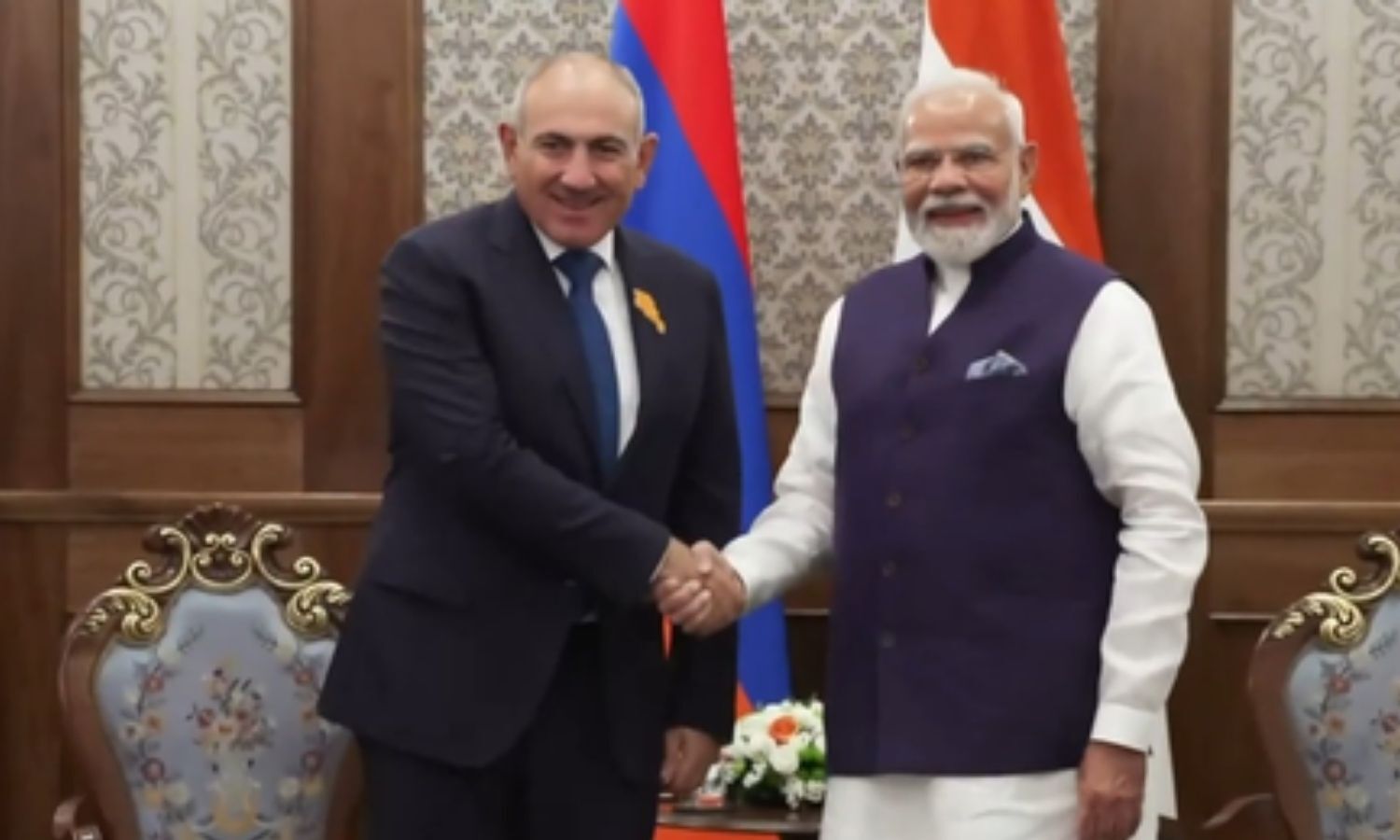
Modi, Pashinyan Discuss Bilateral Ties During Bishkek SCO Summit