2 hrs ago
China’s Delivery Robots Learn to Tackle Night Shifts
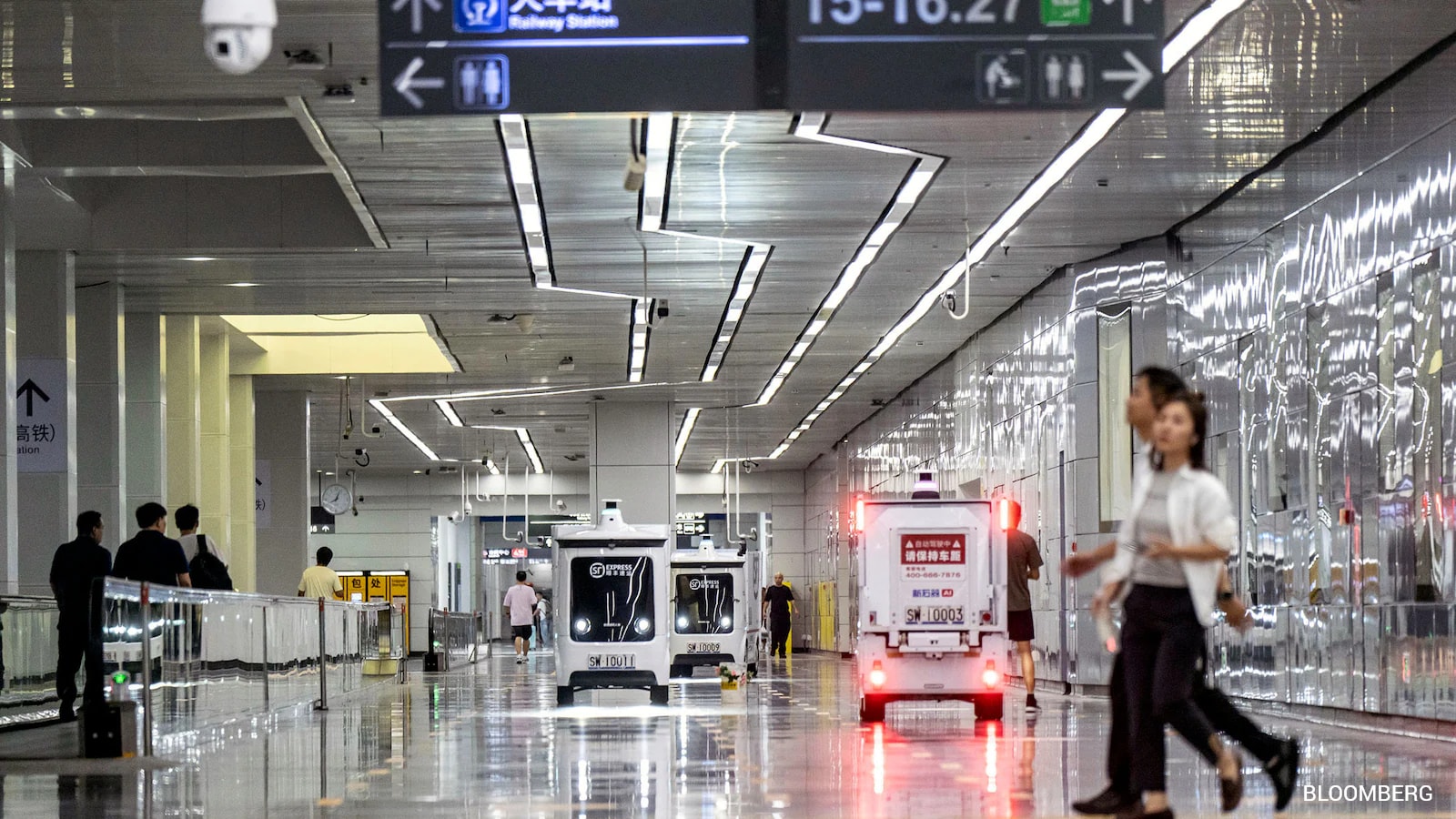
Shenzhen is testing driverless vans that carry deliveries at night.
The vans can use roads when there may be less traffic and fewer pedestrians.
Neolix says this could lower costs and make delivery work less tiring for people.
But darkness can make it harder for the vehicles to see.
Headlights, wet roads, speeding cars and people moving unpredictably can also cause problems.
Shenzhen has set routes and safety rules for the trial.
Neolix says its system watches vehicle information and flags possible risks.
The company says its night service now covers 437 routes.
Other companies are also testing nighttime deliveries, including drones.

Shenzhen opened approved routes to nighttime driverless deliveries in March, allowing companies to test autonomous vehicles after dark.
Neolix says overnight deliveries can use quieter roads and idle vehicle capacity while reducing labor costs and courier strain.
Night operations pose challenges including low visibility, headlight glare, wet-surface reflections, speeding vehicles and unpredictable pedestrians.
Shenzhen’s trial includes approved corridors, anti-glare lighting, vehicle standards and emergency-response protocols.
Neolix says its overnight service has expanded to 437 routes; trials are also underway in Qingdao and Zhangjiakou.
- Who
- Neolix Technologies and other delivery companies, including JD.com and Meituan.
- What
- Companies are testing autonomous vehicles and drones for nighttime deliveries.
- Where
- Shenzhen, China, with Neolix trials also underway in Qingdao and Zhangjiakou.
- When
- Shenzhen opened nighttime driverless delivery access in March; the article reports JD.com’s Shenzhen operations as of August 2026.
- Why
- Companies see nighttime delivery as a way to use quieter roads and idle capacity, lower costs and reduce physical strain on couriers.
Potential benefits
Challenges and safeguards
Costs and courier work
Potential benefits
Neolix founder Yu Enyuan says nighttime robovans can lower costs, use idle transport capacity and reduce couriers’ physical strain.
Challenges and safeguards
The article notes that fewer workers may be available at night to unload vehicles or fix operational errors, requiring robovans to be more precise.
Nighttime road conditions
Potential benefits
Night roads may be quieter, with reduced congestion and fewer pedestrians, making them attractive for deliveries.
Challenges and safeguards
Low light, headlight glare, reflections on wet surfaces, speeding vehicles and unpredictable pedestrians can make navigation more difficult.
Testing and public oversight
Potential benefits
Industry observers say China’s scale, supply chain and local-government willingness to allow trials can help autonomous delivery develop.
Challenges and safeguards
Shenzhen confines the trial to approved corridors and designated routes, with vehicle standards and emergency-response protocols.
Key facts
- Neolix overnight routes
- The company says its service has expanded to 437 routes.
- Neolix fleet
- Neolix says it operates 27,000 vehicles across 300 cities in 15 countries.
- Neolix fleet plans
- The company expects its domestic fleet to reach 50,000 vehicles this year and aims to add another 100,000 next year.
- Meituan delivery activity
- By the end of 2025, its ground vehicles had completed more than 5.5 million outdoor delivery orders and logged over 19 million autonomous kilometers.
- JD.com procurement plan
- JD.com announced plans to procure 3 million robots, 1 million unmanned vehicles and 100,000 drones over five years.
- Chinese city access
- More than 100 Chinese cities have opened some roads to unmanned delivery vehicles.
- Neolix monitoring
- Neolix says its risk system flags 17 categories and its municipal monitoring feed receives 42 vehicle metrics.
- JD.com Shenzhen operations
- As of August 2026, its logistics subsidiary was operating over 100 autonomous vehicles and more than 100 nighttime routes in Shenzhen.
Quotes
Zhang Chao
Grocery store manager in Shenzhen's Longgang district.
“Night delivery bypasses daytime traffic peaks, activates underutilized late-night road resources, unlocks idle transport capacity, lowers costs, and reduces physical strain on couriers. China has immense nighttime consumption potential.”
 NDTV
NDTV
 CNBC TV 18
“Our robots must do a lot more than learn how to drive on a flat road. They ultimately need to reach users' doors, understand three-dimensional space, know exactly where to unload, where to stop.”
NDTV
Bill Russo
Founder and chief executive officer of the China-based consultancy Automobility Limited.
“China’s biggest advantage is scale plus ecosystem density. It has enormous parcel volumes, dense cities, sophisticated digital logistics networks, a deep EV and autonomous-driving supply chain, and local governments willing to designate road access and experiment with commercial deployment.”
CNBC TV 18
Sources
Related news
Tesla Robotaxis Face Nighttime Animal-Detection Hurdle
Harsh Goenka Praises Xiaomi’s AI-Powered Dark Factory in China
Delivery Robots Trigger Brief Traffic Jam In St. Petersburg
UBTECH Opens Factory Producing Humanoid Robots Every Ten Minutes

China’s AI Push Raises Questions for Trucking Workforce