

5 days ago
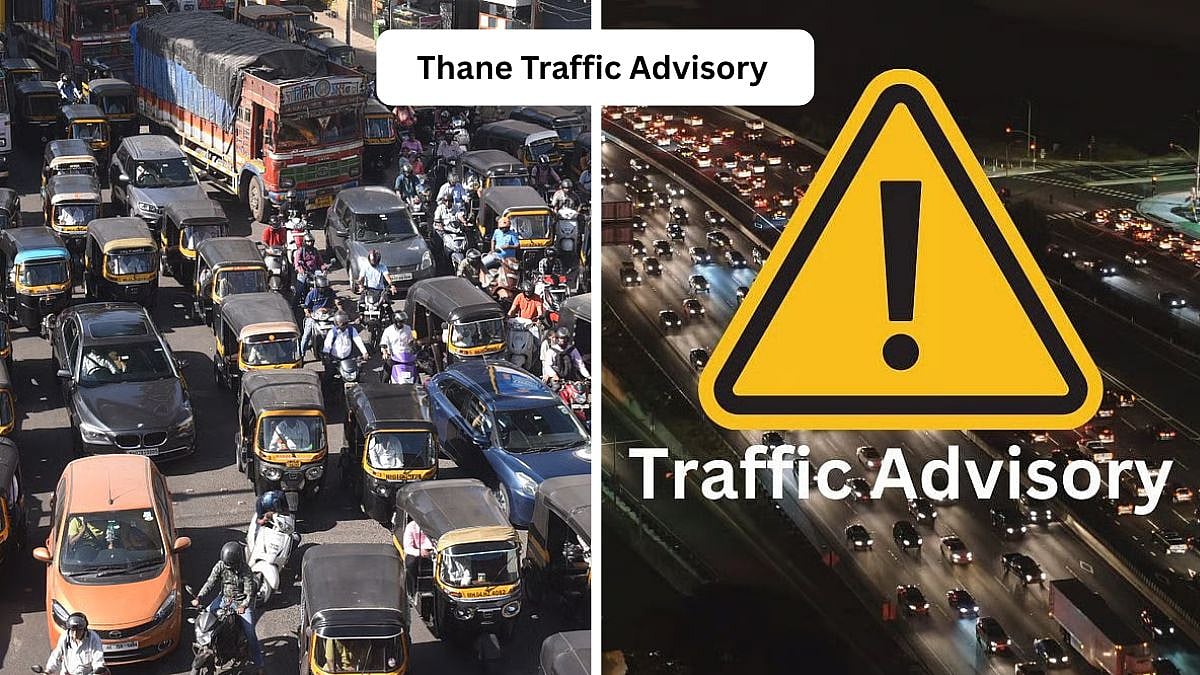
Thane Traffic Diversions Announced For Wagle Pipeline Work

Thane authorities will temporarily change how vehicles travel in parts of Wagle division.
The changes are needed for water pipeline work.
Workers will cut roads and lay new pipelines.
The restrictions start at midnight on August 30, 2026.
They end at 5 a.m.
on August 31, 2026.
Some roads near Kamgar Naka, Savarkar Nagar, Mahatma Phule Nagar, and Aaimata Chowk will be affected.
Drivers will need to follow routes through Savarkar Nagar and Yashodhan Nagar.
Emergency vehicles will still be allowed to pass normally.

Traffic restrictions in Thane’s Wagle division will begin at midnight on August 30, 2026.
The restrictions will continue until 5 a.m. on August 31, 2026.
Thane Municipal Corporation will conduct road cutting and water pipeline installation.
Vehicles between Kamgar Naka and Aaimata Chowk via R.J. Thakur College will use alternate routes.
Emergency vehicles, including ambulances and fire brigade units, will remain exempt from the restrictions.
- Who
- The Thane City Traffic Police and Thane Municipal Corporation are implementing the measures; Deputy Commissioner of Police (Traffic) Pankaj Shirsat issued the route instructions.
- What
- Temporary road closures and vehicle diversions will support road cutting and new water pipeline work.
- Where
- The affected area is within the Wagle Traffic Sub-Division, including routes between Savarkar Nagar, Mahatma Phule Nagar, Kamgar Naka, R.J. Thakur College, and Aaimata Chowk.
- When
- From 12 a.m. on August 30, 2026, until 5 a.m. on August 31, 2026.
- Why
- The restrictions are intended to facilitate essential water pipeline infrastructure work and manage traffic during construction.
Key facts
- Authority
- Thane City Traffic Police
- Work agency
- Thane Municipal Corporation
- Start time
- 12 a.m., August 30, 2026
- End time
- 5 a.m., August 31, 2026
- Affected division
- Wagle Traffic Sub-Division
- Main work
- Road cutting and laying new water pipelines
- Exempt vehicles
- Police vehicles, fire brigade units, ambulances, green corridor transports, oxygen supply trucks, and other essential service vehicles
Sources
Related news
Eid-e-Milad 2026 Brings Traffic Diversions Across Mumbra, Ulhasnagar

SBI Tellapur Traffic Diversions Begin August 22 for 25 Days
Thane Marathon Draws 30,000 Runners Amid Major Traffic Diversions
Pune Announces Traffic Diversions For Tiranga Rally On August 11
Pune, Pimpri-Chinchwad Announce Eid-e-Milad Traffic Curbs and Diversions
Traffic Diversions Announced for Chandrababu Naidu’s Veligonda Visit
Hubtown Reports Strong FY26 Pre-Sales Growth
