8 months ago
Estonian Machines to Clean Chennai Beaches
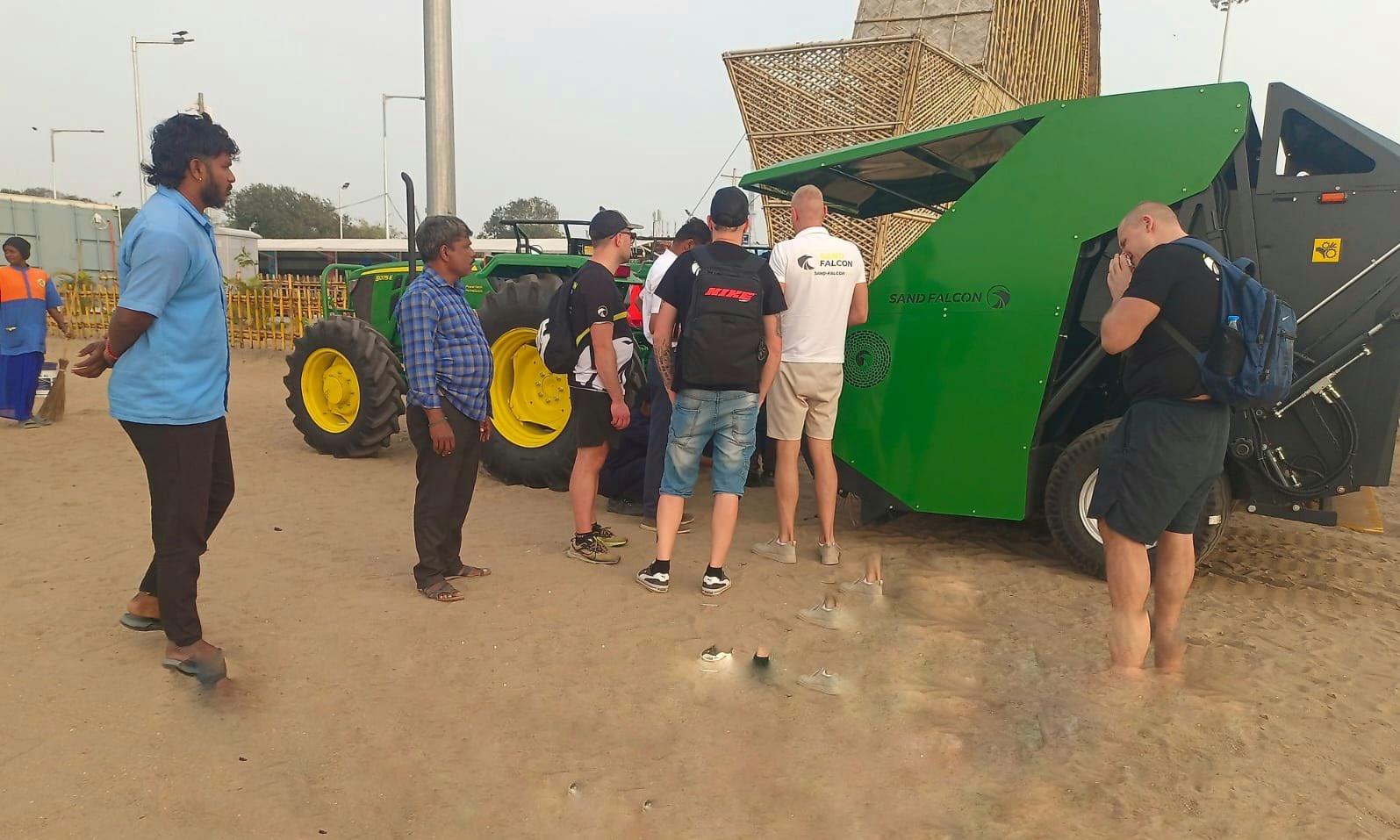
Chennai is getting 22 special machines from Estonia to clean its beaches.
These machines can clean a lot of sand quickly and are very good at picking up trash while leaving the sand and tiny beach animals safe.
They will work early in the morning and late in the evening so they don't bother people or animals.
The machines will help keep the beaches clean and make it safer for the people who usually clean the beaches by hand.
The goal is to make the beaches nicer and cleaner for everyone to enjoy.

22 mechanised beach-combing machines from Estonia will be deployed to clean Chennai's 13-kilometre-long coastline.
The machines can clean 6 acres of sand per hour and are designed to minimise damage to the beach environment.
They will operate during early morning and late evening hours to avoid disturbing beachgoers and wildlife.
The initiative aims to reduce pollution, improve occupational safety for manual workers, and potentially achieve 'Blue Flag Certification' for certain areas.
The machines are expected to cover the entire Ennore–Uthandi stretch, addressing various types of pollution in different beach areas.
- Who
- Greater Chennai Corporation (GCC)
- What
- Deployment of 22 mechanised beach-combing machines from Estonia
- Where
- Chennai's 13-kilometre-long urban coastline from Ennore to Uthandi
- When
- This weekend
- Why
- To clean beaches, reduce pollution, and improve occupational safety for manual workers
Key facts
- Number of Machines
- 22
- Origin of Machines
- Estonia
- Cleaning Capacity
- 6 acres per hour
- Beaches Covered
- Marina, Besant Nagar, Kottivakkam, Palavakkam, Ennore, Uthandi
- Operating Speed
- 15 km/h
- Cleaning Width
- 7 feet
- Hopper Capacity
- 2 cubic metres
- Operating Hours
- Early morning and late evening
Quotes
S.K Sivaramakrishnan
A beachgoer
“Beach cleaning in Chennai has long depended on manual labourers who work barefoot under harsh sun. The sanitary workers were often exposed to broken glass, medical waste, and hazardous debris washed ashore. Mechanisation will significantly reduce direct human contact with dangerous materials, improving occupational safety. It will also allow workers to focus on segregation and monitoring rather than scavenging”
 deccanchronicle.com