

1 week ago
Why Shirts Have Back Loops: From Naval Gear to Heritage
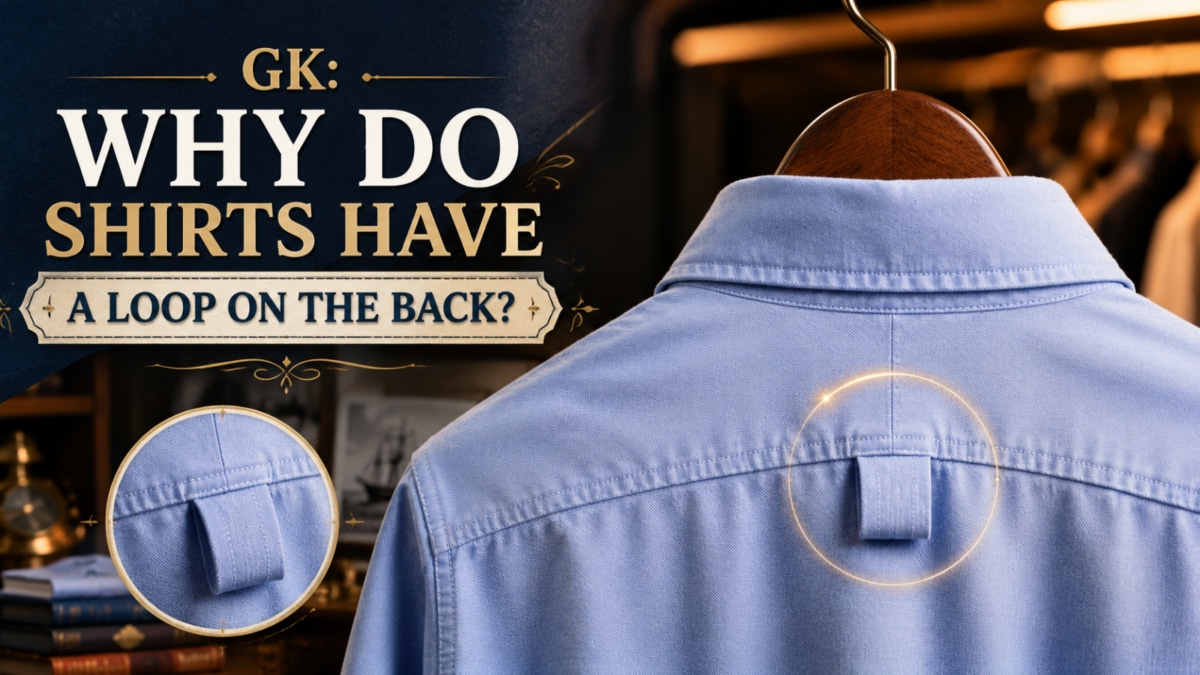
A locker loop is the small piece of fabric sewn onto the back of some shirts.
It was probably first used on naval uniforms.
Sailors could hang shirts on hooks when they had little storage space.
This helped keep shirts off the floor and reduced wrinkles.
The design later became popular in regular men’s clothing.
GANT helped make it fashionable among Ivy League students in the 1960s.
Some students removed the loop to show they were dating someone.
Today, the loop is mostly a traditional design feature, but it can still be useful when traveling.

The small fabric loop on a shirt’s back is called a locker loop.
The loop is widely believed to have originated on naval uniforms for hanging shirts in cramped spaces.
GANT popularized locker loops among Ivy League students during the 1960s.
Some college men reportedly removed the loops to indicate they were in relationships.
Today, locker loops are mainly decorative but can help keep shirts wrinkle-free while traveling.
- Who
- Sailors, clothing manufacturers, GANT, Ivy League students, and shirt wearers are associated with the locker loop.
- What
- The locker loop is a fabric loop on the back of a shirt that was designed for hanging it from a hook.
- Where
- It was associated with naval ships, crowded dorm rooms, and shirts used while traveling.
- When
- Its use is linked to naval uniforms and it became popular in mainstream menswear during the 1960s.
- Why
- The loop allowed shirts to be hung in tight spaces, reducing wrinkles and saving locker space.
Key facts
- Name
- Locker loop
- Original purpose
- Hanging shirts from hooks in cramped spaces
- Early association
- Naval uniforms
- Popularizer
- GANT
- Decade of popularization
- 1960s
- Social signal
- Some college men reportedly removed the loop to indicate they were in relationships
- Modern use
- Mostly a heritage detail, with practical use during travel
Sources
Related news

Why Jeans Have Tiny Front Pockets: A 150-Year-Old Design
How Zippers Went From Unpopular Inventions to Everyday Essentials

The Surprisingly Political History of the Hoodie

Designers Turn One Silk Scarf Into Many Outfits
Why T-Shirt Bras Are Essential for Seamless Everyday Outfits

How Military Cargo Pants Became Modern Fashion Staples

Tamil Nadu teen earns Rs 3.5-crore Brown University scholarship

From Homesickness to Belonging: Coping While Studying Abroad

Tamil Nadu's 17-year-old bags Rs 3.55 crore Brown scholarship

CEO Sparks Debate on Privilege and Luck
