2 weeks ago
First-Night Effect: Why People Sleep Poorly in New Places
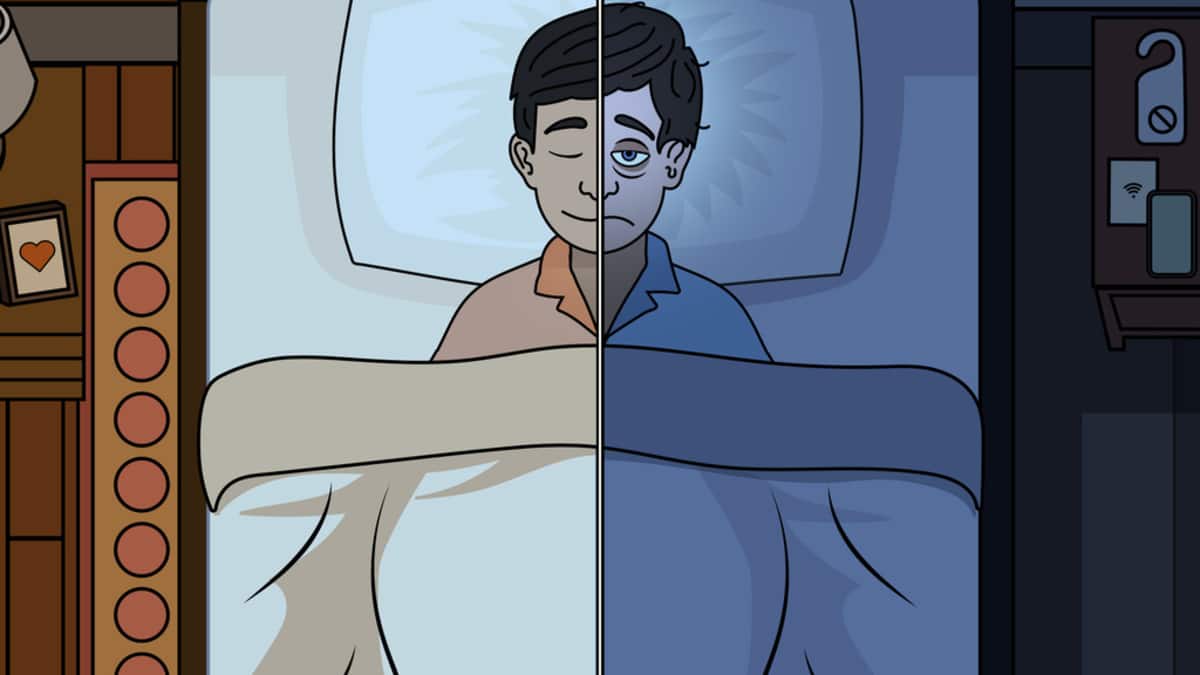
Have you ever stayed at a new house or hotel and found it hard to sleep?
Scientists call this the 'first-night effect.'
Your brain thinks a new place might not be safe, so part of it stays awake while you rest.
That means you sleep less deeply and wake up more often.
Most people sleep about 20 to 30 minutes less on the first night.
Kids and older people feel it more, while people in their twenties are affected the least.
Worrying, traveling or a flashing smoke alarm in a hotel room can make it worse.
You can help yourself by reading in bed, bringing a favorite pillow or following a bedtime routine.
If you have a big event coming up, arriving a day early can help you sleep better.
After the first night, the effect usually fades.

Sleep specialists call the phenomenon the 'first-night effect,' which has been confirmed by dozens of studies and is believed to have evolutionary roots.
On average, people sleep about 20 to 30 minutes less and less deeply in a new environment.
Research by Ahmad Mayeli at the University of Pittsburgh found the frontal lobe is more active during first-night sleep, indicating the brain stays alert.
The effect is more pronounced in children, adolescents and older adults, while people in their 20s are the least affected.
Experts advise sleep hygiene practices, familiar objects and arriving a day early before important events to counter the effect.
- Who
- Sleep researchers Anna Wick, Ahmad Mayeli and Lisa Strauss, and travelers such as Robinson Leoni
- What
- The first-night effect causes people to sleep less and less deeply when they spend the first night in a new environment
- Where
- Unfamiliar environments such as hotels and travel destinations, per research at the University of Freiburg and the University of Pittsburgh
- When
- On the first night in a new place; the effect typically fades after that night
- Why
- It is believed to be an evolutionary adaptation that keeps the sleeping brain vigilant, with anxiety and environmental factors also playing a part
Key facts
- Phenomenon
- First-night effect
- Average sleep loss
- 20 to 30 minutes less on the first night
- Brain area involved
- Frontal lobe shows more activity, signaling alertness
- Most affected groups
- Children, adolescents and older adults
- Least affected group
- People in their 20s
- Example case
- Robinson Leoni sleeps about 7 hours at home but about 5 hours on the first night away
- Suggested remedies
- Cool, dark room, bedtime routine, familiar objects, visualization and arriving a day early
Quotes
Robinson Leoni
Sales director who travels frequently
“It’s assumed to be an adaptation response that the sleeping brain remains vigilant in this unfamiliar environment.”
 firstpost.com
“I feel normal, you know, no stress, nothing, but it’s just I notice I wake up continuously.”
firstpost.com
Sources
Related news

Why Multiple Alarms Can Leave You Feeling More Tired
Experts Say Eight Hours May Not Suit Every Adult

Gurumaa Yogita Khatri Explains Why Quality Sleep Matters

Travel May Benefit Mental Health More Than Expected, Research Finds
Why Sleeping With Fairy Lights On May Disrupt Sleep Quality

Too Little or Too Much Sleep May Harm Health