

1 week ago
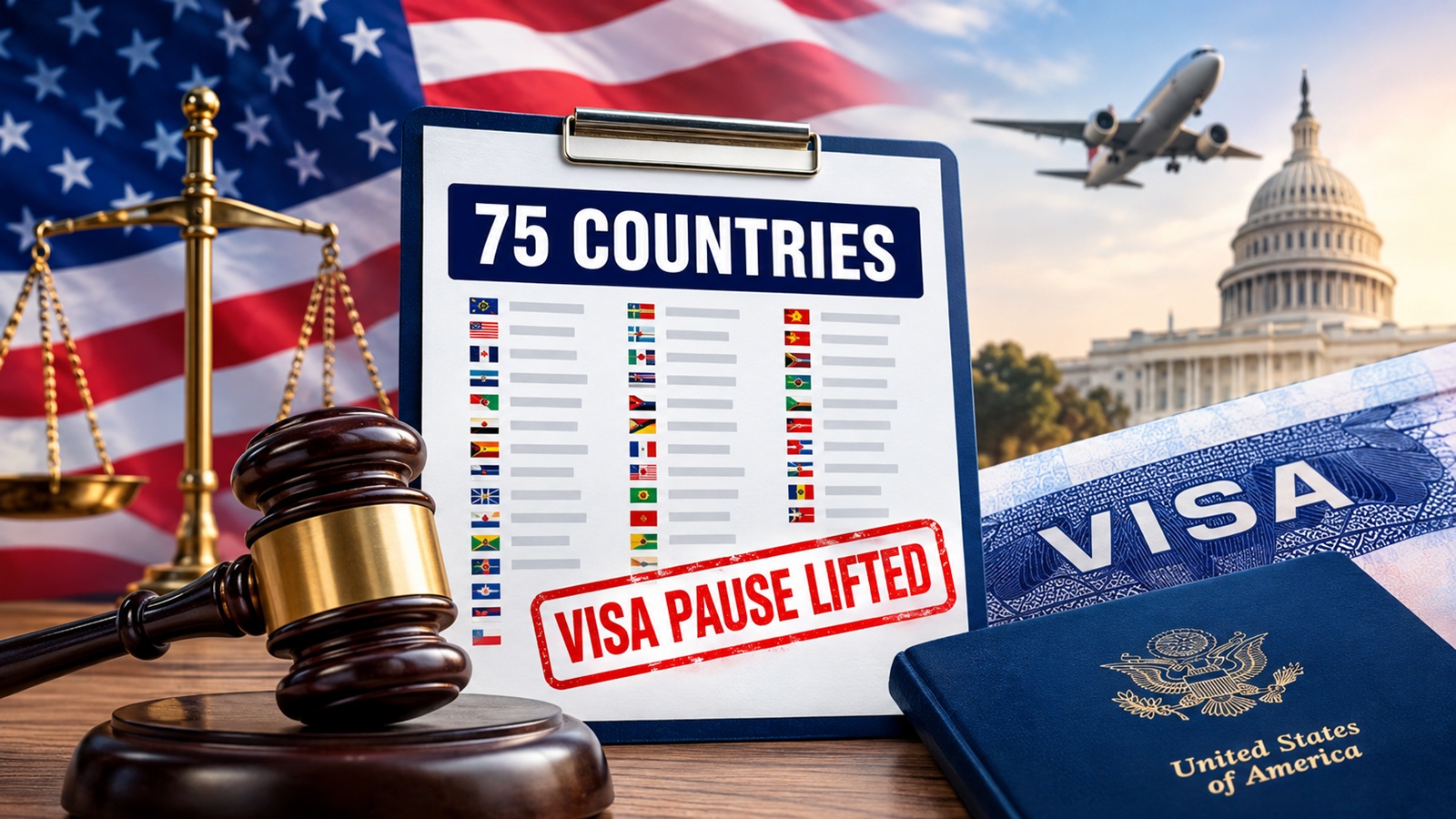
New York Judge Strikes Down Trump’s 75-Country Visa Suspension

The U.S. government paused some visas for people from 75 countries.
These immigrant visas are for people who want to live permanently in the United States.
The government said it was worried that some applicants might need public assistance.
Judge Jeannette Vargas said officials could not automatically reject people just because of their nationality.
She said consular officers must examine each applicant’s individual situation.
The judge also said Secretary of State Marco Rubio did not have the authority to impose the blanket instructions.
Tourist and student visas were not covered by the suspension.
Visa refusals based only on this policy must now be reconsidered.
Refusals based on other legal reasons can still remain in place.

Judge Jeannette Vargas struck down a Trump administration policy suspending immigrant visas for applicants from 75 countries.
Vargas ruled that Secretary of State Marco Rubio exceeded his authority and that the policy unlawfully relied on applicants’ nationality.
The State Department said the affected applicants faced a high risk of becoming public charges and using government resources.
The suspension covered immigrant visas for permanent residence, but not tourist, student or other nonimmigrant visas.
Visa refusals based solely on the policy must be reconsidered, while denials based on separate legal grounds remain valid.
- Who
- U.S. District Judge Jeannette A. Vargas, Secretary of State Marco Rubio, the Trump administration, the State Department, immigrant-rights groups, visa applicants and U.S. citizens sponsoring relatives.
- What
- A federal judge vacated a policy suspending immigrant visa issuance for nationals of 75 countries.
- Where
- The ruling was issued in federal court in Manhattan, New York.
- When
- The policy was announced and took effect in January 2026; Vargas issued her ruling on August 21, 2026.
- Why
- Vargas found that the policy exceeded the secretary of state’s authority, conflicted with laws against nationality-based discrimination and improperly predetermined visa decisions that Congress assigned to consular officers.
Court and immigrant-rights challengers
Trump administration and State Department
Nationality-based visa decisions
Court and immigrant-rights challengers
Vargas ruled that categorically denying immigrant visas based on nationality conflicted with federal immigration law and its ban on nationality-based discrimination.
Trump administration and State Department
The administration imposed the suspension on applicants from 75 countries, arguing that the group faced elevated public-charge risks and that the policy supported immigration screening and domestic security.
Individual applicant review
Court and immigrant-rights challengers
The plaintiffs and the court said consular officers must assess each applicant’s finances, age, health, skills and family circumstances rather than apply an automatic refusal.
Trump administration and State Department
A Rubio cable directed officers to refuse applicants under the policy even when additional evidence indicated that they could overcome a public-charge refusal.
Scope of the court’s ruling
Court and immigrant-rights challengers
The challengers won vacatur of the policy and relief for applicants refused solely under its instructions.
Trump administration and State Department
The government prevailed on the procedural issue that the policy was an internal directive and therefore did not require formal notice-and-comment rulemaking; the court also rejected a claim that the policy itself violated the public-charge provision.
Key facts
- Affected countries
- Nationals of 75 countries across Latin America, Africa, the Middle East, the Caribbean, the Balkans, South Asia and Southeast Asia.
- Visa category
- Immigrant visas for people seeking permanent residence, including family-based and employment-based applicants.
- Excluded visas
- Nonimmigrant visas, including tourist and student visas, were not covered by the suspension.
- Government rationale
- The State Department said applicants from the listed countries were at high risk of becoming public charges and using local, state and federal resources.
- Court findings
- Vargas said the policy was contrary to law, patently unlawful and beyond Rubio’s statutory authority.
- Effect of ruling
- Refusals based solely on the policy must be reversed or reconsidered; refusals based on separate legal grounds may remain valid.
- Plaintiffs
- The lawsuit included Catholic Legal Immigration Network, African Communities Together, visa applicants and U.S. citizens sponsoring relatives.
- Next step
- The parties must submit a joint letter by September 11, 2026, concerning remaining claims, including those involving a separate public-charge rule.
Quotes
Jeannette Vargas
US District Judge who ruled against the visa-processing policy
“The Policy, which categorically prohibits the issuance of immigrant visas based upon the nationality of the applicant, represents a direct abrogation of this statutory scheme.”
 theprint.in
 telegraphindia.com
“We welcome this ruling because, at its heart, this case is about keeping families together”
 livemint.com

U.S. State Department
U.S. government department that announced and defended the visa suspension policy
“at a high risk for becoming a public charge and recourse to local, state and federal government resources in the United States.”
telegraphindia.com
“protecting the American people by upholding the highest standards of screening and vetting of visa applicants”
livemint.com
Sources
Trump's 75-country immigration visa ban struck down by New York judge — ‘Contrary to law’
US court strikes down immigrant visa suspension covering 75 countries: What happens next
'Contrary to law': US Federal judge strikes down Trump administration’s 75-country visa ban

US judge strikes down policy suspending immigrant visa processing for 75 nations
US judge strikes down Trump's 75-country visa ban, calls policy 'patently unlawful'
Related news
US Court Ends Trump Visa Pause Affecting 75 Countries
Trump Administration Pauses Global Immigrant Visa Interviews Amid Crackdown
US Pauses Worldwide Visa Appointments Amid Trump Immigration Crackdown
Court Blocks Trump Student Visa Crackdown Over Political Speech
US Plans Largest-Ever Visa Revocation Targeting Asylum Applicants
