Business · Economy · 13 hrs ago
War, energy costs and AI test the global economy at Bangkok meetings
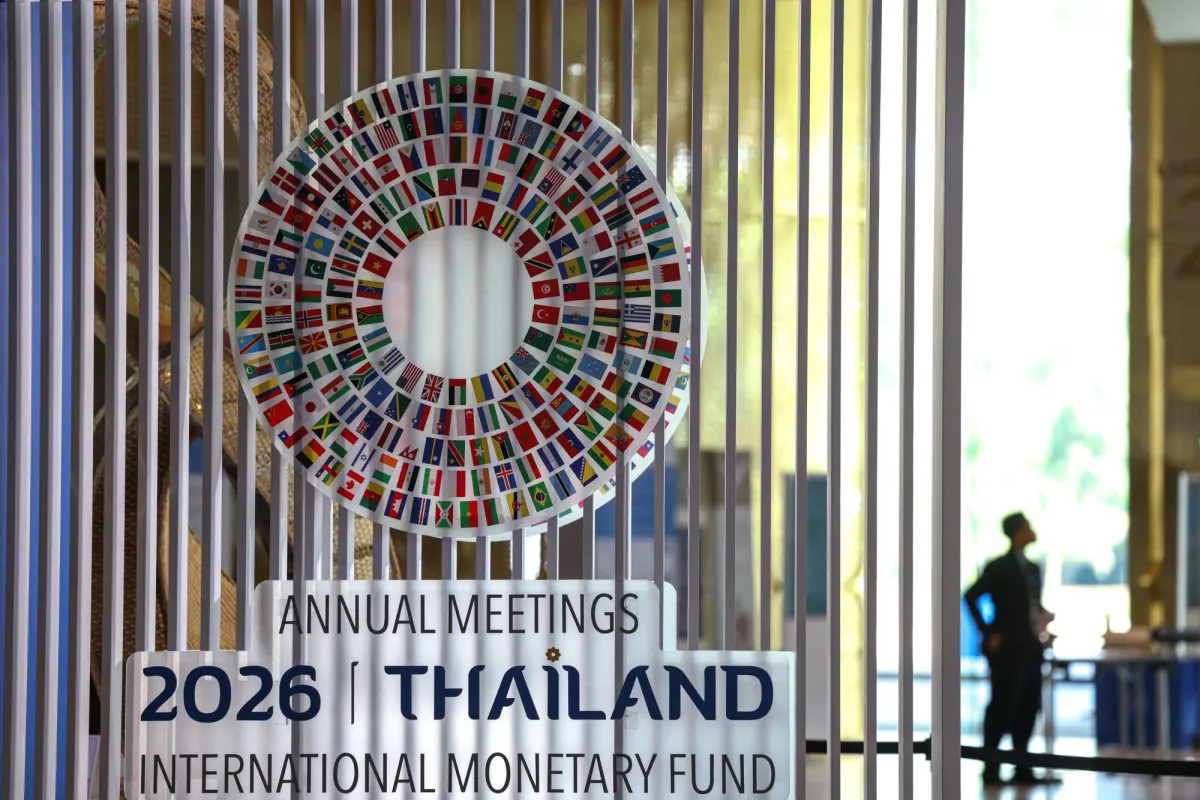
Finance and central bank officials are gathering in Bangkok for the annual meetings of the International Monetary Fund and World Bank.
The global economy has absorbed some of the shock from the war in the Middle East, but higher energy costs and disrupted supplies are adding pressure.
Governments also face high public debt, while borrowing costs have risen in many economies.
Investment linked to artificial intelligence is supporting economic activity, creating a counterweight to the energy shock.
The IMF kept its forecast for global growth in 2026 at about 3% in September, but some countries may face weaker outlooks.
The meetings will include new IMF reports on economic growth, financial stability and public finances, due from October 13 to 14.
Their assessments will help show how well economies and markets can withstand further energy disruptions and persistent inflation.

Finance and monetary policymakers are gathering in Bangkok for the annual meetings of the International Monetary Fund and World Bank.
The meetings come as the global economy faces higher energy costs, persistent inflation pressures, rising public debt and risks linked to the AI investment boom.
The IMF has described energy costs and supply disruptions as a drag on activity, while AI-related investment supports it.
The IMF kept its 2026 global growth forecast at about 3% in September, saying the economy had weathered the shock better than expected.
The meetings will include releases of the IMF’s key economic and financial reports and a briefing on the Middle East and Central Asia.
- Who
- Finance and monetary policymakers are attending the annual meetings of the IMF and World Bank.
- What
- The meetings address pressures on the global economy from war, energy costs, public debt, inflation and AI investment.
- When
- The meetings begin on Monday; the article was published on 11 October 2026.
- Where
- Bangkok, Thailand.
- Why
- The global economy is facing energy supply disruptions, rising costs and debt, alongside risks and growth expectations linked to AI.
This story does not have two clearly opposing sides.
The continued rise in energy prices, the accumulation of public debt, and the risks associated with the AI boom represent the main sources of concern for the global economy.
The war began, according to the article.
The IMF kept its forecast for global economic growth in 2026 at about 3%.
The IMF is due to publish its World Economic Outlook and Global Financial Stability Report.
The IMF is due to publish its Fiscal Monitor.
The IMF is due to hold a briefing on the Middle East and Central Asia.
- Location
- Bangkok
- Global growth forecast
- About 3% in 2026
- Oil withdrawn since the war began
- More than 1 billion barrels
- World Economic Outlook and Global Financial Stability Report
- Scheduled for 13 October
- Fiscal Monitor
- Scheduled for 14 October
- Middle East and Central Asia briefing
- Scheduled for 15 October
Sources
Related news

Bond Selloff Could Reduce Need for Central Bank Rate Hikes

VW chief urges France and Germany to work together on China car competition
Global PC shipments fell 20% in the third quarter of 2026

IMF and World Bank to warn central bankers of gathering storm

IEA urges members to consider releasing more diesel from strategic reserves

Stellantis plans affordable small EVs to revive its European business
Globalization Expands Despite a Decade of Political Pushback

Volkswagen chief backs EU plan to support European industry

Tesla renames its European driver-assistance system after regulator criticism

SoftBank seeks up to $100 billion from Gulf investors for AI