Health · Medical Research · 20 hrs ago
Facial skin changes cannot diagnose high blood sugar, specialist says
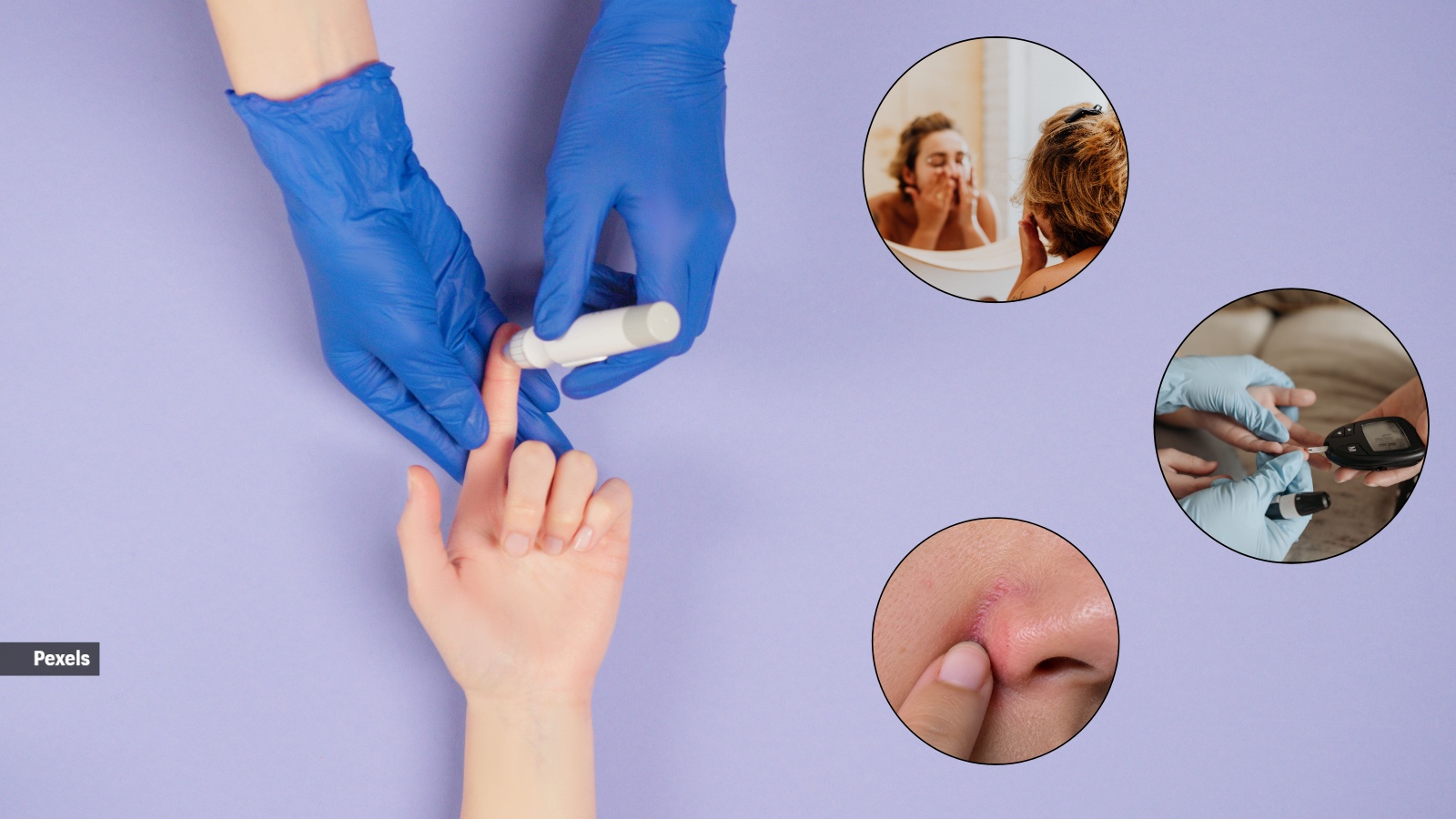
A diabetes specialist says you cannot tell whether someone has high blood sugar just by looking at their face.
Redness or scaling beside the nose can have several causes, and there is no recognised nose-crease sign of diabetes.
Some skin changes can be clues to insulin resistance or diabetes, including dark, thickened, velvety skin around the neck or body folds.
Skin tags may also occur alongside insulin resistance and type 2 diabetes.
People with poorly controlled diabetes can be more prone to some infections, including yeast infections, but a rash or infection alone does not establish diabetes.
Anyone with diabetes risk factors should seek testing, because skin clues cannot replace laboratory tests.

A diabetes specialist says facial skin changes cannot diagnose high blood sugar or diabetes.
Dr Rajiv Kovil says there is no medically recognised “red nose-crease sign” for diagnosing diabetes.
Some skin changes, including darkened, thickened skin around the neck and body folds, can indicate insulin resistance and merit medical assessment.
Kovil says suspected diabetes should be checked with laboratory tests, not diagnosed from a photograph or rash.
- Who
- Dr Rajiv Kovil, a diabetes and obesity specialist at Zandra Healthcare, explains why facial skin changes cannot diagnose diabetes.
- What
- He says facial signs such as redness beside the nose do not provide a blood sugar reading. Some skin changes may point to insulin resistance or a need for testing.
- When
- The article was published on 2026-10-11.
- Where
- Not stated
- Why
- Skin changes can have several causes, and they cannot replace laboratory testing for diabetes.
Social media claims
Dr Rajiv Kovil
Diagnostic value of facial signs
Social media claims
Social media posts present skin changes such as redness beside the nose as proof of diabetes.
Dr Rajiv Kovil
Kovil says there is no medically recognised red nose-crease sign that diagnoses high blood sugar or diabetes.
Social media has created a dangerous new genre of medicine: look at a photograph, identify a patch of skin, and announce that somebody has diabetes. That is not diagnosis. That is conjecture dressed up as medicine.
There is no medically recognised ‘red nose-crease sign’ that diagnoses high blood sugar or diabetes.
Sometimes the skin provides clues; it does not provide a glucose reading.
A rash is not an HbA1c.
This story does not have a timeline yet.
- Expert
- Dr Rajiv Kovil
- Affiliation
- Zandra Healthcare
- Publication date
- 2026-10-11
- Skin sign
- Acanthosis nigricans can appear as darkened, thickened, velvety skin, particularly around the neck and body folds.
- Diagnostic method
- Laboratory testing is needed; skin clues do not replace it.
Sources
Related news

Pope Leo to have surgery to remove an early-detected lung nodule

Pope Leo XIV to have surgery to remove early-stage lung nodule
ADHD and Later Cognitive Diagnoses: Why the Risk Estimate Needs Context

Higher Pre-Surgery A1c Linked to Macular Edema Risk After Cataract Surgery

Pope Leo XIV to have lung nodule removed in surgery this week

PRIMA retinal implant showed control of geographic atrophy for up to 3 years

Presley Gerber died at 27 after years of public struggle with addiction

Chewable gummy offers another oral-care option for people with dementia

Study asks how intense intercourse feels for each partner

Pope Leo XIV says he will have surgery to remove a lung lesion

Chiranjeevi urges people to seek early cancer screening