Business · Economy · 2 days ago
Bank of Spain study finds defense spending has a brief economic impact

NATO countries are increasing military spending, amid a debate over whether that money could be used for other public needs.
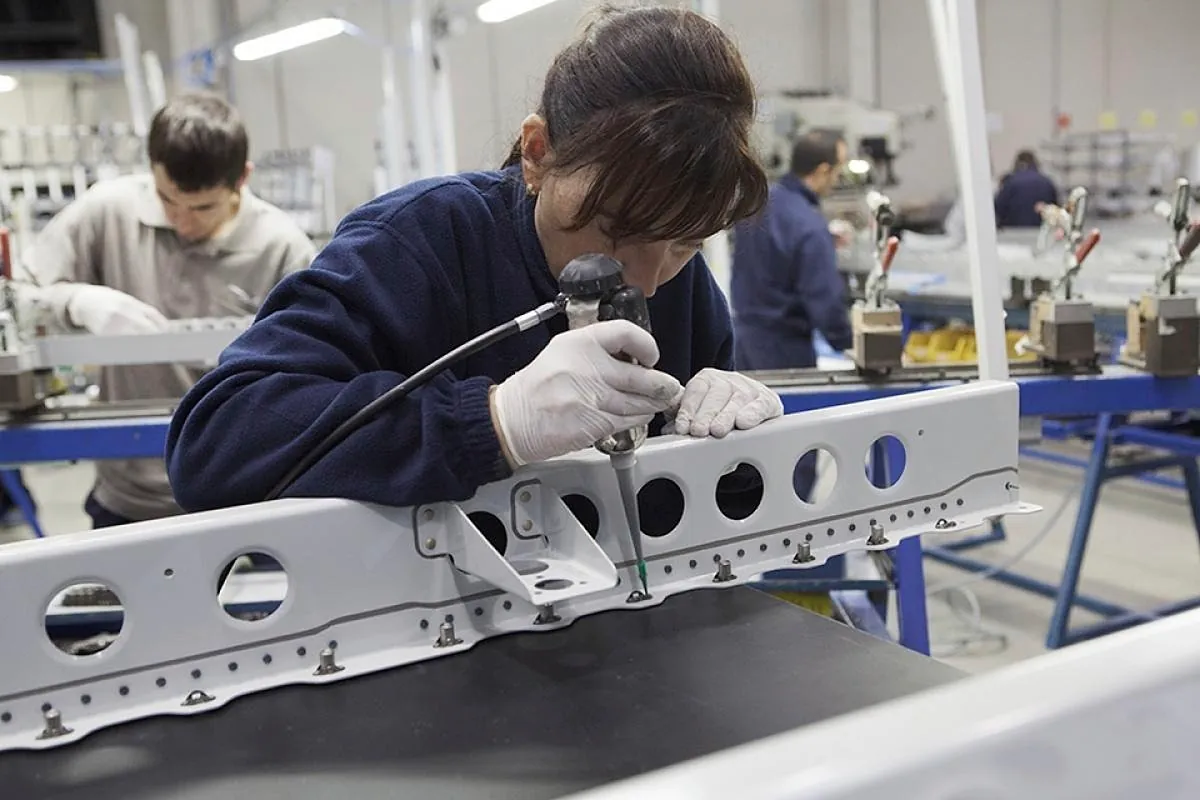
A study by Bank of Spain researchers examined the economic effects of defense contracts over more than 30 years.
It found that the impact on economic output is close to zero for the first two and a half years after a contract is awarded.
The effect then grows, peaking around the fourth year, before fading and returning to zero by the seventh year.
The researchers say this boost is less lasting and smaller than the effect of wider public investment projects.
Contracts awarded to companies abroad have almost no impact on the domestic economy, the study found.
Other estimates are higher: a 2025 BBVA Research study put the defense spending multiplier at up to two for investment alone, while a study commissioned by Spain’s defense industry group estimated an average of 2.3 for 2025.

A study by researchers at the Bank of Spain finds that defense investment has a smaller and less lasting economic impact than general public investment projects.
The researchers say the effect on GDP is close to zero for the first two and a half years after a defense contract is awarded, then rises to a peak before fading.
Their estimates put the fiscal multiplier at just over one in the fourth year and 1.3 in the fifth year, with the effect returning to zero from the seventh year.
The study says contracts awarded to companies abroad have an insignificant macroeconomic impact.
The findings differ from estimates by BBVA Research and a PwC study commissioned by Spanish defense-industry group TEDAE, which report larger multipliers.
- Who
- Researchers at the Bank of Spain; the study also discusses estimates from BBVA Research and TEDAE
- What
- A study of the economic effects of defense investment
- When
- Published on October 10, 2026
- Where
- Spain
- Why
- To estimate how defense spending affects economic activity amid debate over rising military spending
Bank of Spain researchers
BBVA Research and TEDAE-commissioned PwC study
Size of the economic multiplier
Bank of Spain researchers
The Bank of Spain researchers estimate that the multiplier is just over one in the fourth year and reaches 1.3 in the fifth year.
BBVA Research and TEDAE-commissioned PwC study
BBVA Research estimated a multiplier of 1.5 in the first two years and up to 2 when measuring investment alone; PwC reported an average multiplier of 2.3 for 2025.
Duration of the impact
Bank of Spain researchers
The researchers say the impact is temporary and returns to zero from the seventh year.
BBVA Research and TEDAE-commissioned PwC study
The article says BBVA Research also characterized the impact as temporary; it does not state a different duration for the PwC estimate.
tiene efectos a largo plazo más efímeros y de menor magnitud que los proyectos generales de inversión pública
Los responsables políticos también podrían tener que tener en cuenta los costes económicos causados por los conflictos militares y los posibles efectos disuasorios de la mejora de las capacidades de defensa mediante la inversión en este ámbito
This story does not have a timeline yet.
- Study dataset
- More than 30 years of defense contracts
- Estimated contract delays
- One to five years between a contract announcement and production
- Bank of Spain study multiplier
- Just over 1 in year four and 1.3 in year five
- End of estimated effect
- The impact returns to zero from year seven
- PwC estimate for 2025
- An average multiplier of 2.3, according to a TEDAE-commissioned study
Sources
Related news

Homes in flood-risk areas lose value after 2024 Valencia floods
Financial products have left Spanish investors facing risks they did not understand

Students from Lugo win Spain’s youth financial knowledge contest

Cabify’s Spain head discusses work, drivers and life beyond the job
Spain’s competition regulator urges looser rules for data centers
Sabadell shareholders rejected BBVA’s takeover bid after an 18-month battle

Moeve develops lower-carbon chemicals for everyday products

Bank of Spain raises 2026 inflation forecast to 3.9% on energy costs

Spanish company fined €750,000 over luxury car raffle

MyInvestor raises its six-month deposit rate to as much as 3% TAE

Spanish market research startup Autentic AI raises €1.5 million