Business · Markets · 19 hrs ago
Rising borrowing costs add pressure to Spain’s next government
Spain’s next government will have to address a housing crisis and persistent inflation while facing less room in the budget.
The article expects inflation to remain well above 4% for the next few months, partly because higher energy costs affect fuel and other goods.
At the same time, the cost of long-term government borrowing has risen in Spain and other advanced economies.
One explanation is that investors expect central banks to keep interest rates high to control inflation.
Another is that large technology companies investing in artificial intelligence are competing with governments for money, while public deficits are reducing available savings.
Global AI-related bond issuance has topped 400 billion euros so far this year, according to the article.
If borrowing costs stay high, businesses that did not invest when rates were low may find it harder to do so, and government finances will face greater pressure.

Spain’s next government will face rising borrowing costs alongside inflation and a narrowing budget margin.
The yield investors demand on Spain’s benchmark bond has risen by almost one percentage point so far this year.
The rise in long-term interest rates is being seen across advanced economies, with particular force in the United States and France.
One explanation is that markets expect inflation to prompt further central bank rate increases.
Another is that investment in artificial intelligence and public deficits are increasing competition for capital.
- Who
- Spain’s next government and investors in Spanish government debt.
- What
- Rising borrowing costs are adding pressure to the government’s budget choices.
- When
- The article was published on 11 October 2026; the bond yield rise is measured so far this year.
- Where
- Spain, amid a rise in borrowing costs across advanced economies.
- Why
- The rise may reflect expectations of persistent inflation and higher central bank rates, or competition for capital from AI investment and public deficits.
A temporary, inflation-driven explanation
A structural, longer-lasting explanation
Cause of higher rates
A temporary, inflation-driven explanation
Markets may be reacting to inflation and expecting further central bank rate increases.
A structural, longer-lasting explanation
AI investment and public deficits may be increasing competition for capital while savings decline.
How long rates may stay high
A temporary, inflation-driven explanation
Rates could ease as inflation subsides.
A structural, longer-lasting explanation
Rates could remain high for as long as the technology investment cycle and budget deficits continue.
No direct quotes in the coverage so far.
This story does not have a timeline yet.
- Bond yield rise
- Almost one percentage point so far this year
- AI bond-market investment
- More than €400 billion globally so far this year
- Inflation outlook
- Consumer price inflation is expected to remain well above 4% for months
- Cost of government aid
- Close to €12 billion
Sources
Related news
European stocks fall further behind Wall Street as energy and debt concerns grow
ECB may launch new long-term bank funding operations in 2027
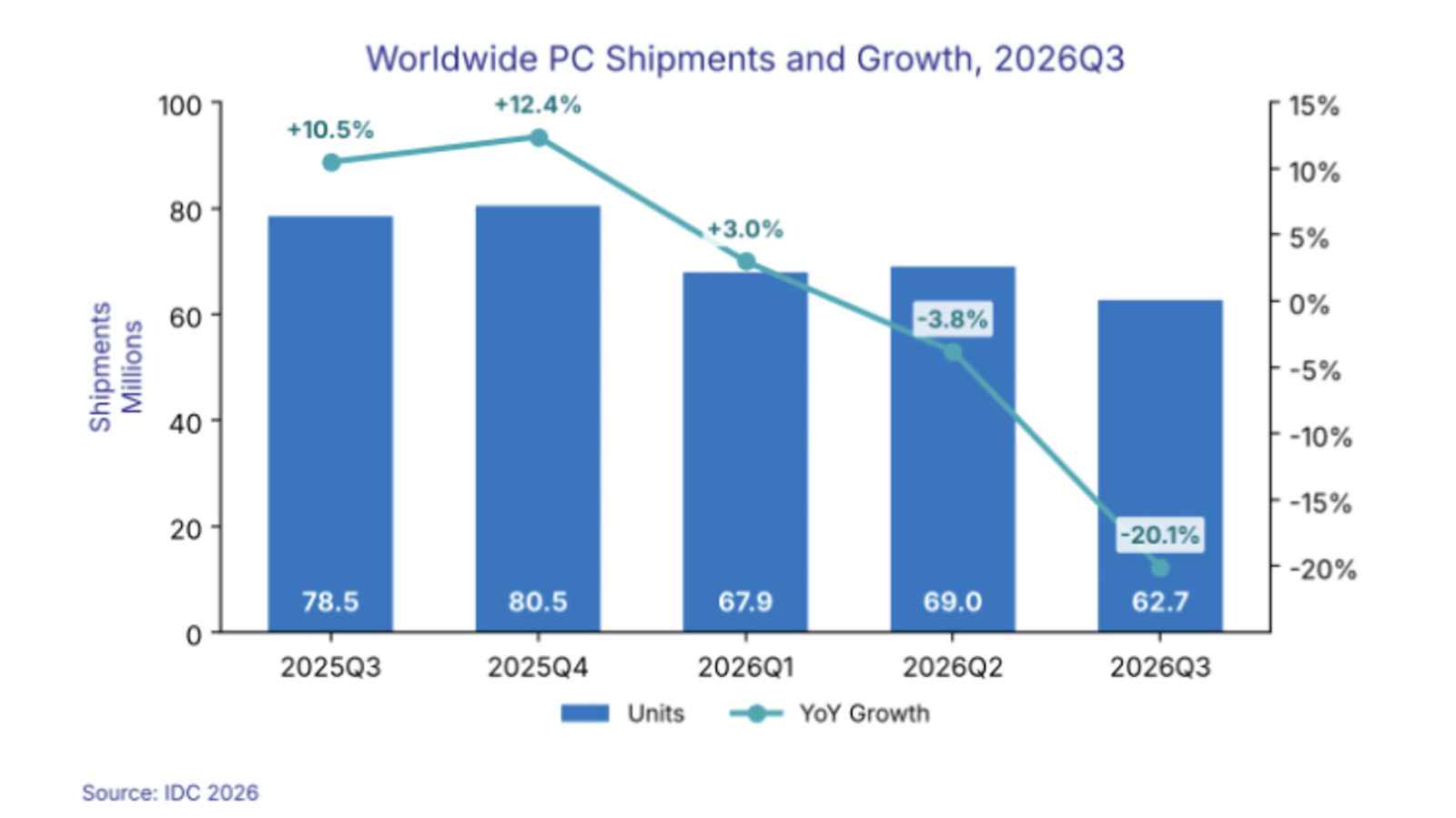
Global PC shipments fell 20% in the third quarter of 2026

Bond Selloff Could Reduce Need for Central Bank Rate Hikes

Tesla renames its European driver-assistance system after regulator criticism

SoftBank seeks up to $100 billion from Gulf investors for AI

VW chief urges France and Germany to work together on China car competition

Energy leaders meet in Riyadh to discuss supply security and markets
IMF and World Bank to discuss global economic risks in Bangkok

IMF and World Bank to warn central bankers of gathering storm

IEA urges members to consider releasing more diesel from strategic reserves