

Health · Medical Research · 2 hrs ago
Meat-derived sugar linked to higher diabetes risk in French study
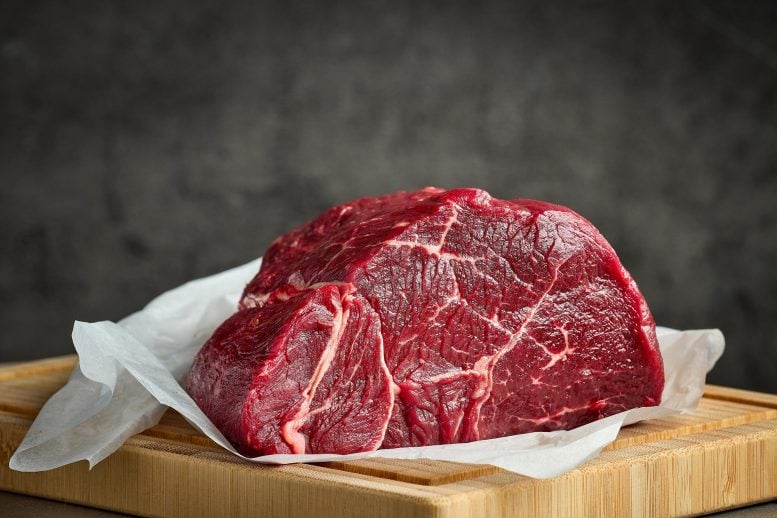
A French study linked a sugar found in meat to type 2 diabetes risk.
The sugar, called Neu5Gc, is found especially in beef and lamb, and people cannot make it themselves.
Researchers followed 89,953 adults who did not have diabetes at the start; 966 developed the disease over a median of 7.2 years.
People with the highest meat-derived Neu5Gc intake had 63% higher risk than those with the lowest intake.
The researchers are examining whether the body’s immune response to this foreign sugar could help explain the link between red meat and diabetes.
The study shows an association, not that the sugar causes diabetes, so the findings do not establish that reducing it would prevent the disease.

A French study linked higher intake of a sugar found in meat with a higher risk of developing type 2 diabetes.
Participants with the highest intake had a 63% higher risk than those with the lowest intake.
The study followed 89,953 adults, of whom 966 developed type 2 diabetes during a median of 7.2 years.
The researchers said the findings support chronic inflammation as a possible link between red meat and diabetes.
The observational study cannot establish that Neu5Gc caused diabetes.
- Who
- Researchers studied 89,953 adults in France; the lead author was Dr. Leopold Fezeu.
- What
- Higher intake of meat-derived Neu5Gc was linked to higher risk of type 2 diabetes.
- When
- Participants were followed for a median of 7.2 years; the study findings were presented at the EASD Annual Meeting.
- Where
- France.
- Why
- Researchers are investigating whether an immune response to Neu5Gc could help explain the association between red meat and diabetes.
This story does not have two clearly opposing sides.
Participants had no diabetes or cancer.
Participants completed three 24-hour dietary records.
966 participants developed type 2 diabetes.
Researchers presented the findings.
- Participants
- 89,953 adults in NutriNet-Santé
- Diabetes cases
- 966 during follow-up
- Follow-up
- Median of 7.2 years
- Highest intake group
- 63% higher diabetes risk than the lowest intake group
- Second-highest intake group
- 41% higher diabetes risk than the lowest intake group
What people are saying
Our findings support chronic inflammation as a specific mechanism linking red meat consumption with T2D, partly beyond the amount of red meat a person eats and partly independent of body fat.
Sources
Related news

Pope Leo XIV diagnosed with lung cancer after surgery in Rome

Davina McCall describes severe memory loss after brain tumour surgery

Blocking an immune pathway protected brain tissue in mice with tau buildup

Study finds body changes begin years before the last menstrual period

Daily egg intake linked to lower Alzheimer’s risk in older adults

Studies find more cancer diagnoses among people under 50

Science Corporation implants vision chip in first Stargardt disease patient
Two studies raise concerns about Ozempic, Mounjaro and hair and nails

Lola Weippert says doctors found a tumour in her right breast

Greater gut bacteria diversity linked to lower frailty in older women

A 30-Minute Hot Bath Lowered Blood Pressure More Than Cycling in a Small Study
