

Science & Tech · Science & Environment · 2 hrs ago
Fossil found in southern England identified as new dinosaur species
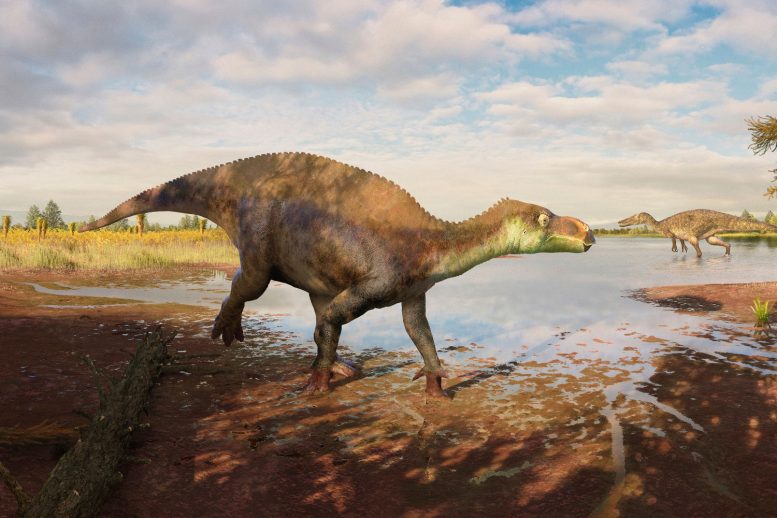
Scientists have identified a fossil found in a Surrey clay quarry in 2001 as Paludohadros proudlovii, a new dinosaur genus and species.
It was a plant-eating iguanodontian that lived about 125 million years ago in wetlands covering parts of what is now southern England.
The animal was about five metres long and likely still young when it died; adults may have grown to twice that size.
Its identification followed closer study of teeth and bones that set it apart from other known iguanodontians.
That work is also prompting scientists to re-examine older museum fossils, some collected decades ago, that may belong to the same dinosaur.
A large meat-eater called Baryonyx lived nearby, and its last meal included a young iguanodontian, but researchers cannot tell how this dinosaur died or whether Baryonyx hunted it.

Researchers have identified a fossil found in southern England as a new dinosaur genus and species, named Paludohadros proudlovii.
The plant-eating dinosaur lived about 125 million years ago in the Early Cretaceous.
The fossil was discovered in 2001 and later donated to the Natural History Museum in London.
Researchers estimate the animal was about 5 metres long and weighed 1.5 to 2 metric tons.
The team says the dinosaur lived near the predatory dinosaur Baryonyx walkeri.
- Who
- Researchers from the Natural History Museum in London identified the fossil as Paludohadros proudlovii.
- What
- A fossil has been identified as a new genus and species of plant-eating dinosaur.
- When
- The dinosaur lived about 125 million years ago. The fossil was discovered in 2001.
- Where
- A clay quarry in southern England. The articles give different site names: Ewhurst Works and Smokejacks Pit.
- Why
- The fossil’s tooth and bone features distinguished it from other iguanodontians.
This story does not have two clearly opposing sides.
Paludohadros lived in southern England during the Early Cretaceous.
The fossil was discovered in a southern English clay quarry and later donated to the Natural History Museum.
A detailed reassessment of Mantellisaurus clarified anatomical differences among iguanodontians.
Researchers described Paludohadros proudlovii as a new genus and species.
- Scientific name
- Paludohadros proudlovii
- Estimated length
- About 5 metres
- Estimated weight
- 1.5 to 2 metric tons
- Fossil discovery
- 2001
- Nearby dinosaur
- Baryonyx walkeri, found about 100 metres away
2 sources
What people are saying
Paludohadros was found just 100 meters (about 330 feet) away from Baryonyx, whose fossils we also look after at the Natural History Museum.
We can’t tell for certain which species this came from, so it’s possible that Baryonyx could have been scavenging on the remains of young Paludohadros or even hunting them when it had the opportunity.