

Science & Tech · Science & Environment · 2 hrs ago
Hybrid crabs now outnumber snow crabs in parts of the Bering Sea catch
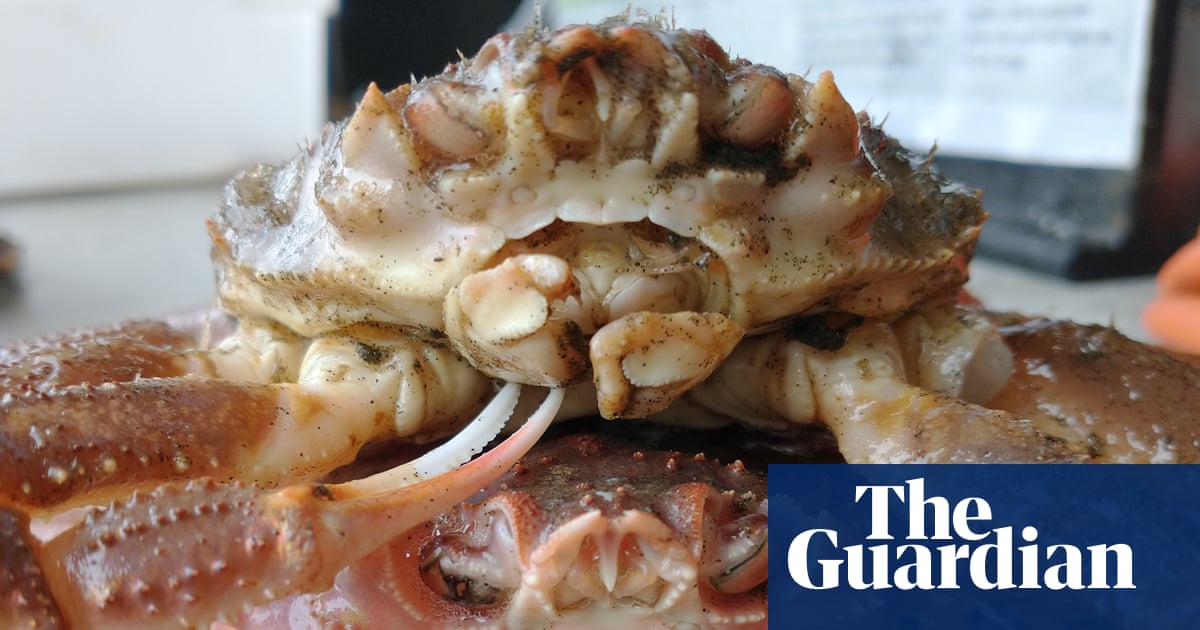
Researchers surveying the Bering Sea off Alaska found a surge in hybrid crabs that share traits of snow and tanner crabs.
Hybrids were once rare, but their numbers rose sharply in 2025 and the increase continued in the 2026 survey.
The hybrids now outnumber snow crabs among commercially sized adult males, and make up more than half of the commercial-sized catch.
A marine heatwave in 2018 and 2019 nearly cleared the sea of ice and contributed to the death of about 10 billion crabs.
With snow crab numbers collapsing, the hybrids may have flourished with less competition, though researchers do not know whether they are affecting the snow crab recovery.
Snow crab fishing was closed from 2022 to 2024, causing hundreds of millions of dollars in losses.
Because hybrids are not officially considered a species, they have no set fishing quotas, creating a challenge for fisheries managers who use survey data to set catch limits.

Commercially sized hybrid snow-tanner crabs now outnumber snow crabs in the 2026 Bering Sea survey.
The hybrids made up more than half of the commercial-sized catch, but have no set fishing quotas because they are not officially considered a species.
Researchers recorded more than 13 times the historical average number of hybrids in 2025, and the increase continued in 2026.
A 2018 and 2019 heatwave caused a collapse in the snow crab population, and researchers say the decline may have allowed hybrids to flourish.
Whether the hybrid increase is affecting snow crab recovery is not known.
- Who
- Researchers at NOAA’s Alaska Fisheries Science Center documented the increase. The catch includes hybrids of snow crabs and tanner crabs.
- What
- Commercially sized hybrid adult males now outnumber snow crabs in the survey.
- When
- The 2026 survey showed the increase was continuing, after a sharp rise recorded in 2025.
- Where
- The Bering Sea, off Alaska.
- Why
- A 2018 and 2019 heatwave caused a collapse in the snow crab population. Researchers found that the absence of snow crabs may have allowed hybrids to flourish.
This story does not have two clearly opposing sides.
An extreme heatwave left the Bering Sea nearly ice-free by early spring and led to mass starvation and a snow crab population collapse.
The devastation was shockingly obvious in survey results.
The snow crab fishery was closed, resulting in hundreds of millions of dollars in losses.
Researchers recorded more than 13 times the historical average number of hybrids.
The survey showed the increase continuing, with commercially sized hybrid adult males outnumbering snow crabs.
- Survey year
- 2026
- Hybrid increase
- More than 13 times the historical average in 2025
- Commercial-sized catch
- Hybrids made up more than half
- Heatwave
- 2018 and 2019
- Fishery closure
- 2022–2024
What people are saying
I was struck by how hybridy they are
A lot of times it takes several years of our survey data to really understand what’s going on
The very first station we sampled, I was seeing all of these large male hybrids. It was sort of like an affirmation for me.
This is going to be such a headache for fisheries management