

Science & Tech · Science & Environment · 2 hrs ago
Dinosaur blood molecules found in 115-million-year-old Brazilian fossil
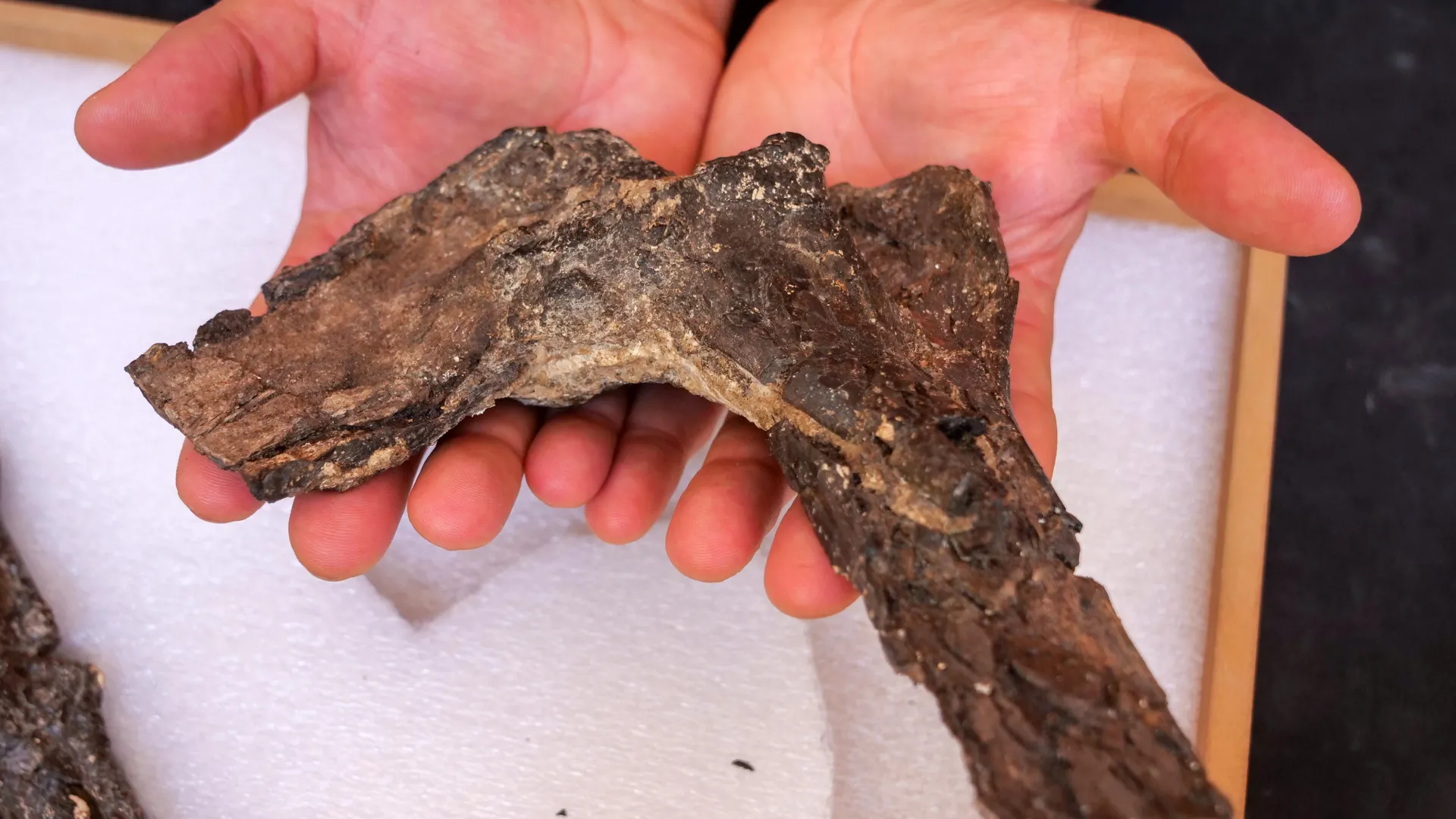
Researchers found molecular traces of blood in a 115-million-year-old dinosaur fossil from Brazil.
The bone belonged to Aratasaurus museunacionali, a small meat-eating dinosaur discovered in northeastern Brazil.
Inside the bone, structures resembling red blood cells contained heme, a component of hemoglobin, along with traces of collagen.
Earlier fossils had shown blood-cell-like shapes, but this finding provides direct chemical evidence of blood-related molecules in them.
Minerals and burial conditions may have protected the traces, including rapid burial in a low-oxygen setting.
The discovery suggests some biological molecules can survive for millions of years and may help scientists learn more about extinct animals.
Researchers say other museum fossils may hold similar clues that further study could reveal.

Researchers found chemical traces of blood in a 115-million-year-old dinosaur fossil from Brazil.
The fossil is from Aratasaurus museunacionali, a small theropod dinosaur.
Tests detected heme molecules inside structures resembling red blood cells, along with collagen-related traces.
The findings were reported in the Proceedings of the National Academy of Sciences on November 2, 2026.
The researchers say the discovery could help scientists study the biology of extinct animals and look for similar clues in other fossils.
- Who
- An international team led by Curtin University, including researcher Kliti Grice.
- What
- Researchers detected heme molecules and other blood-related traces in a dinosaur fossil.
- When
- The findings were reported on November 2, 2026; the articles were published on November 6, 2026.
- Where
- The fossil was found in Brazil’s Romualdo Formation in the northeast.
- Why
- The study aimed to determine whether structures in the fossil were biological remains and to identify their chemical composition.
This story does not have two clearly opposing sides.
The dinosaur whose remains became the fossil lived.
A fire destroyed much of the Brazilian National Museum’s collection, but the building holding this fossil was not affected.
The researchers reported the discovery in the Proceedings of the National Academy of Sciences.
EarthSky and ScienceDaily published articles about the findings.
- Age of fossil
- 115 million years
- Species
- Aratasaurus museunacionali
- Fossil location
- Romualdo Formation, northeast Brazil
- Blood-related molecule detected
- Heme
- Publication
- Proceedings of the National Academy of Sciences, November 2, 2026
3 sources
What people are saying
To detect intact heme-derived molecules in 115-million-year-old red blood cells is astonishing: this really is a landmark discovery
It opens exciting new avenues for molecular-level paleontology, allowing us to investigate the evolution of blood, metabolism and even activity levels in ancient animals.