

Health · Public Health & Disease · 1 hr ago
eHealth Africa uses digital mapping to help reach unvaccinated children in Nigeria
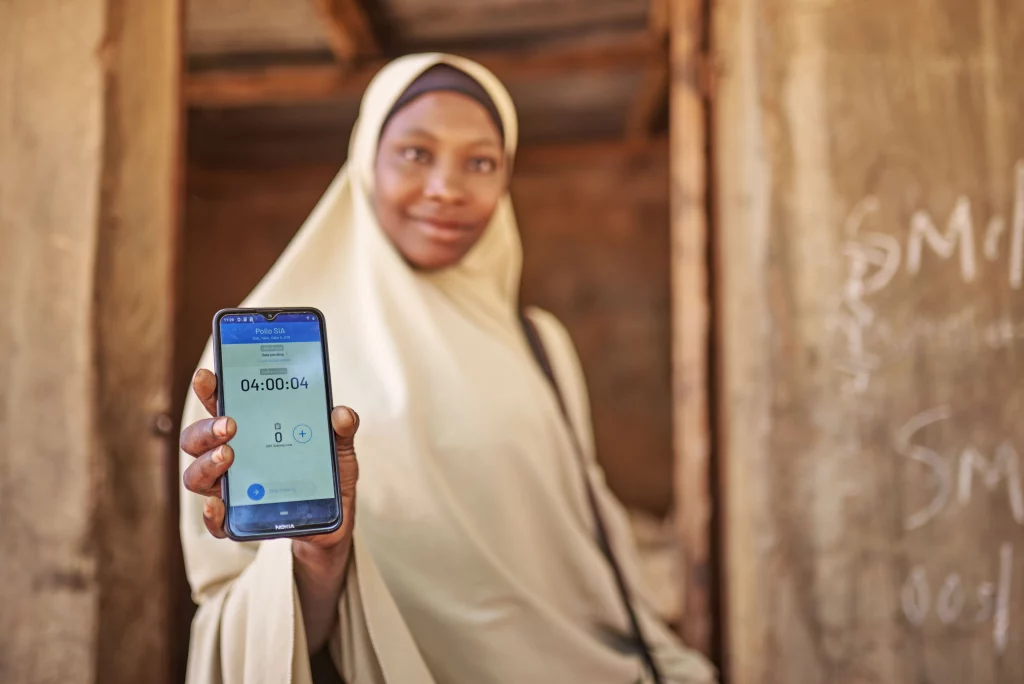
eHealth Africa uses digital tools to help Nigeria reach children with vaccines through its immunisation programmes.
The Nigerian nonprofit maps settlements and records details such as their location, accessibility and community services.
About 2.1 million Nigerian children had received no routine vaccine dose, according to UNICEF’s 2023 estimate.
That made Nigeria the country with the largest number of zero-dose children worldwide.
Campaigns supported by the organisation reached more than 23 million children across over 205,000 settlements in the first half of 2026.
Mapping and tracking can help identify communities missed by vaccination teams, including places that administrative records may wrongly count as covered.
The tools will last only if Nigerian institutions can fund and maintain them.

eHealth Africa uses digital maps and campaign-planning tools to help Nigeria’s immunisation programmes find communities and reach children who have not received routine vaccines.
UNICEF estimated that 2.1 million Nigerian children had received no routine vaccine dose in 2023, the highest number of zero-dose children globally.
In the first half of 2026, campaigns supported by eHealth Africa reached more than 23 million children across over 205,000 settlements in Nigeria.
The organisation’s mapping records settlement locations, accessibility, habitation status, community leadership and public amenities.
The article says the tools will endure only if Nigerian institutions can fund, operate and maintain them.
- Who
- eHealth Africa, a non-profit supporting Nigeria’s immunisation programmes.
- What
- It uses geospatial mapping, digital campaign planning and vaccine-delivery tracking to help vaccination teams reach communities.
- When
- The organisation has supported immunisation programmes for more than a decade. Its campaigns reached children in the first half of 2026.
- Where
- Nigeria.
- Why
- To identify communities that may be missing from maps or difficult to reach, and help prevent children from being excluded from vaccination campaigns.
This story does not have two clearly opposing sides.
UNICEF said Nigeria’s immunisation programme relied on multiple paper-based registries to record maternal and child health information.
UNICEF estimated that 2.1 million Nigerian children had received no routine vaccine dose.
Campaigns supported by eHealth Africa reached more than 23 million children across over 205,000 settlements in Nigeria.
TechCabal published its article on eHealth Africa’s use of technology to address immunisation gaps.
- Zero-dose children
- About 2.1 million in Nigeria, or 24% of the estimated 8.7 million children under one, in 2023
- Global ranking
- Nigeria had the highest number of zero-dose children in 2023
- Campaign reach
- More than 23 million children in the first half of 2026
- Settlements reached
- Over 205,000 in the first half of 2026
- Organisation
- eHealth Africa has supported Nigeria’s immunisation programmes for more than a decade
What people are saying
No matter how small a community is in northern Nigeria, they have a leader, and that leader is as important to us as somebody within the traditional system.
Having the technological details of the locations where the people are residing is different, and also accessing the community is different.
When we started using it in Nigeria, we discovered that the actual geographical coverage is far lower than what has been reported by the administrative data.
We’ve gone from hand-drawn maps to GIS maps. So it has helped us to be able to correctly identify the settlements and the missed communities in the field.