

Business · Companies · 4 hrs ago
Japan’s New Takeover Rules Reshape Corporate Defences
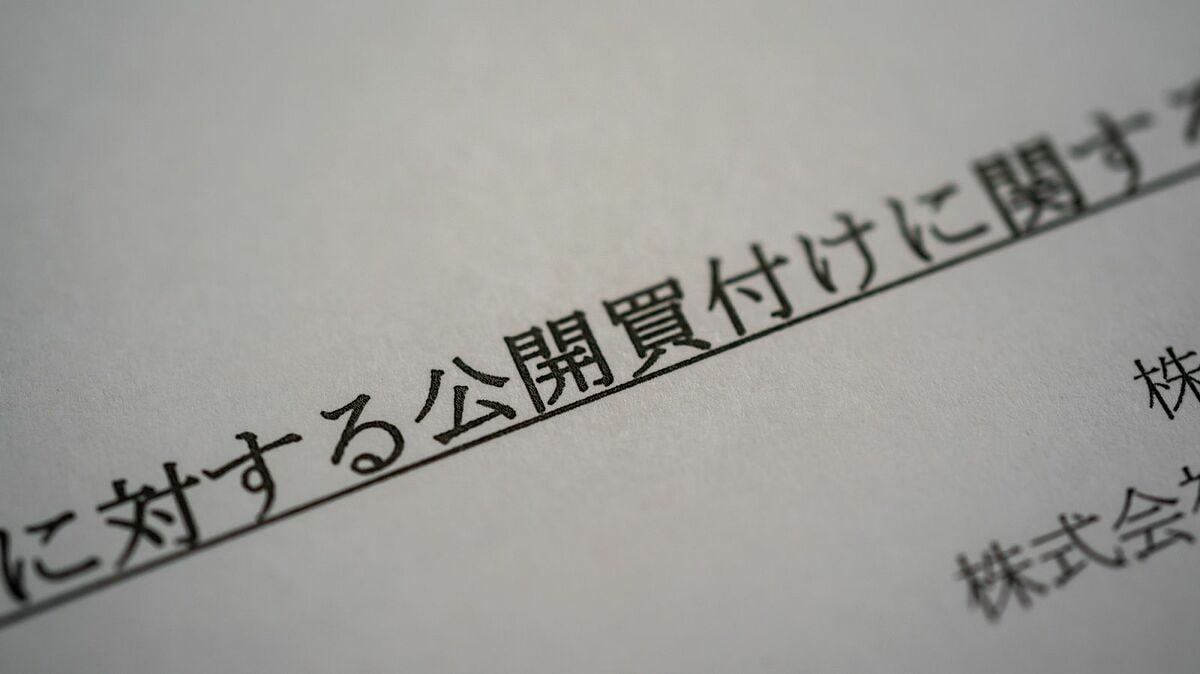
Japan’s new takeover rules took effect in May 2026, changing how companies can buy shares in listed firms.
The rules lowered the shareholding threshold that triggers a takeover bid from more than 33.3% to more than 30%, and brought purchases made on the market into the rules.
This limits rapid, less visible share buying, but does not eliminate the risk of unwanted takeovers.
The article points to recent unsolicited proposals involving Japanese companies as signs that such bids are becoming more common.
Many companies have moved away from standing defence plans and may instead consider measures after a specific bid is made.
Those measures can face legal challenges, and courts may assess whether the bidder threatens company and shareholder interests and whether shareholders had a proper say.
Boards must balance shareholder interests with their legal duties when deciding how to respond.

Japan’s revised takeover-bid rules took full effect in May 2026, lowering the threshold that triggers a tender offer from more than 33.3% to more than 30%.
The rules also brought on-market purchases within the scope of tender-offer requirements, restricting rapid share buying on the market.
The article argues that the changes do not eliminate takeover risks but may push bidders toward formal, unsolicited offers with higher premiums.
It says target-company boards must balance shareholder interests with their legal duties when responding to takeover proposals.
The article describes a shift from standing takeover defences to measures considered after a specific bid is made.
- Who
- Japanese listed companies, their boards and potential acquirers.
- What
- Revised takeover-bid rules have reshaped acquisition approaches and corporate defences.
- When
- The rules took full effect in May 2026. The article was published on November 18, 2026.
- Where
- Japan.
- Why
- The Financial Instruments and Exchange Act revision expanded the circumstances requiring a tender offer and restricted rapid on-market share accumulation.
This story does not have two clearly opposing sides.
Revised tender-offer rules took full effect, extending requirements to on-market transactions and lowering the threshold to more than 30%.
Toyo Keizai published an article describing how the revised rules are changing takeover approaches and defences.
- Tender-offer threshold
- More than 30%, lowered from more than 33.3%
- Rules took effect
- May 2026
- Earlier defence model
- Standing, advance-warning measures
- Current defence approach
- Measures considered after a specific takeover proposal
- Named takeover examples
- Nidec’s approaches involving TAKISAWA and Makino Milling Machine; Yageo’s proposal involving Shibaura Electronics
What people are saying
The disappearance of options for irregular share accumulation on the market has forced acquirers to choose the straightforward approach of presenting a high control premium from the outset and making an unsolicited tender offer.
The change in the institutional framework does not mean the disappearance of takeover risks; it is merely a process through which acquirers’ approaches evolve to become more sophisticated and powerful.