

Science & Tech · Science & Environment · 17 hrs ago
DNA From 7,000-Year-Old Spanish Leather Links Ancient Goats to a Modern Breed
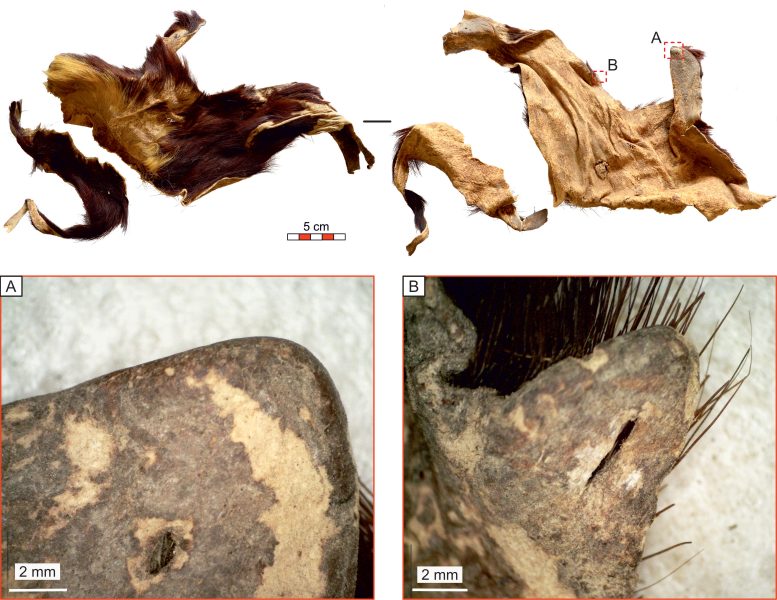
Scientists recovered DNA from a 7,000-year-old piece of goat leather found in Cueva de los Murciélagos, a burial cave in southern Spain.
Marks on the leather suggest it was tanned and pierced, so it may have been part of clothing or a protective covering.
Genetic analysis showed the hide came from a domestic goat, not a wild ibex.
Its DNA was closely related to that of the Bermeya breed, showing a genetic link to goats in Spain today.
The ancient goat showed no evidence of African ancestry, unlike modern European goats, but the researchers cannot say when that ancestry entered those populations.
The find offers rare evidence of Neolithic animal keeping and leatherworking, though the small amount of surviving DNA limits what can be concluded.

Researchers recovered ancient DNA from goat leather about 7,000 years old found in a burial cave in southern Spain.
The DNA links the Neolithic goat to the modern Bermeya breed of northern Spain.
Marks on the leather indicate it was tanned and perforated, providing evidence of early leatherworking.
The genetic analysis found no evidence of African ancestry in the ancient goat, unlike in modern European goats.
Researchers said the incomplete DNA and single specimen limit conclusions about when genetic links with African goats developed.
- Who
- A research team led by Jolijn A. M. Erven of University College Dublin.
- What
- The team analysed DNA from 7,000-year-old goat leather and found a genetic link to the modern Bermeya breed.
- When
- The leather dates to approximately 7,000 years ago. The findings were published November 4, 2026.
- Where
- Cueva de los Murciélagos, Albuñol, Granada, Spain.
- Why
- To investigate prehistoric animal husbandry, leatherworking and relationships between people and domesticated animals.
This story does not have two clearly opposing sides.
The goat leather was produced and later deposited in Cueva de los Murciélagos.
The study’s findings were published in PLOS One.
- Age of leather
- Approximately 7,000 years
- Site
- Cueva de los Murciélagos, Albuñol, Granada, Spain
- Modern breed linked by DNA
- Bermeya goat
- Study publication date
- November 4, 2026
What people are saying
The preservation of this 7,000-year-old goat leather is exceptional. Cueva de los Murciélagos has preserved organic materials that rarely survive in the archaeological record, offering us a unique opportunity to investigate prehistoric technologies, animal husbandry, and the relationships between human communities and domestic animals.
It is rare to for such ancient, organic materials to retain DNA – but this was one of the few exceptions.
With a tiny amount of surviving DNA, we were able to show a link with Iberian breeds today – a genetic connection spanning 7,000 years.