

Science & Tech · Science & Environment · 1 hr ago
Evidence of deepest-known explosive volcanic eruption found in Mariana Trench
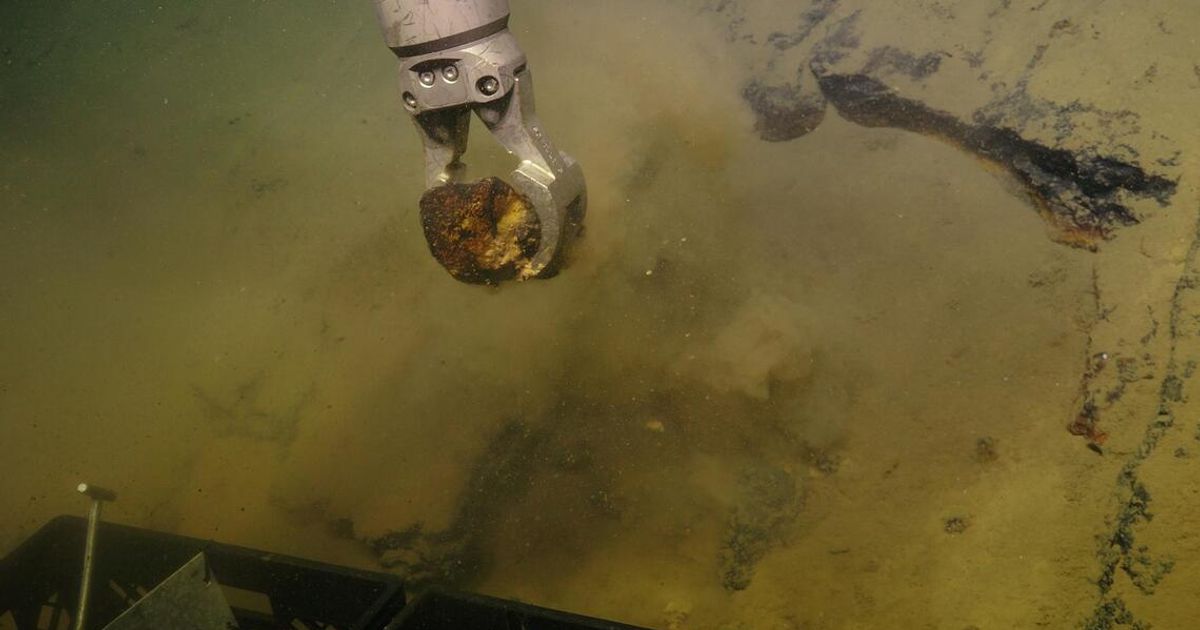
An international team of marine geologists found evidence of an explosive volcanic eruption in the Mariana Trench in the western Pacific.
A remotely operated vehicle called Jason/Medea collected the rocks at depths of up to 6,500 metres, near Challenger Deep.
The rocks contain broken rock fragments and volcanic glass, which point to material thrown out by an eruption.
The discovery is the deepest-known evidence of this kind of eruption, according to the researchers.
The Mariana Trench formed where one tectonic plate moves beneath another, while most large volcanoes in the area lie 200 to 300 kilometres from the trench.
The rocks’ age is unknown, and researchers have not found the vents they came from or witnessed an eruption.
Researchers are now investigating how eruptions happen under such intense water pressure.

An international team found evidence of the deepest-known explosive volcanic eruption on Earth in the Mariana Trench.
The remotely operated vehicle Jason/Medea collected pyroclastic rocks at depths of up to 6,500 metres.
The rocks, made of broken rock and volcanic glass, indicate an eruption, but researchers did not observe one or locate its vents.
The rocks’ age is unknown, though lead author Robert Stern said they appear recent in geological terms.
Researchers are investigating how explosive eruptions occur under the intense pressure at such depths.
- Who
- An international team of marine geologists, including lead author Robert Stern.
- What
- The team found pyroclastic rocks that are evidence of an explosive volcanic eruption.
- When
- The articles were published on November 27, 2026. The rocks’ age is not yet known.
- Where
- The Mariana Trench in the western Pacific Ocean, near the Challenger Deep.
- Why
- The researchers are investigating how explosive eruptions can occur under the intense pressure at such depths.
This story does not have two clearly opposing sides.
The team deployed the Jason/Medea remotely operated vehicle in the Mariana Trench to study the trench walls near the Challenger Deep.
The vehicle made 10 dives, including seven in the forearc around the Challenger Deep and three in shallower waters near Guam.
The vehicle collected pyroclastic rocks in the trench, which researchers identified as evidence of an explosive eruption.
- Maximum depth
- Up to 6,500 metres below the surface
- Observed pyroclastic flow
- 6,148 metres below sea level
- Vehicle
- Jason/Medea remotely operated vehicle
- Dives
- 10 total; seven in the forearc around the Challenger Deep
- Study journal
- Frontiers in Earth Science
3 sources
What people are saying
This is unmistakably the product of a volcanic eruption. We did not see any eruption, and we have not yet found the vents from which the pyroclastic rocks erupted.
Pyroclastic rocks are well known from volcanic eruptions on land and even in the shallow ocean, but they aren’t known from as deep as we discovered them.
The intense pressures at the depths that these submarine volcanoes erupted makes the eruption style different than it would be on land or in shallow water, where the pressures are much lower.