

Politics · Italy · 9 hrs ago
Some precarious workers say fear of losing work keeps them from striking
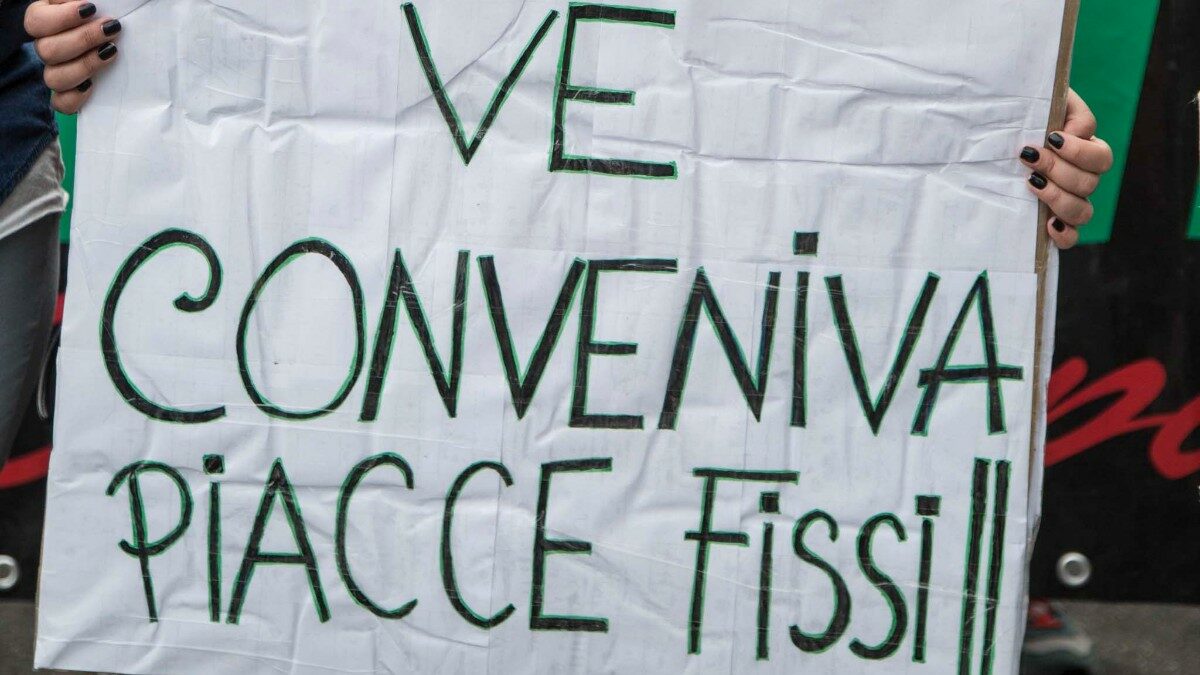
Some workers in Italy say they support recent protests but fear workplace consequences if they join.
They include a 26-year-old consultant in Milan, a freelance architect and a worker hired shift by shift.
The consultant says managers discouraged staff from attending demonstrations, while the architect describes talk of strikes as taboo.
Although the right to strike is protected by Italy’s Constitution, workers who strike lose pay for the time they do not work.
People hired on call may also fear that turning down a shift will mean they stop getting future work.
The accounts show how insecure jobs and low incomes can make it harder to exercise that right.
A CGIL general strike is planned for Friday, but the workers say fear still limits who can take part.

Some precarious workers in Italy say fear of workplace consequences keeps them from joining protests or strikes.
A 26-year-old consultant said managers had made clear they would not welcome employees taking part in demonstrations.
A 30-year-old worker formally registered as self-employed said discussing a strike at his architecture studio was taboo.
A 31-year-old on-call worker said refusing a shift could mean no more calls for work.
The accounts come as a general strike called by the CGIL is due on Friday.
- Who
- Precarious workers identified as M., F. and R. describe their concerns.
- What
- They say fear of losing work, income or future shifts keeps them from striking or protesting.
- When
- The article was published on November 19, 2026, and refers to a general strike planned for that Friday.
- Where
- The accounts are from Italy; M. works in Milan, and F. works at an architecture studio.
- Why
- They fear workplace disapproval or losing future work and income.
This story does not have two clearly opposing sides.
People including students, pensioners and workers had been protesting in streets and squares.
Il Fatto Quotidiano published accounts from precarious workers who said they feared consequences for striking.
A general strike called by the CGIL was due to take place.
- M.
- 26-year-old consultant at a Big Four firm
- F.
- 30-year-old worker registered as self-employed at an architecture studio
- R.
- 31-year-old on-call worker in restaurants and leaflet distribution
- CGIL
- Called the general strike planned for that Friday
- Milan
- City where M. said his pay barely covered the cost of living
What people are saying
From the beginning, we were made to understand, even without being told openly, that we should not take part in what were called ‘silly demonstrations’ and that the managers would not like it.
Here, just trying to talk about a strike is enough to get called in immediately. It is a taboo word.
For us, the right to strike does not exist. We can barely even count on the right to work.