

Science & Tech · Science & Environment · 5 hrs ago
More than 150 Australian artists oppose Woodside gas project near Scott Reef
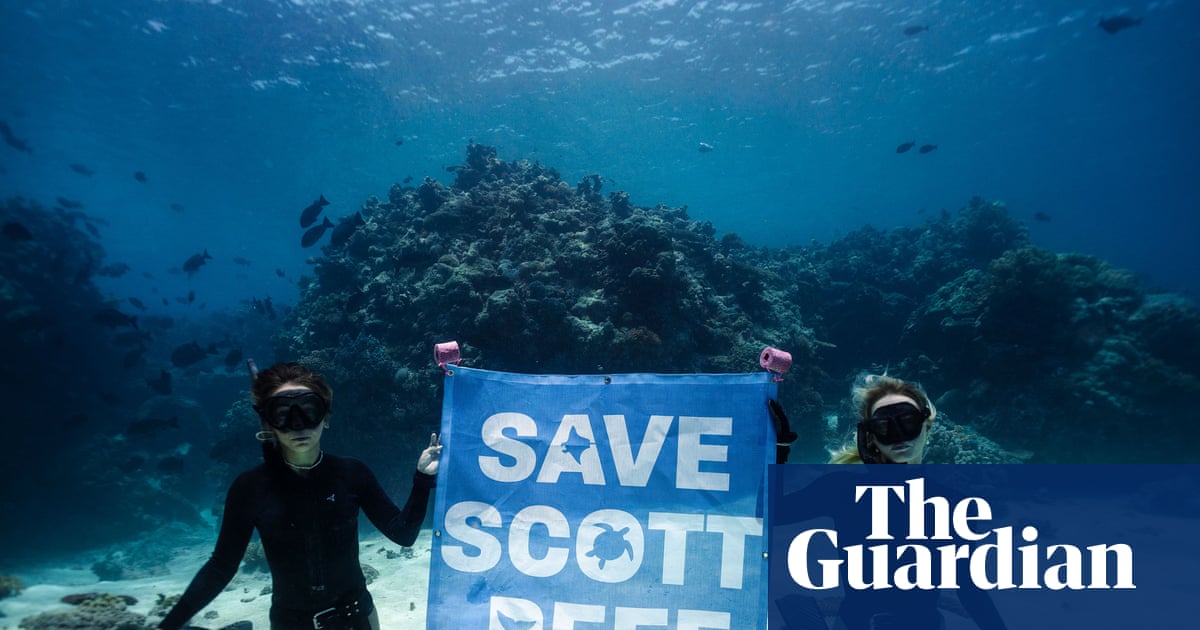
More than 150 Australian artists urged the government to reject Woodside Energy’s gas project near Scott Reef, off Western Australia’s Kimberley coast.
The proposal would involve drilling more than 50 wells in the Browse basin, about 3km from the reef.
Scott Reef is home to more than 1,500 species, including endangered pygmy blue whales.
The artists say drilling could harm the reef, while their open letter warns that an oil spill could affect the Kimberley coast and reach Indonesia.
The project is under federal environmental assessment, and the artists have asked Environment Minister Murray Watt not to approve it.
An independent environmental watchdog has criticised Woodside’s plans to protect turtles and blue whales, and a draft assessment said it might be impossible to lower oil-spill risks to an acceptable level.
The government’s approval decision is still pending; the national environmental agency says the proposal is being assessed under federal law.

More than 150 Australian artists have backed a Greenpeace-led campaign urging the federal government to reject Woodside Energy’s proposed Browse gas development near Scott Reef.
The proposal would involve drilling more than 50 gas wells about 3km from the reef, around 300km off the Kimberley coast.
The artists say the project could damage the reef’s ecosystem, which is home to more than 1,500 species, including endangered pygmy blue whales.
The campaign’s open letter calls on federal environment minister Murray Watt not to approve the development.
Woodside describes Browse as “Australia’s biggest undeveloped offshore gas resource”.
- Who
- More than 150 Australian artists, including Hugh Jackman, Rebel Wilson and Jessica Mauboy, backed the campaign. It is led by Greenpeace.
- What
- The campaign calls on the federal government not to approve Woodside Energy’s Browse gas development.
- When
- The campaign was reported on 18 November 2026.
- Where
- The proposed gas wells would be about 3km from Scott Reef, around 300km off the Kimberley coast.
- Why
- The artists say the development could damage the reef ecosystem. The open letter also warns of seismic blasting, carbon emissions and oil-spill risks.
Artists opposing the development
Woodside Energy
Project approval
Artists opposing the development
The artists call on the federal environment minister not to approve the development.
Woodside Energy
Woodside is seeking federal government approval to drill more than 50 gas wells.
Project description
Artists opposing the development
The artists say the proposal could harm Scott Reef and turn it into an industrial gas zone.
Woodside Energy
Woodside describes Browse as “Australia’s biggest undeveloped offshore gas resource”.
Woodside first proposed the Browse project.
A draft letter from the Environmental Protection Authority said it may be impossible to reduce the risk of an oil spill to an acceptable level.
Guardian Australia reported that Western Australia’s independent environmental watchdog had sharply criticised the proposal.
Greenpeace nominated Scott Reef for national heritage listing.
More than 20 Australian artists released If Not Now, a musical call to action about the reef.
Guardian Australia reported that more than 150 artists had backed the campaign against the development.
- Artists backing campaign
- More than 150
- Gas wells proposed
- More than 50
- Distance from Scott Reef
- About 3km
- Distance off Kimberley coast
- About 300km
- Species at Scott Reef
- More than 1,500
- Proposed gas pipeline
- About 900km to the North West Shelf gas export plant
What people are saying
would turn Scott Reef into an industrial gas zone with decades of deafening seismic blasting [and] carbon dumping beneath the ocean floor
Australia’s biggest undeveloped offshore gas resource
At the end of the day, we don’t need Browse gas. Western Australia has enough gas available to support us through the transition to a renewable future and regional demand for LNG is declining.
The federal and state governments have enough evidence to reject this disastrous proposal and save Scott Reef, and we expect them to do just that.