

Science & Tech · Science & Environment · 3 hrs ago
SUPREME project will trace cosmic events through Earth's geological record
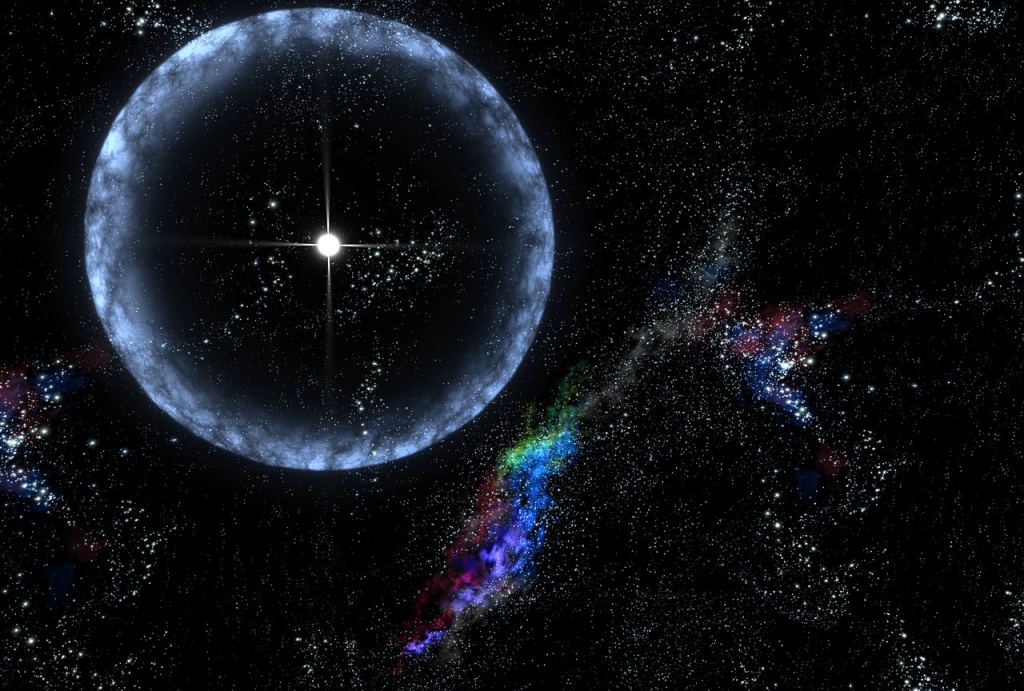
A team at HZDR has won a €3 million grant for the SUPREME project, which will investigate cosmic events near Earth.
The team will study the past 500 million years, including whether nearby supernovae affected Earth and the evolution of life.
Researchers will search for rare radioactive isotopes in lunar samples from NASA, deep-sea sediments, ice cores and other geological records.
These materials preserve traces of interstellar matter that reached Earth over long periods, which can help identify and date cosmic events.
The project will also investigate how the heaviest elements form and spread to Earth and the Moon, including elements created through rapid neutron capture.
The team plans to use HAMSTER, an accelerator mass spectrometry facility installed at HZDR in 2025, to measure the isotopes.

The SUPREME project will use geological records to trace nearby cosmic events and investigate how the heaviest elements form.
Led by Prof. Anton Wallner at the Helmholtz-Zentrum Dresden-Rossendorf, the project received a €3 million European Research Council grant.
Researchers will examine rare radioactive isotopes in lunar samples, deep-sea sediments, ice cores and other geological archives.
The project will investigate how nearby supernovae affected Earth and biological evolution over the past 500 million years.
It will also study how the heaviest elements were created and delivered to Earth and the Moon.
- Who
- Prof. Anton Wallner and his team at the Helmholtz-Zentrum Dresden-Rossendorf are leading the SUPREME project.
- What
- The project will trace cosmic events through radioactive isotopes preserved in geological records.
- When
- It focuses on the past 500 million years. The project received a grant recently, but the award date is not stated.
- Where
- The research is based at the Helmholtz-Zentrum Dresden-Rossendorf in Germany and will examine samples from Earth and the Moon.
- Why
- To investigate how nearby supernovae affected Earth and biological evolution, and how the heaviest elements formed and were distributed.
This story does not have two clearly opposing sides.
HAMSTER, an accelerator mass spectrometry facility developed by Wallner and his team, was installed at HZDR.
HZDR scientists made the first significant measurement of curium-247 and plutonium-244 in interstellar matter trapped on Earth.
The SUPREME project was awarded a €3 million European Research Council Advanced Grant.
- Project
- SUPREME
- Lead researcher
- Prof. Anton Wallner
- Host institution
- Helmholtz-Zentrum Dresden-Rossendorf
- Grant
- €3 million
- Research period
- Past 500 million years
- Facility
- HAMSTER, installed at HZDR in 2025
What people are saying
This award is a remarkable recognition of Anton Wallner's internationally leading research.
SUPREME addresses fundamental questions about the origin of the elements and the history of our cosmic environment while building on measurement capabilities that are unique worldwide.
We are proud that this pioneering work is being carried out at HZDR.