

Business · Companies · 2 hrs ago
Turkey’s central bank says lira demand remains strong amid market strain
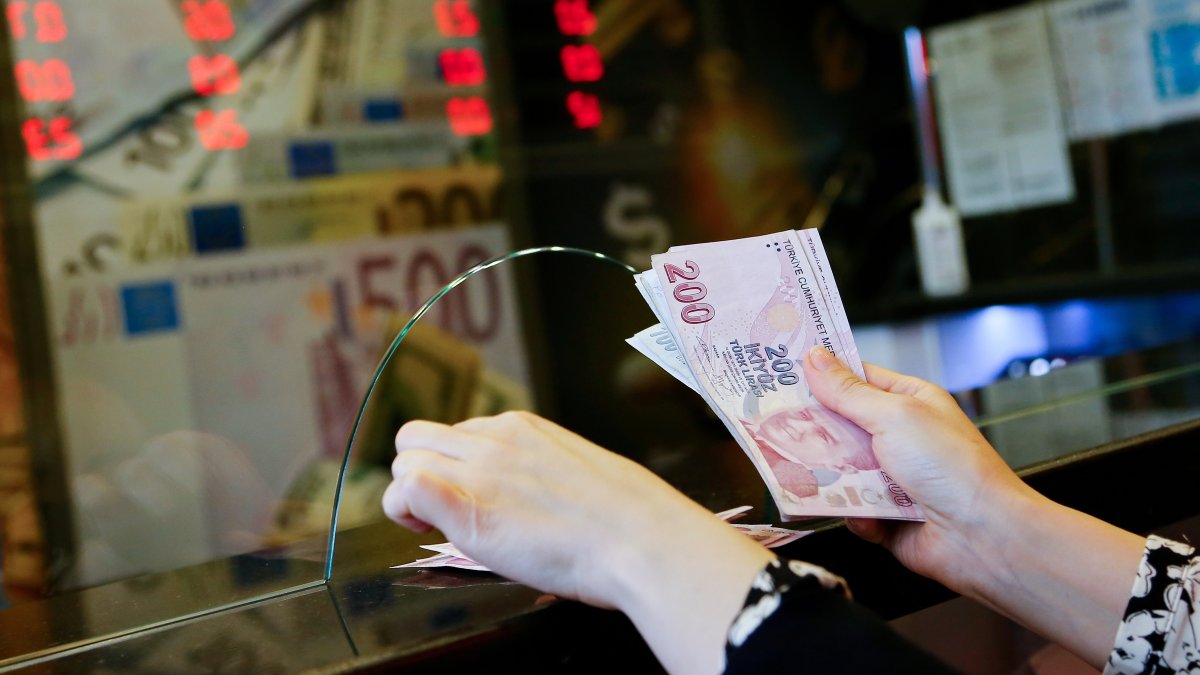
Turkey’s central bank says demand for the lira remains strong among people and businesses in the country.
Governor Fatih Karahan said reserves have recently fallen, partly because of lower gold prices and global investment shifts.
He also cited companies’ increased need for foreign currency near year-end, which he described as expected.
The central bank has taken steps to support demand for the lira as global volatility continues.
Its financial stability report says banks have strong liquidity and capital buffers, while outflows from money market funds have slowed since October.
The report says withdrawals from troubled funds were largely moved into lira investments and have not caused broad market disruption.
Karahan said the bank has managed similar fluctuations in recent years and expects to handle the coming period in the same way.

The Central Bank of the Republic of Türkiye says domestic demand for the lira remains stable and strong despite global volatility and market strain.
Governor Fatih Karahan said the bank had taken steps to support lira demand.
The bank attributed recent reserve declines to falling gold prices, global portfolio movements and some businesses’ foreign-currency demand.
Outflows from money market funds slowed after liquidity measures and flowed mainly into lira instruments, according to the bank.
The bank said Türkiye’s banks retain strong liquidity and capital buffers.
- Who
- The Central Bank of the Republic of Türkiye and its governor, Fatih Karahan.
- What
- The bank says lira demand remains strong and describes measures to support it amid market strain.
- When
- The report was published on Friday, November 27, 2026; Karahan spoke on November 29.
- Where
- Türkiye.
- Why
- Global volatility and fund-market turmoil have caused outflows and pressure on reserves; the bank says its steps aim to support lira demand and buffer shocks.
This story does not have two clearly opposing sides.
The investment funds crisis prompted outflows, which officials said moved mainly into bank deposits.
Authorities arrested dozens of people over allegations of market manipulation, fraud and bribery.
Outflows from money market funds slowed, according to the central bank.
The central bank temporarily suspended one-week repo auctions and announced a higher rate paid on required reserves.
The central bank’s Financial Stability Report said lira demand continued despite geopolitical uncertainty and fund-market turmoil.
- Liquidated funds
- 131 funds managed by seven asset management companies
- Share of investment funds
- 4.6%
- Share of total portfolio value
- 7.7%
- Share of household financial assets
- 2.4%
- Lira against the dollar
- 50.7875 on Friday
- Required-reserve remuneration rate
- Raised to 90% of the weighted average funding cost from 86%
3 sources
What people are saying
The latest data show us that demand for the Turkish lira, particularly from households, continues in a stable and strong way.
We can say very clearly that our macroeconomic fundamentals are strong.
We accumulate our reserves in such periods so that they can act as a buffer against shocks.