

Politics · Other · 1 hr ago
Eisenkot’s bloc needs Arab-party support to form Israel’s next government
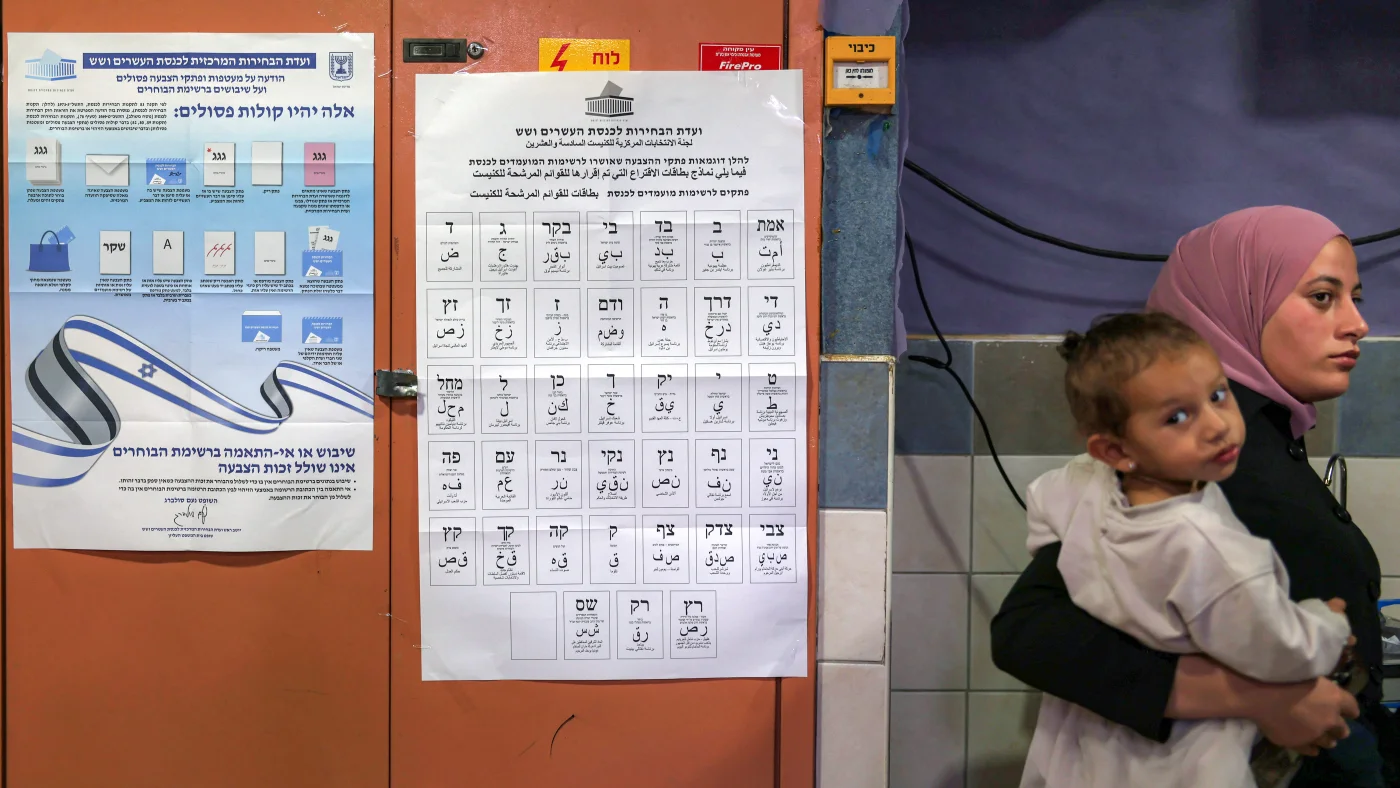
Former military chief Gadi Eisenkot is seeking to unseat Benjamin Netanyahu as Israel’s prime minister after Tuesday’s election.
Early results put Netanyahu’s bloc ahead, but neither side appeared to have enough seats to govern alone.
Israel’s parliament, the Knesset, needs 61 seats for a majority, and local media projected 53 for Likud and its allies, 48 for Eisenkot’s bloc and 19 for Arab-led parties.
Eisenkot could reach a majority with Arab-led parties, which made a strong showing, but the parties would first need to agree to work together.
Netanyahu’s Likud has ruled out partnering with Arab parties, while Eisenkot has not; his allies have proposed principles for a possible agreement, but such a partnership could cost him support from right-wing members of his bloc.
The parties need to agree soon or Israel could face another round of elections.

Neither Benjamin Netanyahu’s bloc nor Gadi Eisenkot’s opposition bloc appeared on Wednesday to have a majority in Israel’s parliament.
Emerging results projected 53 seats for Likud and allied parties, 48 for Yashar and allied parties, and 19 for Arab-led parties.
Eisenkot’s bloc would need Arab-party support to reach the 61 seats required for a majority, but forming such a partnership may be difficult.
Political analyst and former diplomat Alon Pinkas called opposition leaders’ reluctance to work with Arab-led parties “myopic and reckless.”
The sources differ on Eisenkot’s position: AP says he has not ruled out partnering with Arab parties, while NPR says he has rejected working with them.
- Who
- Opposition leader Gadi Eisenkot, Prime Minister Benjamin Netanyahu and Arab-led parties are central to the government-formation question.
- What
- Neither main bloc appeared to have a majority, leaving Arab-led parties in a potential kingmaker role.
- When
- Israel’s parliamentary election was held Tuesday, Oct. 27, 2026; results were still emerging Wednesday.
- Where
- Israel, including the Knesset, the country’s parliament.
- Why
- Neither main bloc appeared to have the 61 seats needed for a majority, so forming a government may require support from other parties.
Eisenkot’s opposition bloc
Netanyahu’s bloc
Working with Arab-led parties
Eisenkot’s opposition bloc
AP says Eisenkot has not ruled out a partnership; NPR says he has rejected working with them.
Netanyahu’s bloc
Netanyahu and many Likud members have ruled out working with Arab-led parties.
Relying on Arab-party support
Eisenkot’s opposition bloc
Pinkas said Eisenkot could form a coalition with the parties or a minority government with their outside support.
Netanyahu’s bloc
Netanyahu called the prospect of a government relying on Arab-party support “a shame and a disgrace.
Israel held its parliamentary election, with Arab-led parties making a strong showing.
Eisenkot said, “We have made history!” as initial exit polls suggested a major loss for Netanyahu.
Emerging results showed neither main bloc with a clear majority, while Arab-led parties were projected to hold 19 seats.
- Seats needed for a majority
- 61
- Projected seats for Likud and allied parties
- 53
- Projected seats for Yashar and allied parties
- 48
- Projected seats for Arab-led parties
- 19
- Election date
- Oct. 27, 2026
4 sources
What people are saying
We have made history!
myopic and reckless
Mr. Netanyahu cannot. I repeat, cannot form a government.
a shame and a disgrace