

Science & Tech · Space · 9 hrs ago
Bengaluru company tests inflatable space habitat structure at 30km
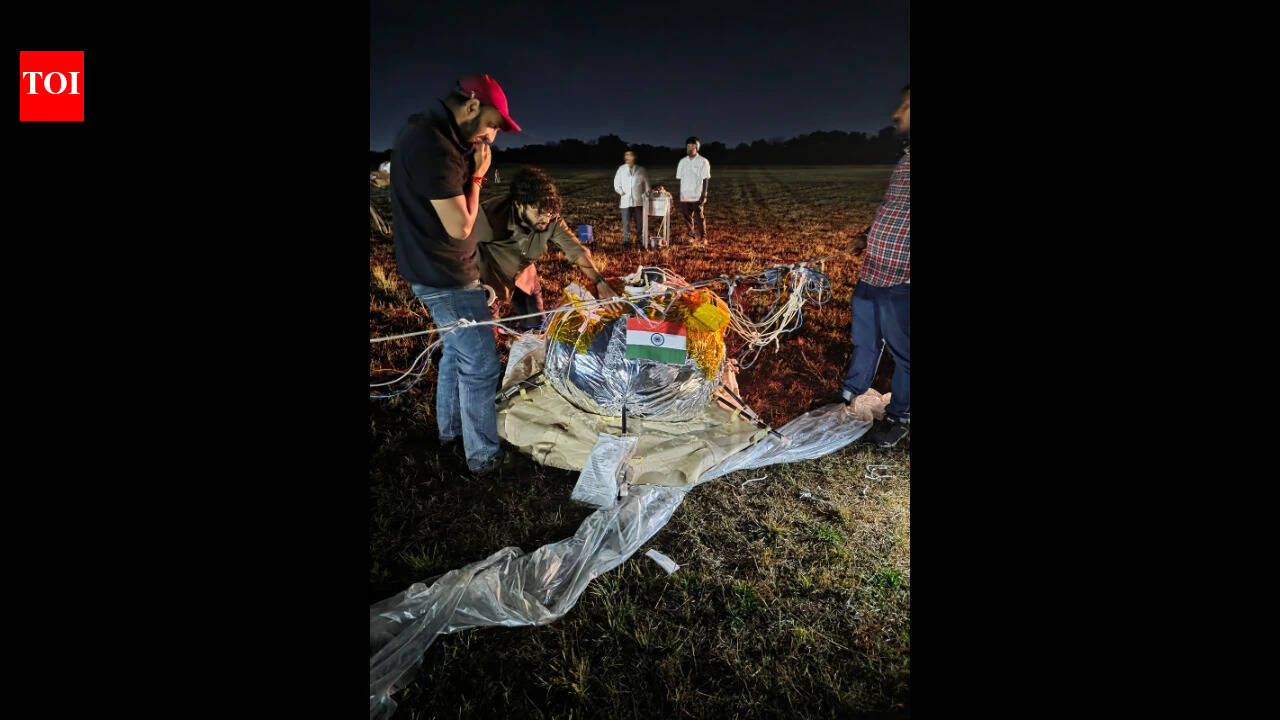
Bengaluru-based Akashalabdhi Space tested an expandable structure on a high-altitude balloon flight in Hyderabad.
The 250-litre structure was carried to about 30km, where it was inflated and made rigid to test whether it could hold its shape.
The flight tested technology for future space infrastructure, such as orbital factories, laboratories and habitats that could offer more room without needing a larger rocket payload.
Two research payloads also flew: one tested whether microbes could help turn Moon and Mars soil into building material, and another assessed solar cells in near-space conditions.
The test was not a simulation of life in orbit: it did not reproduce sustained weightlessness, the vacuum or the full radiation environment of space.
The company was still checking the solar-cell results and whether the parachute reached its target landing speed before confirming all mission objectives.
Akashalabdhi plans an orbital mission for March, with a larger payload that is expected to include material experiments and a data-centre payload.

Akashalabdhi Space tested an inflatable space-habitat structure aboard a high-altitude balloon at about 30km.
The Bengaluru-based company said the flight was an initial test of technology for future expandable space habitats and orbital factories.
The 25kg mission carried two research payloads, including an experiment on microbial processes that could turn lunar and Martian soil into construction material.
The company said the structure deployed, inflated and rigidised, and it absorbed the impact of landing without the expected damage.
The company is preparing for a planned orbital mission in March, though some results from the balloon flight were still awaiting confirmation.
- Who
- Bengaluru-based Akashalabdhi Space conducted the test.
- What
- It tested a 250-litre rigidizable inflatable structure on a high-altitude balloon flight.
- When
- Early on Tuesday, November 3, 2026.
- Where
- The balloon flight reached about 30km; it was conducted through TIFR’s National Balloon Facility in Hyderabad.
- Why
- To test the structure and related systems as a step towards future orbital infrastructure.
This story does not have two clearly opposing sides.
Akashalabdhi Space flew the inflatable structure to about 30km aboard a high-altitude balloon.
The company was awaiting confirmation of the solar-cell experiment’s performance and whether the parachute reached its targeted terminal velocity.
The company plans an orbital mission using Skyroot’s Vikram-2 rocket.
- Structure
- 250-litre rigidizable inflatable structure
- Flight altitude
- Approximately 30km
- Mission mass
- 25kg
- Research payload
- Microbial Regolith Experiment developed by Prof Aloke Kumar’s lab at IISc
- Planned orbital mission
- March, using Skyroot’s Vikram-2 rocket
What people are saying
The module, which was expected to sustain some damage during landing, absorbed the impact without the anticipated damage. The ability of the structure and its protective systems to withstand landing loads is important for future missions involving the recovery of experimental hardware and materials from space.