

Health · Medical Research · 1 hr ago
Teen Salty Snack Intake Linked to Higher Risk of Inflammatory Bowel Disease
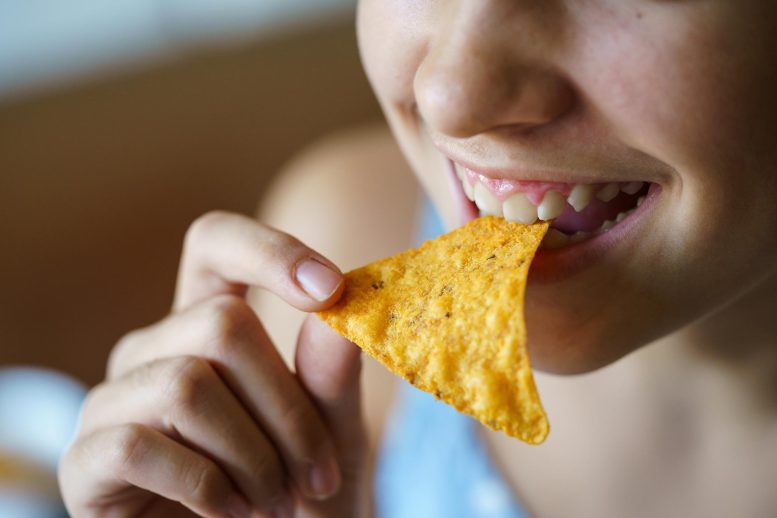
A study of 111,999 people in Norway, Denmark and Sweden linked diets in childhood and adolescence with later inflammatory bowel disease, or IBD.
The researchers identified 653 cases of IBD during follow-up that averaged 12 to 17 years.
Teenagers who ate many salty snacks had a 32% higher risk of IBD than those who ate few, and the difference was larger for ulcerative colitis.
The study tracked foods including fruit, vegetables, fish and snacks, and accounted for several early-life and family factors.
Higher fruit intake was associated with a lower risk of Crohn’s disease, but the patterns varied by age and IBD type.
These findings suggest food choices earlier in life may matter for long-term gut health, but they do not prove that salty snacks cause IBD.
The researchers say more research is needed to understand how diet may affect the gut and disease risk.

A study of 111,999 participants found that teenagers with high salty-snack intake had a 32% higher risk of developing inflammatory bowel disease than those with low intake.
The association was stronger for ulcerative colitis, with a 51% higher risk.
The study also found that higher fruit intake was associated with a lower risk of Crohn’s disease, though results varied by age and type of IBD.
Researchers combined data from three Scandinavian birth cohort studies and tracked IBD cases through national patient registries.
The findings suggest diet during childhood and adolescence may be relevant to later IBD risk, but the study reports associations.
- Who
- Researchers studying 111,999 participants in three Scandinavian birth cohorts.
- What
- High salty-snack intake during adolescence was associated with a higher risk of IBD in young adulthood.
- When
- Dietary information was collected during childhood and adolescence; cases were tracked through 2024.
- Where
- Norway, Denmark and Sweden.
- Why
- The researchers examined whether diet at different ages was associated with later IBD risk.
This story does not have two clearly opposing sides.
Participants entered the birth cohort studies in Denmark and Norway.
Researchers collected dietary information at two stages of development, with ages varying by country.
National patient registries were used to identify 653 IBD cases.
SciTechDaily published its report on the study.
- Participants
- 111,999 across three birth cohort studies
- IBD cases
- 653 identified through 2024
- Salty snacks
- High intake in adolescence linked to 32% higher IBD risk
- Ulcerative colitis
- High adolescent salty-snack intake linked to 51% higher risk
- Fruit and Crohn’s disease
- Higher adolescent intake associated with 64% lower risk
What people are saying
Fruits are thought to exert favorable effects on the gut microbiome by promoting microbial diversity and increasing the production of short-chain fatty acids, which have been proposed to have anti-inflammatory effects.
The inverse association between higher fruit intake and [Crohn’s disease] risk may therefore be partly explained by its high dietary fiber content.