

Business · Energy & Commodities · 10 hrs ago
K+S produces high-purity pharmaceutical salts in eastern Hesse
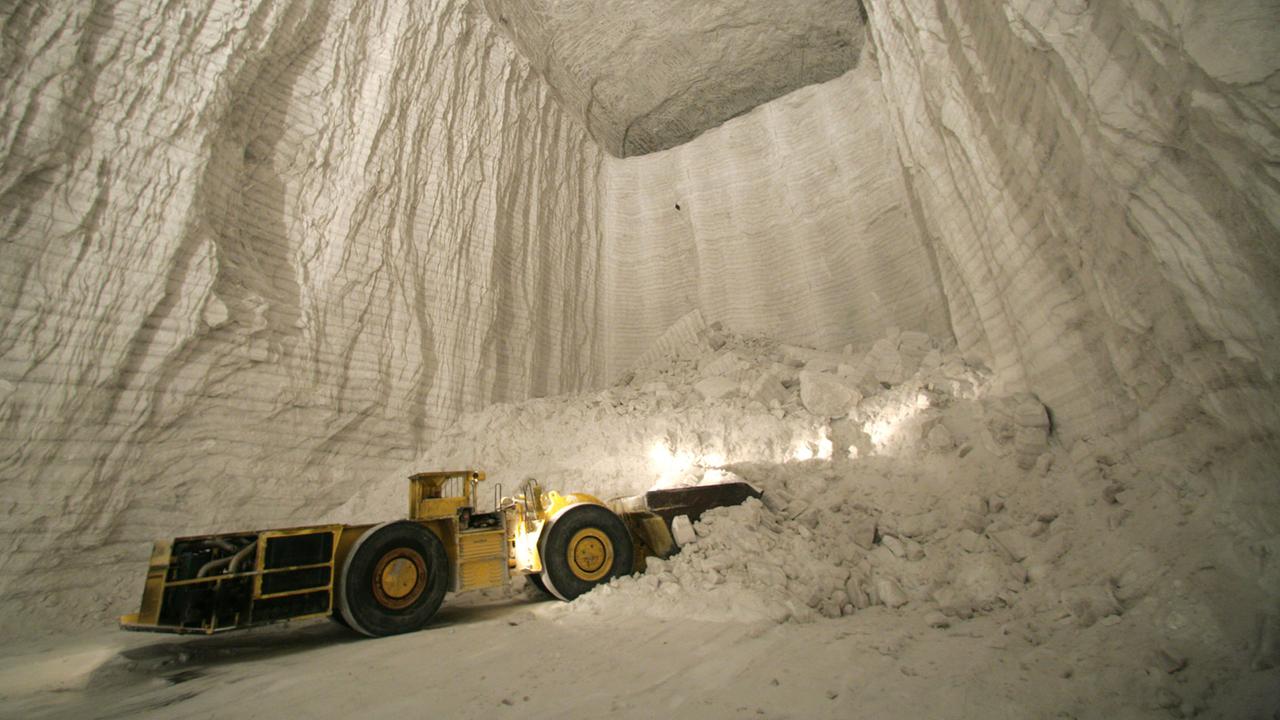
K+S mines salt in eastern Hesse for use in medicines and medical treatments.
The raw material comes from about 1,000 metres underground, but must be cleaned before it is suitable for people.
A team of 38 workers removes other minerals, producing salt with purity of up to 99.9%.
The plant makes about 95 tonnes of high-purity salt each day and sells it around the world.
These salts are used in products such as infusions and vaccines, but experts differ on whether they should count as critical raw materials: sodium is widely available, while potassium salts are rare.
Salt is not on the EU's critical raw materials list, and adding it could help the industry get funding and faster permits; the plant also faces high energy costs and complex approval rules in different countries.

K+S produces high-purity pharmaceutical salts at a site in eastern Hesse, extracting the raw material from about 1,000 metres underground.
The company supplies around 30 percent of the global market for high-purity pharmaceutical salts, according to Tagesschau.
The salts, including sodium chloride and potassium chloride, are used in products such as infusions and vaccines.
A 38-person team processes the raw salt to remove impurities, producing salt with purity of up to 99.9 percent.
K+S says energy costs and differing regulatory requirements across countries pose challenges for the business.
- Who
- K+S, a mining company based in Hesse, produces the salts.
- What
- It extracts and processes salt for pharmaceutical use, including sodium chloride and potassium chloride.
- When
- The report was published on 31 October 2026.
- Where
- Eastern Hesse, Germany; the raw material is extracted from about 1,000 metres underground.
- Why
- The salts are used in medical products such as infusions and vaccines.
Stefanie Navabi
Rudolf Pietschnig
Whether salt should be considered a critical raw material
Stefanie Navabi
Navabi says she could imagine salt being added to the European Union’s list of critical raw materials, given the importance of secure supply.
Rudolf Pietschnig
Pietschnig says sodium is too widely available worldwide to qualify as critical, though he describes potassium salts as rare and important.
This story does not have a timeline yet.
- Global market share
- Around 30 percent
- Extraction depth
- About 1,000 metres
- Processing team
- 38 employees
- Daily output
- Around 95 tonnes of high-purity salt
- Maximum purity
- 99.9 percent
- European position
- K+S is the only producer of high-purity pharmaceutical salts in Europe
What people are saying
When you consider sodium chloride and potassium chloride together, K+S is actually the world's largest producer of these pharmaceutical salts.
It is extremely important that supply is secured, because any disruption would be a major problem for all of us.
Potassium salts are essential, for example as fertiliser in agriculture, and we can be glad that we have this resource here in such good quality.
Purification is energy-intensive, and given its fundamental importance, we should make sure that something like this does not move elsewhere, because it is essential.